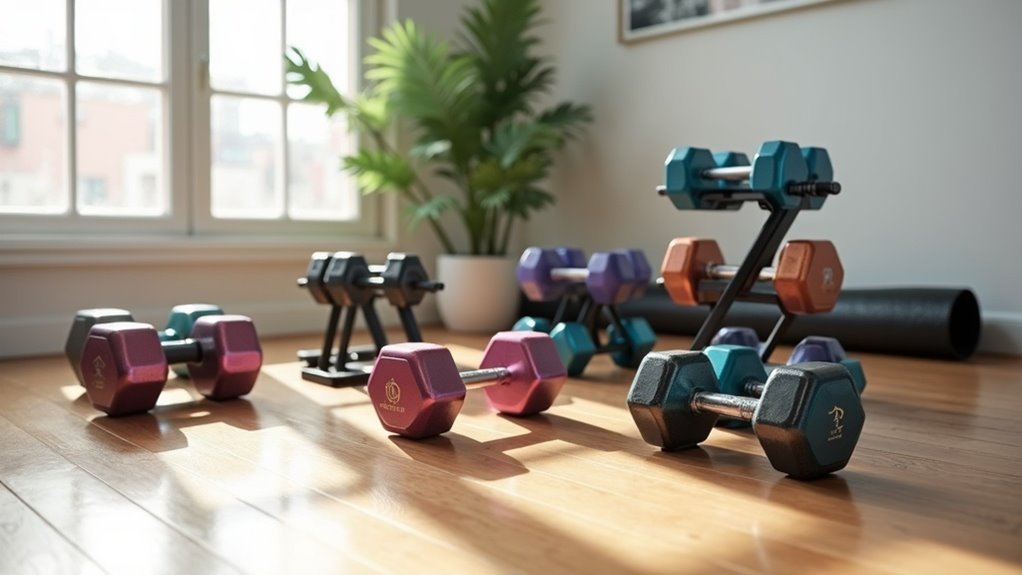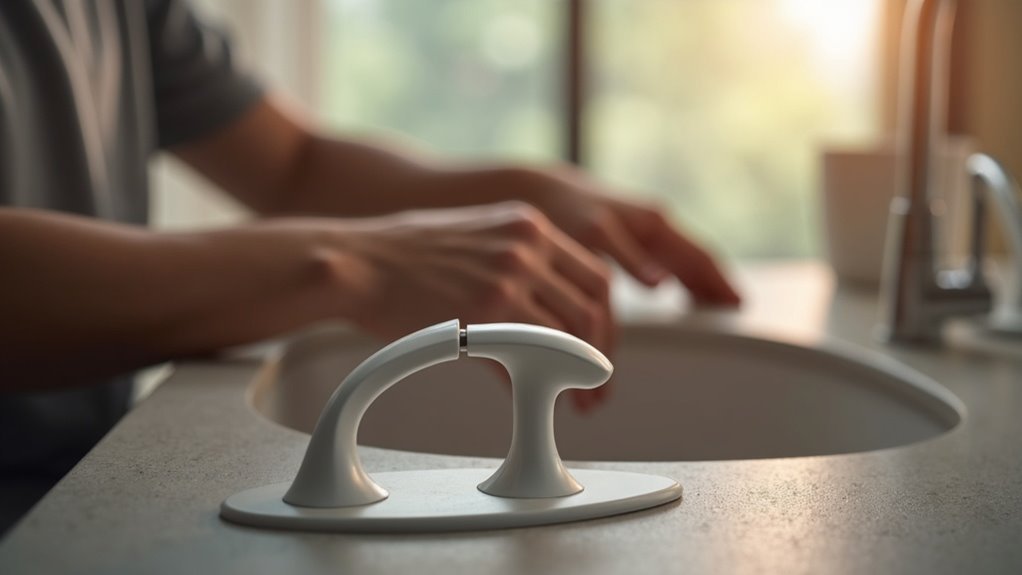
Rotating handles significantly reduce elbow irritation, making them an essential addition to your home gym equipment. By promoting a neutral wrist position, these handles alleviate strain on tendons, which is especially beneficial during various exercises. This design enhances muscle engagement and allows for a smoother range of motion, ultimately improving your overall workout experience. By minimizing discomfort and reducing the risk of conditions like tennis elbow, rotating handles contribute to better joint health. Incorporating them into your home workouts can boost both your performance and comfort. Explore more ways to maintain healthy, pain-free elbows while exercising at home.
Key Takeaways
- Rotating handles help maintain a neutral wrist position, which reduces strain on the tendons during home workouts.
- They promote a smoother range of motion, minimizing discomfort in the elbow joint while exercising at home.
- By alleviating stress on the elbow, rotating handles can help prevent common conditions like lateral and medial epicondylitis.
- Enhanced muscle engagement from using rotating handles can lead to improved strength and performance, making your home workouts more effective.
- Incorporating rotating handles encourages proper grip techniques, supporting overall ergonomic alignment for both men and women during their fitness routines at home.
Understanding Elbow Anatomy
Understanding the elbow’s anatomy is essential for anyone experiencing discomfort or irritation in the joint, especially those who engage in home workouts.
The elbow consists of the humerus, radius, and ulna, forming a complex hinge joint that allows for flexion, extension, and rotation of the forearm—key movements in various exercises. Surrounding ligaments and tendons stabilize the joint, while forearm muscles facilitate movement during daily workouts.
However, repetitive use, particularly in strength training or resistance exercises, can lead to common injuries, especially at the medial and lateral epicondyles, where tendons attach.
Common Causes of Elbow Irritation
Elbow irritation can frequently arise from repetitive movements that strain the tendons, resulting in conditions like tendinitis. This is particularly relevant for individuals who engage in home workouts or strength training exercises. Common causes of elbow pain often stem from overuse injuries linked to activities that challenge the muscles and tendons. Poor technique during exercises or excessive gripping can worsen these issues. Here’s a quick overview tailored for home fitness enthusiasts:
| Cause | Description | Symptoms |
|---|---|---|
| Lateral Epicondylitis | Inflammation of the outer tendons | Pain during gripping |
| Medial Epicondylitis | Inflammation of the inner tendons | Pain during lifting |
| Improper Technique | Incorrect form during exercises | Weakness and discomfort |
| Repetitive Motion | Frequent gripping or rotation in workouts | Persistent elbow pain |
| Ergonomic Issues | Poor posture or repetitive tasks at home | Increased strain on elbow |
The Role of Ergonomics in Elbow Health
In your home workout routine, proper grip and equipment design are crucial for maintaining elbow health. Choosing fitness tools that fit comfortably in your hands and allow for a neutral wrist position can significantly reduce strain and prevent overuse injuries during exercise.
Ergonomic solutions, such as rotating handles on dumbbells or resistance bands, not only enhance your grip but also promote better alignment, leading to a more comfortable and effective workout experience.
Prioritizing ergonomic home gym equipment can help you stay healthy and enjoy your fitness journey to the fullest.
Importance of Proper Grip
When you maintain a proper grip while using home gym equipment, you’re not only boosting your workout performance but also safeguarding your elbow health.
An ergonomic grip keeps your wrist in a neutral position, which helps to reduce strain on the elbow joint. This is crucial for preventing common issues like tennis or golfer’s elbow that can arise from improper form.
By incorporating rotating handles into your routine, you enable natural wrist movement, which alleviates stress on your tendons and ligaments.
Proper grip techniques help distribute force evenly across your forearm muscles, minimizing localized pressure on the elbow.
By avoiding excessive gripping force and awkward wrist angles, you can significantly reduce inflammation and pain.
Emphasizing the importance of these correct ergonomic practices will contribute to lasting elbow comfort, allowing you to enjoy your home workouts to the fullest.
Equipment Design Considerations
Understanding how home gym equipment design impacts your elbow health is essential for anyone engaging in regular workouts at home.
Ergonomic features, particularly rotating handles, promote a neutral wrist position, which reduces strain on your elbow and helps prevent irritation. These handles enhance your range of motion, aligning your wrist and forearm in a biomechanically favorable way, minimizing stress during repetitive exercises.
Research indicates that equipment designed with ergonomic principles not only lowers muscle fatigue and discomfort but also boosts performance.
Furthermore, adjustable rotating handles cater to your unique body mechanics, ensuring a personalized fit that promotes proper technique and further reduces the risk of elbow irritation.
Prioritizing these design aspects will help you achieve your fitness goals while staying healthy at home.
Benefits of Using Rotating Handles
Using rotating handles during your home workouts can significantly elevate your fitness experience by allowing for a more natural movement of your wrist and forearm. This innovative design helps to reduce elbow irritation and minimizes the risk of overuse injuries that can arise from repetitive exercises.
| Benefits | Impact on Performance | Long-term Effects |
|---|---|---|
| Reduces strain on tendons | Enhances overall muscle engagement | Promotes longevity of elbow joints |
| Maintains a neutral forearm position | Boosts strength and workout performance | Decreases stress on joints |
| Promotes a smoother range of motion | Minimizes discomfort during workouts | Helps prevent conditions like tennis elbow |
Incorporating rotating handles into your home gym setup can truly transform your training routine, making it more effective and enjoyable for both men and women looking to stay healthy and fit.
How Rotating Handles Promote Natural Movement
Rotating handles improve wrist alignment, enabling your forearm to move naturally while exercising at home.
This innovative design minimizes strain on your elbow joint, helping to prevent discomfort and irritation during workouts.
By supporting your body’s natural motion, these handles encourage healthier movement patterns, which are crucial for reducing the risk of overuse injuries.
Embrace a safer and more effective home gym experience with equipment designed for optimal performance.
Enhanced Wrist Alignment
When you engage in home workouts that involve gripping weights or gym equipment, maintaining a neutral wrist position is essential for preventing strain. Ergonomically designed rotating handles enhance your wrist alignment, allowing your wrists and fingers to move more naturally during exercises. This promotes proper forearm positioning, reducing stress on the elbow and minimizing the risk of conditions like golfer’s and tennis elbow, which can hinder your fitness journey. The ergonomic grip guarantees less wrist flexion and extension, lowering the chances of overuse injuries, so you can focus on reaching your fitness goals.
| Benefit | Explanation |
|---|---|
| Improved Alignment | Keeps forearm bones aligned in a natural position |
| Reduced Strain | Lowers peak wrist torque during lifting |
| Enhanced Movement | Promotes efficient biomechanics for better performance |
| Injury Prevention | Minimizes risk of elbow irritation, helping you stay active |
Reduced Strain Dynamics
As you engage in resistance training at home, the dynamics of your grip can significantly influence your performance and comfort.
Rotating handles promote natural movement by allowing your forearm to move freely, maintaining proper alignment of the elbow joint. This reduces strain on tendons and ligaments, minimizing repetitive stress during your home workouts.
By encouraging a more ergonomic grip, rotating handles lower the risk of overuse injuries, such as tennis elbow. They also activate multiple muscle groups, leading to balanced engagement and less discomfort.
Incorporating these handles into your home gym equipment enhances biomechanics, ensuring smoother shifts and reducing overall impact on your elbow joint, promoting healthier training sessions for both men and women.
Exercises to Complement Rotating Handle Use
To effectively support your use of rotating handles and minimize elbow irritation, integrating specific exercises into your home workout routine is essential.
Here are some key exercises that both men and women can easily incorporate:
- Wrist Flexor and Extensor Stretches: Enhance your flexibility with these simple stretches to keep your wrists supple.
- Forearm Strengthening Exercises: Try wrist curls and reverse wrist curls to build strength in your forearms, which is crucial for handling gym equipment.
- Rotator Cuff Exercises: Utilize a resistance band for external rotations to strengthen the muscles around your shoulder, improving your overall stability.
- Forearm Pronation and Supination: Use light weights to perform these exercises, helping improve your grip and wrist control.
- Grip Strength Exercises: Squeeze a stress ball or use hand grippers to enhance your grip strength, making your workouts more effective and comfortable.
Incorporating these exercises into your routine can improve wrist and forearm strength, promote joint stability, and reduce tension, ensuring a more comfortable and efficient experience with your home gym equipment.
Additional Strategies for Elbow Pain Relief
Elbow pain can be a barrier to achieving your fitness goals, but there are several effective strategies to alleviate discomfort and support your recovery. Consider incorporating rotating handles on your home gym equipment to reduce stress during repetitive exercises. Engage in stretching and strengthening routines for your forearm muscles to enhance flexibility and prevent injuries. Ensure that your workout space features ergonomic tools that promote proper wrist alignment, which can help minimize strain on the elbow. Utilizing ice therapy for 15-20 minutes can effectively decrease inflammation, while counterforce braces can help distribute pressure away from the tendons, providing relief during your workouts.
| Strategy | Description | Benefits |
|---|---|---|
| Rotating Handles | Allows natural wrist motion during exercises | Reduces stress on elbow joints |
| Stretching Exercises | Enhances flexibility and strength of forearms | Prevents overuse injuries |
| Ergonomic Tools | Maintains proper wrist alignment in your gym setup | Reduces strain on elbow tendons |
| Ice Application | Decreases inflammation post-workout | Provides pain relief |
| Counterforce Braces | Distributes pressure from tendons during activities | Promotes healing and comfort |
Long-Term Prevention Tips for Elbow Health
Maintaining long-term elbow health is essential for anyone engaging in home workouts. By adopting proactive practices, you can effectively protect your joints while enjoying the convenience of exercising at home:
Prioritizing elbow health is key for home workouts; proactive practices ensure joint protection and effective exercise routines.
- Use ergonomic home gym equipment to minimize repetitive wrist strain during workouts.
- Incorporate forearm strengthening exercises, such as wrist curls using dumbbells or resistance bands.
- Take time to stretch your forearm muscles regularly to enhance flexibility and range of motion.
- Adjust your grip techniques on weights and resistance tools for better wrist alignment and support.
- Ensure a balanced exercise routine that includes both strength training and cardiovascular activities to promote overall joint health.