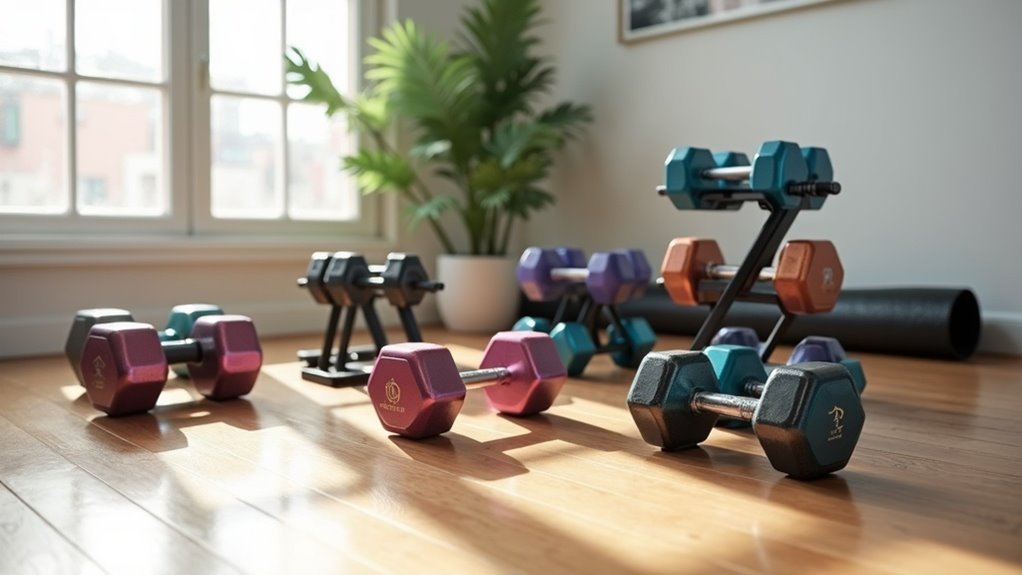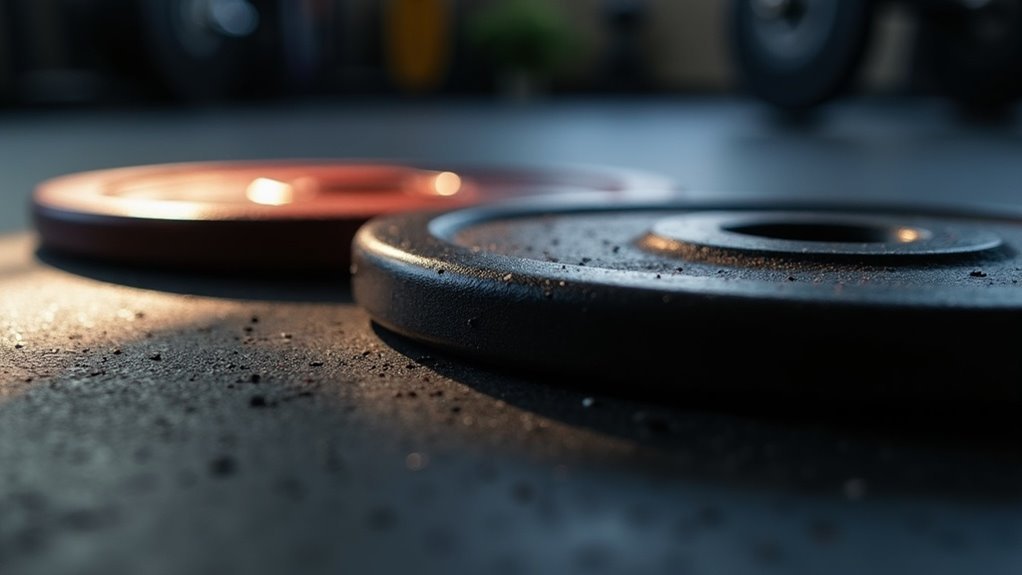
When selecting between urethane and rubber plates for your home gym, it’s important to consider durability, performance, and cost. Urethane plates are known for their longevity, resistance to wear, and precise weight tolerances, making them a great investment for serious lifters, though they do come with a higher price tag. On the other hand, rubber plates are more budget-friendly and versatile, but they may emit odors and have larger designs that could affect grip and space in your workout area. Understanding these differences is crucial for tailoring your home gym to your fitness needs. Dive deeper to uncover valuable insights that will help you make the best choice for your exercise routine.
Key Takeaways
- Urethane plates are exceptionally durable, lasting up to 50,000 drops, making them a great investment for home gym enthusiasts, while rubber plates tend to wear out more quickly and may show signs of deterioration over time.
- Urethane plates provide tighter weight tolerances and come in vibrant colors for easy identification, in contrast to the often duller appearance of rubber plates, which can be beneficial for those who enjoy a visually appealing workout space.
- While rubber plates are generally more budget-friendly, they may emit odors and have a wider design that complicates loading onto barbells, which could be an inconvenience in a home gym setting.
- Urethane plates feature a dead bounce design that ensures safer drops and minimizes noise, creating a more pleasant workout environment for you and anyone else in your home.
- When choosing between urethane and rubber plates, consider your budget, training style, and space efficiency to find the best fit for your home gym setup.
Key Differences Between Urethane and Rubber Plates
When considering home gym equipment, particularly weight plates, it’s important to understand the differences between urethane and rubber plates as they can significantly affect your workout experience.
Urethane plates are known for their hardness and exceptional durability, capable of withstanding up to 50,000 drops, making them a reliable choice for serious lifters. On the other hand, rubber plates, often crafted from recycled materials, tend to be less durable and may even emit an odor over time.
Urethane plates offer unmatched durability and reliability, while rubber plates may lack longevity and can produce unpleasant odors.
Another advantage of urethane plates is their ability to maintain tighter weight tolerances, which is essential for those looking to achieve precise lifts.
Aesthetically, urethane plates stand out with vibrant colors, adding a visually appealing element to your home gym, whereas rubber plates tend to have a more muted appearance.
While urethane plates come at a higher price point, their long-lasting performance and durability make them a worthwhile investment for anyone dedicated to building a home gym focused on fitness and strength training.
Ultimately, choosing the right type of weight plate can enhance your workout and support your health goals at home.
Advantages of Urethane Plates
Urethane plates are an excellent choice for home gym enthusiasts, offering remarkable durability that allows them to withstand up to 50,000 drops with minimal wear.
This longevity ensures that they outlast traditional rubber plates, making them a smart investment for anyone looking to set up a home workout space.
Their vibrant colors not only enhance the aesthetic appeal of your gym but also facilitate quick weight identification, so you can stay focused on your fitness goals.
Moreover, urethane plates significantly reduce noise during drops, contributing to a quieter workout environment that benefits everyone in your home.
Enhanced Durability and Longevity
While many home gym enthusiasts look for equipment that can withstand intense workouts, urethane plates are particularly noteworthy for their exceptional durability and longevity.
Here’s why urethane plates stand out compared to rubber plates:
- Urethane plates can endure up to 50,000 drops with minimal wear, significantly enhancing their lifespan.
- The construction of urethane is resistant to scratches and UV damage, helping them maintain their appearance over time, even in a home gym setting.
- The dead bounce feature of urethane plates minimizes the risk of bars flying during drops, creating a safer workout environment for both men and women exercising at home.
These advantages highlight the enhanced durability of urethane plates, making them an excellent choice for those serious about their home fitness journey.
Superior Aesthetic Appeal
Aesthetic appeal is essential for creating an inviting home gym environment, and urethane plates shine in this regard. Their vibrant colors enhance the overall look of your workout space, making them a great choice compared to the muted tones of standard rubber plates.
You can customize urethane plates with unique logos and designs, adding a personal touch to your home gym. Thanks to their superior UV resistance, these plates maintain their bright appearance over time, even in different lighting conditions.
The smooth, non-tacky surface helps keep dirt accumulation to a minimum, contributing to a cleaner workout area. Additionally, urethane plates feature tighter calibration tolerances, ensuring they not only look great but also perform consistently well during your home workouts.
Reduced Noise During Drops
When setting up your home gym, noise levels can be a crucial factor, especially if you share your living space. Urethane plates provide a clear advantage over traditional rubber options, thanks to their superior design that ensures minimal sound upon impact.
Here are some key benefits of using urethane plates:
- Dead Bounce: Urethane plates significantly reduce noise when dropped, contributing to a more serene workout environment at home.
- Shock Absorption: Their unique material composition effectively absorbs impact, allowing for quieter training sessions without disturbing others.
- Durability: Built to endure up to 50,000 drops, urethane plates maintain their noise-reducing properties over time, ensuring long-lasting performance.
These features not only help in minimizing noise but also foster a focused and enjoyable atmosphere for your workouts, making it easier to stay committed to your fitness goals at home.
Shortcomings of Urethane Plates
While urethane plates provide several benefits for home gym enthusiasts, they do have some significant drawbacks to consider.
One major issue is their higher initial cost compared to traditional rubber plates, which can strain your budget when setting up your home gym.
Furthermore, the limited availability of urethane plates in some regions may pose challenges when trying to source them, potentially delaying your fitness journey.
Higher Initial Cost
Urethane plates typically come with a higher initial cost than rubber plates, making them a significant investment for many home gym enthusiasts. Before you make your decision, consider these factors:
- Durability: Urethane plates are built to last, providing exceptional longevity and reducing the need for frequent replacements. This is especially beneficial for those who are serious about their home workouts.
- Performance: Their advanced design minimizes maintenance, allowing you to focus more on enhancing your lifting experience and reaching your fitness goals.
- User Type: Casual exercisers might find rubber options to be more budget-friendly, while dedicated lifters may appreciate the long-term value of urethane plates.
Although the upfront cost can be a concern, it’s important to weigh these advantages against the potential long-term benefits of investing in urethane plates.
Ultimately, your choice should reflect your fitness ambitions and budget considerations as you create your ideal home gym.
Limited Market Availability
Despite their benefits, urethane plates can present challenges due to limited market availability, especially for home gym enthusiasts.
Their higher manufacturing costs often result in a niche market appeal, meaning you may encounter fewer options compared to the more commonly available rubber plates.
Many fitness retailers and online stores primarily stock rubber plates, making urethane plates harder to find for your home gym setup.
You might need to special order them from specific brands, which could delay your acquisition if you’re looking to enhance your workout routine right away.
As the market for urethane plates continues to evolve, the selection of brands and styles may remain limited, affecting your choices and accessibility when seeking quality weight options for your at-home fitness journey.
Benefits of Rubber Plates
Rubber plates are an excellent option for your home gym, offering both affordability and long-lasting performance. Here are three significant benefits of incorporating rubber plates into your workout routine:
- Material Quality: Opting for virgin rubber plates ensures a minimal odor and an extended lifespan compared to recycled alternatives, making them a great investment for your home gym.
- Grip & Safety: The textured surface of rubber plates provides a secure grip, reducing the risk of slipping during lifts and enhancing your overall safety while exercising.
- Impact Absorption: Rubber bumper plates are designed to absorb impact efficiently, safeguarding both your weights and flooring from damage when dropped.
When deciding between rubber and urethane plates, keep these advantages in mind for a safer and more effective lifting experience at home.
Drawbacks of Rubber Plates
While rubber plates are a popular choice for home gym enthusiasts due to their affordability and versatility, they come with some drawbacks that can affect your workout routine.
One of the main issues is the strong odor they can emit, particularly if made from recycled materials, which may be unpleasant in smaller workout spaces.
One significant drawback is the strong odor emitted by rubber plates, especially those made from recycled materials.
Their wider design can also pose challenges when loading multiple plates onto a barbell, making heavy lifts more complicated.
Additionally, rubber plates are generally less durable than their urethane counterparts, which can lead to damage of the center ring if used alongside smaller iron plates.
They may slip more easily when hands are sweaty, potentially impacting grip during lifts.
Furthermore, the calibration of rubber plates isn’t as precise as that of urethane plates, which can result in inconsistencies in weight and affect your training progress.
User Experiences With Both Materials
User feedback highlights distinct preferences for rubber and urethane plates, particularly for those setting up a home gym. Here are some key insights from users:
- Durability: Urethane plates stand out for their longevity, withstanding over 50,000 drops, while rubber weights tend to show signs of wear more quickly. This makes urethane a solid investment for your home workout routine.
- Grip and Handling: Many users report that rubber plates are easier to grip, providing a more secure feel during lifts. However, urethane plates can have a slick surface, which may pose a risk during heavier lifts. So, it’s important to consider your comfort and handling preference.
- Aesthetic and Space: Urethane plates come in vibrant colors and feature a narrower design, allowing for better loading efficiency. In contrast, rubber plates are typically wider, which can lead to sleeve space issues in your home gym setup.
Recommendations for Choosing the Right Plates
When selecting the right plates for your home gym, it’s essential to consider factors such as your training style, how often you work out, and the space you have available. Urethane plates are ideal for serious lifters who prioritize performance, while rubber plates are more suited for casual users looking for a budget-friendly option. Don’t forget to evaluate your budget: while urethane plates may come with a higher price tag, they typically offer greater longevity.
Space is another critical factor; urethane plates have a narrower design that helps save sleeve space. Maintenance is also important; urethane plates require less upkeep and are more resistant to odors. If you care about the look of your gym, urethane plates come in a variety of vibrant colors that can enhance your workout environment.
| Factor | Urethane Plates | Rubber Plates |
|---|---|---|
| Durability | High | Moderate |
| Cost | Higher | Lower |
| Space Efficiency | Narrower | Wider |
| Maintenance | Low | Higher |
| Aesthetic Appeal | Customizable, Vibrant | Basic Colors |