To understand barbell whip and tensile strength, it’s essential to consider how they affect your home workouts. Whip refers to the bar’s flex under load, which can enhance the dynamics of your lifts, particularly in Olympic-style movements. Tensile strength, measured in PSI, is crucial for the durability of your equipment; for optimal performance, look for barbells with a tensile strength between 170,000 and 190,000 PSI. When selecting a barbell for your home gym, balance the whip and rigidity according to your lifting style, as excessive whip may hinder your control. Choosing the right barbell can significantly elevate your home fitness journey, helping you achieve your health goals effectively.
Key Takeaways
- Barbell whip refers to the bar’s ability to flex under load, which is essential for optimizing your lifting technique and performance, especially in a home gym setting.
- Tensile strength, measured in PSI, indicates a barbell’s durability; for home gym enthusiasts, ideal values range from 170,000 to 190,000 PSI to ensure reliability during workouts.
- The degree of whip is influenced by bar length and the materials used, which can significantly impact your lifting experience and control, making it crucial for achieving your fitness goals at home.
- Understanding the balance between whip and rigidity is key when selecting the right barbell for your specific lifting style, whether you’re focusing on Olympic weightlifting or powerlifting.
- Regular maintenance, including cleaning and proper storage, is essential to maintain optimal performance and extend the longevity of your barbell, ensuring it remains a valuable part of your home gym equipment.
Defining Barbell Whip and Its Importance
Barbell whip is an essential element of Olympic weightlifting that significantly impacts lifting dynamics, especially for those setting up a home gym.
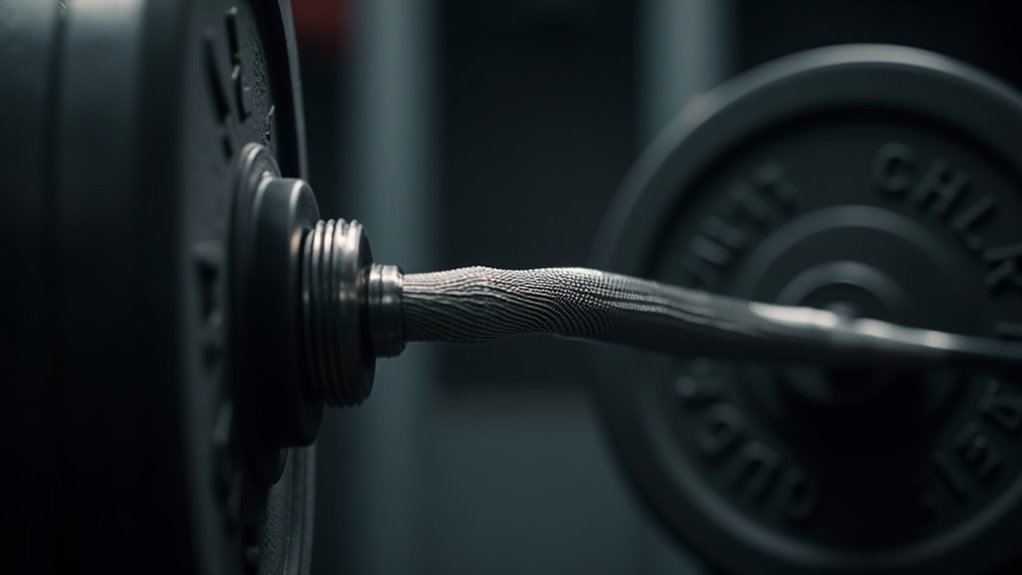
This phenomenon describes the barbell’s ability to flex under load, which can enhance performance during lifts such as the clean and jerk. The degree of whip, influenced by the bar’s length and material properties, depends largely on high tensile strength.
Thinner bars tend to exhibit more whip, which can alter the effective weight felt during lifts, thereby affecting control and technique. While some lifters believe they can utilize the elastic rebound for energy redirection, evidence suggests they can’t fully match this speed.
This highlights the importance of selecting a barbell with ideal whip characteristics for achieving successful lifts, making it a vital consideration for anyone committed to exercising at home.
Understanding Tensile Strength in Barbells
Tensile strength is a crucial factor in determining how well a barbell can endure the stresses of heavy lifts, making it particularly important for home gym enthusiasts.
Measured in PSI, tensile strength for barbells usually ranges from 120,000 to 230,000. A higher tensile strength means a lower likelihood of bending, which is essential for durability during various weightlifting exercises.
Tensile strength in barbells, ranging from 120,000 to 230,000 PSI, ensures durability and resistance to bending during heavy lifts.
For those investing in home gym equipment, a quality tensile strength between 170,000 and 190,000 PSI is ideal for enhancing performance during dynamic lifts.
While the static load capacity of a barbell is important, it doesn’t fully represent how the barbell behaves under real lifting conditions.
Therefore, understanding both tensile and yield strengths is vital for selecting the right equipment to support your fitness journey at home.
The Relationship Between Whip and Performance
While evaluating performance in home weightlifting, understanding the whip of the barbell is essential for maximizing your lifting technique. The whip enhances lift dynamics, particularly in Olympic lifts, by allowing energy storage, which can be beneficial for those exercising at home. Thinner bars exhibit more whip, improving control during heavy lifts. Here’s a breakdown of whip’s influence on performance to help you choose the right equipment for your home gym:
| Bar Type | Whip Level |
|---|---|
| Olympic Bar | High |
| Powerlifting Bar | Low |
| Thinner Bar | More Whip |
| Rigid Bar | Less Deflection |
Balancing whip and tensile strength is crucial for achieving peak performance while exercising at home, as it reduces the risk of permanent deformation during intense lifts. This knowledge will help you make informed choices about your home gym equipment and enhance your overall fitness journey.
Factors Affecting Barbell Whip
When evaluating barbell whip for your home gym setup, it’s essential to consider factors such as bar length, material composition, and load distribution, as they all play crucial roles in your lifting experience.
A longer bar may flex more during exercises, which can impact your performance, especially if you’re aiming for maximum efficiency and safety. Different materials can also affect the bar’s stiffness and elasticity, influencing how it feels during your lifts.
Furthermore, how you distribute weight across the bar is key; an even load can enhance stability and control, helping you optimize your workouts at home.
Bar Length Influence
The length of a barbell significantly affects its whip characteristics, which in turn influences your ability to lift heavy loads effectively at home.
Longer bars generally exhibit more deflection under load, impacting your lifting dynamics. Here are some important points to consider:
- A standard Olympic barbell (7 feet) can deflect about one inch at 400 pounds, which may affect your overall lifting experience.
- The second area moment of inertia, influenced by bar length, is crucial in calculating whip, helping you understand how the bar will behave under different loads.
- Shorter bars, such as the Texas Power Bars (30.5 inches), have minimal deflection, allowing for immediate force transmission, which can be beneficial for powerlifting at home.
Understanding how bar length influences whip is essential for optimizing your lifting performance and achieving your fitness goals in your home gym.
Material Composition Impact
Barbell whip isn’t solely determined by length; the material composition significantly influences its performance characteristics, making it crucial for home gym enthusiasts.
High-quality steels, such as chrome-moly (41xx), offer superior elasticity and tensile strength, which are essential for effective dynamic lifts. The atomic bonds in these steels facilitate deformation and recovery, vital for generating whip during your workouts.
A barbell’s tensile strength, typically ranging from 120,000 to 230,000 PSI, indicates its load-bearing capacity, with higher values leading to reduced deflection.
Furthermore, yield strength is particularly important, as it defines when a bar begins to deform under heavy loads, impacting its whip and overall performance during your lifts.
This understanding can help you choose the right equipment for your home gym, ensuring a safer and more effective workout experience.
Load Distribution Effects
While various factors contribute to barbell whip, load distribution plays a crucial role in its dynamics during home workouts. Proper load distribution ensures predictable whip behavior, enhancing stability and performance for both men and women exercising at home.
Consider these key aspects:
- Grip width: A wider grip increases deflection and whip, which can affect your lift’s effectiveness.
- Plate positioning: Keeping weights closer to the bar’s center minimizes whip and stabilizes your lift, making it safer for home gym setups.
- Uneven loading: This can lead to unpredictable whip, complicating your lift dynamics and potentially increasing the risk of injury.
Understanding these factors allows you to optimize your barbell setup at home, ensuring effective load distribution for improved control and safety during your workouts.
How to Choose the Right Barbell for Your Lifting Style
How can you ensure that your barbell choice complements your home gym lifting style? Begin by assessing the tensile strength; a barbell rated between 170,000 to 190,000 PSI provides excellent durability for home workouts. Next, think about the whip characteristics—Olympic bars offer a flexible design ideal for dynamic lifts, while powerlifting bars are stiffer, providing stability for heavier lifts. Lastly, consider the knurling and sleeve construction; aggressive knurling can enhance grip for powerlifting, while needle bearings improve spin for Olympic lifts.
| Feature | Olympic Lifting | Powerlifting |
|---|---|---|
| Tensile Strength | 170,000 – 190,000 PSI | 170,000 – 190,000 PSI |
| Whip | High | Low |
| Sleeve Type | Needle Bearings | Bushings |
Maintenance and Care for Optimal Barbell Performance
To maintain optimal performance and longevity of your home gym barbell, regular care is crucial. Proper maintenance not only enhances your weightlifting experience but also extends the lifespan of your equipment.
Regular care is essential for your home gym barbell, enhancing performance and extending equipment lifespan.
Here are some essential practices to follow:
- Wipe off excess chalk and moisture after each use to prevent rust and keep your barbell in top condition.
- Use a stiff-bristled nylon brush to clean the knurling, ensuring you maintain a strong grip during your workouts.
- Apply a light coat of oil once a month to protect against oxidation and keep your barbell performing well.
Additionally, always store your barbell in a dry environment to minimize degradation and ensure it remains in excellent shape.
Following these guidelines is especially important for those investing in higher-end barbells, which often come with lifetime warranties, highlighting the significance of diligent upkeep for your home gym equipment.
Common Misconceptions About Barbell Whip and Strength
You might think that a barbell’s whip always enhances your lifting experience, but excessive whip can actually compromise stability and control, especially if you’re focusing on powerlifting techniques at home.
Additionally, many home gym enthusiasts overlook the importance of yield strength over ultimate tensile strength, which can directly impact your performance during lifts.
Misunderstandings about how strength ratings and whip interact can lead to inefficient lifting strategies and even potential injuries, making it crucial to choose the right equipment for your home workouts.
Whip vs. Stability
While many home gym enthusiasts believe that a barbell’s whip can enhance performance, this misconception overlooks the crucial balance between whip and stability. Excessive whip can lead to compromised stability during heavy lifts, affecting control and overall results.
Here are some key points to consider:
- Rigid barbells transmit force immediately, which is essential for powerlifting and strength training at home.
- A whippy bar can alter the effective weight felt, influencing lift dynamics and making it harder to maintain proper form.
- The ideal design requires a balance of whip and rigidity tailored for various training styles to maximize your workouts.
Understanding this relationship is vital when selecting the right barbell for your home gym. It ensures you optimize your lifts while maintaining the necessary stability for safety and effectiveness, ultimately supporting your fitness journey.
Strength Ratings Misunderstood
When selecting the right barbell for your home gym, it’s essential to look beyond just whip and stability; understanding strength ratings is crucial.
Many fitness enthusiasts mistakenly think that higher tensile strength equals better performance, but yield strength is actually more important as it shows when a bar starts to deform under load.
The dynamic performance of barbell whip is often misunderstood; while stiffer bars can handle heavier weights, they may lack the necessary elasticity for Olympic-style lifts, which are popular for building strength and explosiveness.
Additionally, confusing static load capacity with real-world performance can lead to suboptimal choices for your home workouts.
Be sure to scrutinize marketing claims about “sick whip” and take the time to understand the physics behind barbell performance.
This knowledge will help you choose the right equipment to meet your fitness goals and enhance your home exercise routine.