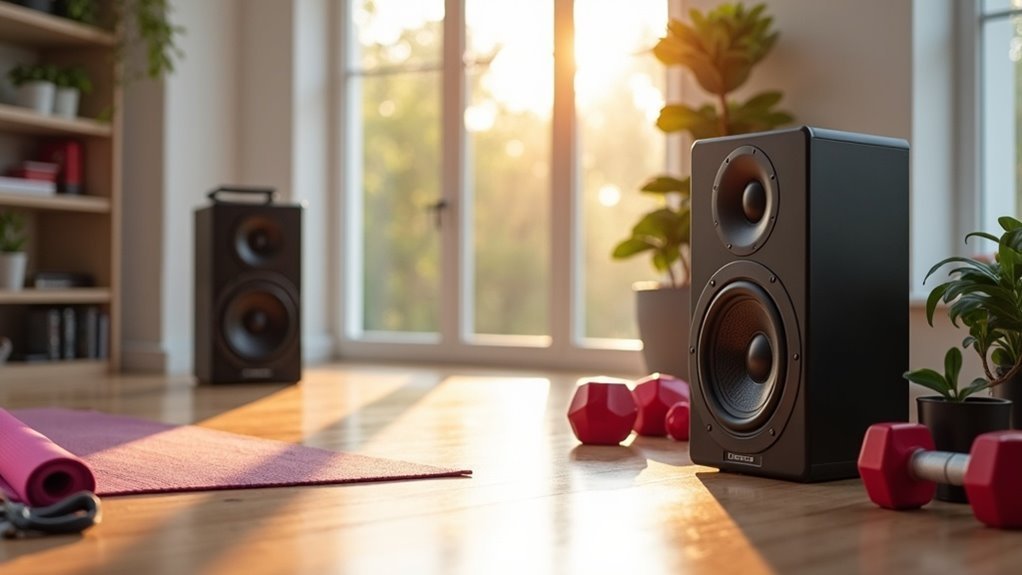
To set up speakers for your home workout space, start by measuring the dimensions of your area and considering the acoustics to ensure optimal sound quality. Opt for active or in-ceiling speakers that deliver the best audio experience. Position your speakers high or in the corners to enhance sound distribution, ensuring that you enjoy clear audio coverage throughout your workout. Conduct a clap test to assess clarity and make any necessary adjustments to speaker placements. Remember to use licensed music to stay compliant while boosting your motivation during workouts. If you’re looking to further elevate your audio experience, there are additional strategies you can explore to make your home gym even more enjoyable.
Key Takeaways
- Measure your home gym dimensions and consider room acoustics to optimize speaker placement and ensure sound reaches every corner of your workout area.
- Use active speakers or portable PA systems for easy setup and superior sound quality, perfect for enhancing your at-home workout experience.
- Position speakers high on walls or on floating shelves to maximize sound reach and minimize obstacles, creating an immersive atmosphere for your fitness routines.
- Always use licensed music to avoid legal complications and elevate your audio experience during workouts, keeping you motivated and energized.
- Regularly troubleshoot sound issues by checking connections and performing a clap test for sound clarity, ensuring your home gym remains a top-notch environment for fitness.
Assessing Your Workout Space
Assessing your workout space is crucial for enhancing your home gym experience. Start by measuring the dimensions—height, width, and length—to determine the best number and placement of speakers for optimal sound coverage during your workouts.
Take into account the room’s acoustics; reflective surfaces can lead to echoes, so you’ll want to strategically position your speakers to minimize distortion. Be mindful of obstacles, such as walls or gym equipment, that could interfere with sound distribution, and adjust your speaker placement to ensure even audio throughout the space.
Consider the main activities and where you’ll be listening during your workouts, ensuring that the speakers provide consistent audio levels. This will help boost engagement and motivation for both you and any workout partners.
Proper speaker placement is essential for achieving clear, powerful sound that enhances your home fitness routine.
Choosing the Right Speakers
When selecting speakers for your home gym, it’s important to consider the type that best complements your workout environment.
Active speakers are great for their user-friendly setup, while portable PA systems offer the flexibility you might need for various workout routines.
Ensuring proper placement is crucial; position your speakers to cover the entire workout area and eliminate any dead zones, providing a balanced sound experience.
Additionally, there are budget-friendly options available that deliver excellent audio quality, making it easier to create an effective sound system that motivates you to stay healthy and fit at home.
Speaker Types Overview
Choosing the right speakers for your home gym can significantly enhance your workout experience, allowing you to stay motivated and energized. Here’s an overview of different speaker types to help you make the best choice for your space:
| Speaker Type | Best Use Case |
|---|---|
| Active Speakers | Great for versatile placement; requires power for optimal sound quality |
| In-Ceiling Speakers | Perfect for a discreet, permanent setup that doesn’t take up floor space |
| Portable PA Systems | Ideal for flexibility, allowing you to easily move between indoor and outdoor workouts |
For larger home gyms, consider using multiple smaller speakers to improve sound distribution and reduce ear strain during your sessions. Wireless Bluetooth speakers are an excellent option for smaller areas, providing mobility without the hassle of tangled wires. Ensure that the size of your chosen speakers matches the dimensions of your room to achieve the best audio clarity and enhance your home workout environment.
Placement Strategies Explained
Understanding how to position your speakers can significantly enhance the sound quality and effectiveness of your home workout space. Proper speaker placement ensures optimal audio distribution, elevating your exercise experience.
- Position speakers high on walls or on corner floating shelves to minimize obstructions and maximize sound reach.
- Utilize multiple speakers to achieve consistent sound levels and reduce echo, particularly in spaces with hard surfaces that reflect sound.
- Conduct a reverberation test using the clap test to ensure clear and effective sound clarity during workouts.
Choosing the right speaker size and output based on your gym’s dimensions is crucial.
Additionally, verify that pathways remain clear for safe movement during your exercise routines.
Budget-Friendly Options Available
How can you find budget-friendly speakers that still deliver quality sound for your home workout space?
Consider options like Monoprice or JBL floor-standing speakers, which can be found for around €100 each. Exploring secondhand markets can also lead to high-quality speakers at a fraction of their original price.
Active Bluetooth speakers from brands like ION or JBL allow for easy movement and eliminate the need for amplifiers, making them convenient for your exercise routine.
If space is limited, bookshelf-style speakers are both aesthetically pleasing and practical for wall-mounted setups.
For a more permanent solution, in-ceiling speakers provide excellent sound without taking up valuable space, making them ideal budget-friendly options for compact home gym environments.
Speaker Placement Strategies
To achieve ideal sound coverage in your home gym, strategically position speakers in each of the four corners. This placement minimizes dead spots while ensuring even audio distribution.
Strategically position speakers in the corners of your home gym for optimal sound coverage and minimal dead spots.
Consider these speaker placement strategies for optimal results:
- Mount speakers high on walls or on corner floating shelves to reduce echo and reverberation, creating a more immersive workout experience.
- Use the clap test to assess sound reverberation and adjust placement for clearer audio, ensuring you can hear instructions without distractions.
- Utilize multiple speakers at lower volumes to protect your ear health while maintaining effective instruction sound levels during your routines.
This layout supports dynamic movement, essential for creating an engaging and motivating workout environment at home.
Power and Control Setup
When establishing a power and control system for your home gym, it’s crucial to design a flexible audio environment that accommodates a variety of workouts and personal preferences. Consider implementing a two-zone sound system featuring amplifiers like the Atlas CP400 and JBL CSA 140Z. Incorporate in-wall volume controls for seamless adjustments tailored to your workout intensity or mood. Ensure streaming capabilities for both TV audio and music sources, providing versatile connectivity options to keep you motivated.
| Component | Purpose | Example |
|---|---|---|
| Amplifier | Manage sound distribution | Atlas CP400 |
| Volume Control | Easily adjust audio levels | In-wall controls |
| Streaming Sources | Connect various audio sources | Sonos, mobile devices |
Creating an engaging audio experience can significantly enhance your at-home workout routine, making it easier to stay focused and energized.
Importance of Licensed Music
Using licensed music in your home workout sessions is crucial for legal compliance, as unlicensed tracks can result in significant fines.
By ensuring that artists receive their royalties, you not only support the music industry but also create an energizing atmosphere that enhances your exercise experience.
Opting for commercial music services simplifies the licensing process, allowing you to concentrate on achieving your fitness goals from the comfort of your home.
Legal Compliance Necessities
Ensuring your home gym creates an enjoyable atmosphere with licensed music isn’t just about enhancing your workout experience; it’s a legal necessity that protects you.
Without proper music licensing, you could face significant fines and potential legal issues. Organizations like ASCAP, SESAC, and BMI enforce these laws, ensuring artists receive their rightful royalties.
- Subscription services provide convenient access to licensed music stations tailored for your home workouts.
- Compliance sets a professional standard for your audio experience, making your exercise sessions more enjoyable.
- Prioritizing music licensing helps you avoid legal complications while you focus on achieving your fitness goals at home.
Artist Royalty Considerations
The significance of using licensed music in home workout spaces can’t be overstated, as it enhances the overall experience for users while ensuring legal compliance.
Playing unlicensed music can lead to legal penalties and substantial fines, which can negatively affect your fitness journey. Organizations like ASCAP, SESAC, and BMI actively monitor compliance, highlighting the necessity for proper licensing.
By utilizing subscription services that offer pre-licensed music stations, you can create an energizing atmosphere in your home gym that meets industry standards.
Choosing licensed music not only supports artists and the broader music industry but also fosters an engaging environment that elevates your workout experience.
Compliance is key to maintaining a successful and enjoyable home exercising routine.
Professional Sound Standards
While you might focus on workout routines and equipment for your home gym, overlooking the significance of licensed music can compromise your professional sound standards.
Proper licensing not only ensures that artists receive their fair share of royalties but also shields you from potential legal issues. To optimize your audio experience while exercising at home, consider the following:
- Utilize licensed music services for ease and compliance.
- Avoid fines from organizations such as ASCAP, SESAC, and BMI.
- Foster a motivating atmosphere that enhances your workout sessions.
Investing in licensed music aligns with professional sound standards, enriching both your audio experience and overall satisfaction during your home workouts.
Troubleshooting Sound Issues
To effectively troubleshoot sound issues in your home gym, start by verifying all connections; loose cables can lead to silence or diminished audio quality during your workouts. If a speaker is silent, perform a clap test to check for sound output. If there’s still no sound, try swapping cables or speakers to isolate the problem. Ensure that the amplifier is powered on and that volume levels are adjusted appropriately on both the amplifier and mixer. Also, don’t forget to check for software updates on any digital equipment, as these can enhance performance and ensure a seamless workout experience.
| Step | Action |
|---|---|
| Check Connections | Confirm all cables are secure |
| Perform Clap Test | Test for sound output |
| Update Firmware | Check for software improvements |
Additional Equipment Considerations
After addressing sound issues, it’s time to contemplate additional equipment that can enhance your home gym’s audio experience. Here are some key considerations:
- Wireless microphone receiver for clear communication over your workout playlist.
- Battery-powered speakers, like the ION Block Rocker, ideal for outdoor or backyard workouts.
- In-wall volume controls for easy sound adjustments without interrupting your flow.
Incorporating these elements not only elevates your home gym setup but also ensures that instructors can engage effectively without interruptions.
Utilizing portable PA systems can further enhance flexibility, allowing for seamless transitions between indoor and outdoor training sessions.
Prioritize reliable connections and accessibility to optimize the audio experience for both you and your workout partners.