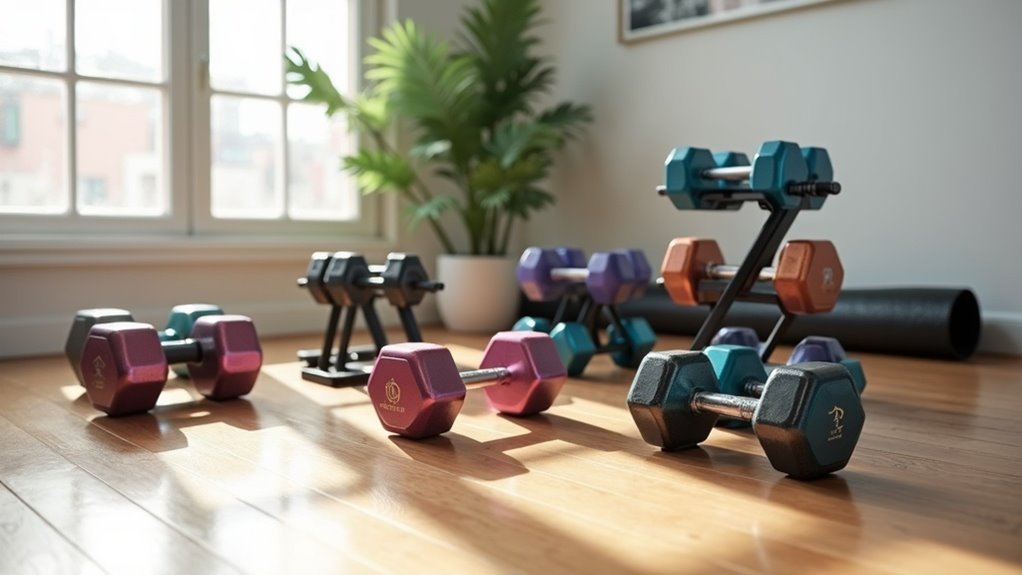
To choose the appropriate steel gauge for your home gym rack, start by evaluating your load requirements and the weight of your gym equipment. If you’re planning to store heavier items or if you live in a humid environment, it’s wise to select thicker steel, such as 12-gauge, to ensure enhanced durability and stability. Structural integrity is crucial; using an insufficient gauge could result in bending or failure of the rack. For taller designs, think about incorporating reinforcement methods to maintain safety and functionality. By considering these factors, you’ll be able to make an informed decision that provides a reliable setup for your home workout space, helping you stay healthy and fit effectively.
Key Takeaways
- Start by assessing the total weight of your home gym equipment to determine the necessary load capacity for the rack’s steel gauge, ensuring it can support your workout needs.
- Opt for 12-gauge steel if your gym environment is humid or if you have heavier equipment, as this will provide the durability needed for a long-lasting setup.
- Refer to steel gauge charts to comprehend the differences in thickness, which will help you choose based on the required stability and resistance to bending for your home gym.
- Enhance structural integrity by adding cross-bracing or selecting thicker steel, especially for taller or heavier configurations, to ensure safety during your workouts.
- Strike a balance between durability and budget by choosing thicker steel, which typically offers greater longevity and reliability, making your investment in home fitness equipment worthwhile.
Understanding Steel Gauge Basics
When selecting steel for home gym equipment, understanding steel gauge basics is fundamental for ensuring durability and safety during your workouts.
Steel gauge numbers typically range from 3 to 30, with lower numbers indicating thicker steel. For instance, 12-gauge steel measures 0.1046 inches, while 18-gauge is only 0.0478 inches thick.
Steel gauge numbers range from 3 to 30, with lower numbers signifying thicker steel for enhanced durability and stability.
It’s crucial to note that moving between gauge numbers doesn’t equate to uniform thickness changes; the variations can be significant. Therefore, knowing the specific gauge thickness helps you choose the right steel for your gym equipment, ensuring it can withstand heavy use and provide the stability you need for effective training.
This knowledge is essential for selecting the right materials for your home gym setup, contributing to both performance and safety.
Evaluating Load Requirements for Your Rack
Understanding steel gauge basics is essential when evaluating load requirements for your home gym equipment rack. Start by determining the total weight of the gym gear you plan to store, as this will directly influence your load requirements.
Consider how often you’ll access these items; if you frequently switch between weights or equipment, opting for a thicker steel gauge can provide added durability and stability.
Assess the environmental factors in your workout space, such as humidity or temperature fluctuations, which could necessitate impact resistance and influence your choice between 12-gauge or 14-gauge steel.
Additionally, factor in the dimensions and spacing of your shelves; wider spans may require thicker steel to prevent sagging under the weight of your equipment.
Consult steel gauge charts to ensure your selection meets the necessary load capacity for a safe and efficient home gym setup.
Selecting the Right Gauge for Your Application
Selecting the right steel gauge for your home gym equipment is crucial for ensuring durability and safety during your workouts. To choose the appropriate gauge, consider these factors:
Choosing the right steel gauge for your gym equipment is essential for durability and safety during workouts.
- Environment: Use 12-gauge steel for home gyms in garages or basements where equipment might be exposed to moisture; 18-gauge is suitable for controlled indoor environments.
- Weight of Equipment: Heavier equipment like weight benches or squat racks require 14-gauge or 12-gauge steel for added stability and protection.
- Frequency of Use: Thicker steel can handle the wear and tear from frequent workouts better, making it a wise choice for regularly used equipment.
- Budget Considerations: Find a balance between durability and cost; while thicker steel may have a higher initial price, it often results in greater longevity, making it a worthwhile investment for your fitness journey.
Importance of Structural Integrity and Stability
While it’s tempting to focus solely on aesthetics when building a home gym rack, the structural integrity and stability are paramount for safe and effective workouts. Selecting the right steel gauge is critical; for instance, 12-gauge steel offers superior resistance against impacts and heavy loads, ensuring longevity and safety during your exercise routines.
A stable rack needs a solid base and proper gauge thickness—14-gauge steel can strike a balance between durability and weight, making it suitable for various workout equipment. Additionally, incorporating support features like ribs enhances stability, especially when using lighter materials.
Always consider the cumulative weight of your gym equipment; insufficient gauge thickness can lead to bending or failure, jeopardizing structural integrity and overall stability. Prioritizing these factors will help you achieve peak performance in your home workouts.
Additional Considerations for Rack Design and Reinforcement
When designing a rack for your home gym, it’s essential to account for both the intended load capacity and the frequency of use, as these factors directly influence the appropriate steel gauge.
Consider the following additional aspects to enhance your design:
- Use cross-bracing or thicker steel in critical areas for added support, especially when storing heavier weights.
- Assess the height and depth of the rack; taller setups often require more reinforcement to prevent tipping during workouts.
- Incorporate ribbing or support beams to improve weight distribution, ensuring your equipment can handle diverse exercises safely.
- Guarantee proper reinforcement at connection points and joints for stability, particularly important with thinner gauges.
Prioritizing these elements can greatly improve your home gym experience by ensuring reliability and safety during your fitness journey.