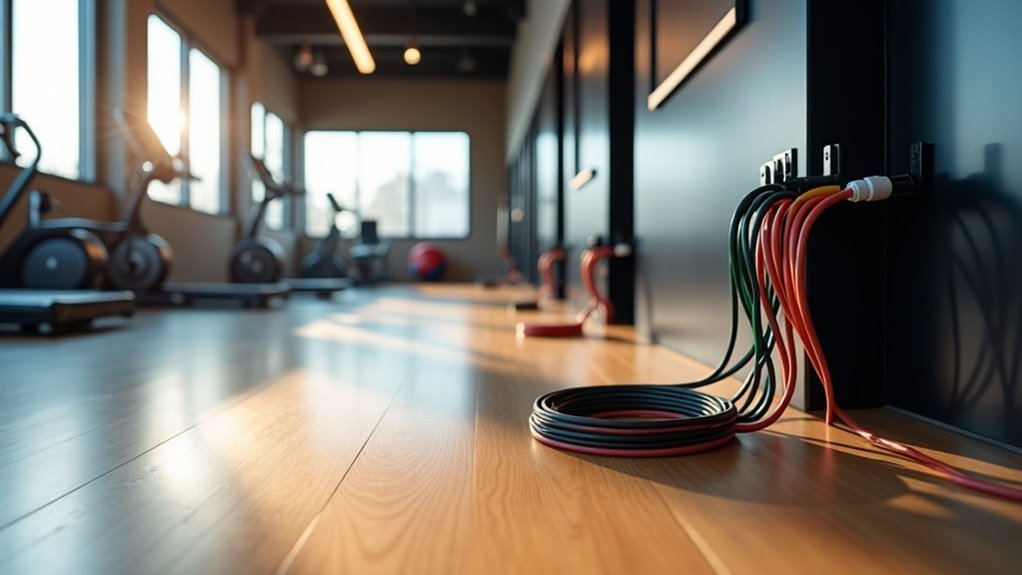
To achieve a tidy home gym, start by unplugging and sorting all cables by device type. Plan efficient routes that minimize crossings and visualize ideal placements to enhance your workout space. Secure cables with clips and sleeves to reduce tripping hazards and maintain a clean aesthetic. Mount power strips 12-18 inches above the floor near frequently used equipment for easy access, ensuring you can focus on your fitness goals without distraction. Finally, label both ends of cables for quick identification and always inspect them for wear to prioritize safety. Continue exploring strategies for even better organization to create an inspiring environment for your at-home workouts.
Key Takeaways
- Assess the layout of your home gym equipment to create effective cable routes and minimize crossing cables, ensuring a safe and organized space for your workouts.
- Utilize cable clips and adhesive mounts to secure cables along walls or gym equipment, significantly reducing tripping hazards and creating a clean workout area.
- Clearly label each cable at both ends for easy identification and maintenance, helping you keep your home gym tidy and efficient.
- Position power strips 12-18 inches off the floor for easy access, making it convenient to plug in and power up frequently used equipment.
- Regularly inspect and adjust your cable management strategies to uphold safety and organization as your home gym evolves and new equipment is added.
Unplug and Sort Your Cables
To kick off your cable management process for your home gym, unplugging all equipment and power strips is essential for safety and creates a clean workout space.
Next, sort your cables by device type and purpose, grouping similar equipment like cardio machines and strength training devices. This organization minimizes confusion and helps maintain a tidy environment, making it easier for both men and women to stay focused on their fitness goals.
Sorting cables by device type and purpose fosters organization, reduces confusion, and keeps your home gym focused and tidy.
Visualize ideal routing to avoid crossing cables, securing them along walls or under mats to prevent tripping hazards during your workouts. Create a designated area for power strips, ensuring accessibility while minimizing unnecessary crossings.
Finally, label each cable with tags to simplify identification, troubleshooting, and maintenance during your home gym operations.
Plan Your Cable Routing System
Planning an effective cable routing system is essential for maintaining a safe and organized home gym environment. Start by evaluating your equipment layout to determine efficient cable routes, ensuring cables don’t cross to minimize tangling.
Use cable clips and adhesive mounts to secure cables neatly along walls or under machines, reducing tripping risks and keeping your workout area tidy. Remember to plan for slack in movable equipment like treadmills and ellipticals.
For easy troubleshooting, label cables at both ends for quick identification. Regularly review your cable management solutions as you add or reposition equipment, ensuring an efficient workout space that fosters safety and accessibility for all users.
Prioritizing a clean and organized gym not only enhances your exercise experience but also contributes to your overall health and fitness goals.
Secure Cables With Clips and Sleeves
While you’re dedicated to reaching your fitness goals at home, securing cables with clips and sleeves can significantly enhance your workout space’s safety and organization.
Effectively utilizing cable clips ensures that cables are fastened to walls or gym equipment, reducing tripping hazards and keeping your home gym tidy.
Utilizing cable clips keeps your home gym organized and safe by reducing tripping hazards and maintaining a tidy space.
Cable sleeves offer protective coverings for multiple cables, guarding them against wear and tear while maintaining a clean and organized look.
Both options allow for customization to match your home gym’s aesthetic.
Regularly inspect and adjust these cable management solutions to ensure cables remain secure, preventing accidental disconnections and prolonging the life of your home gym equipment.
Mount Power Strips for Accessibility
Securing cables is essential for creating a safer home gym environment, but ensuring easy access to power sources is equally important for your workout routine.
Mount power strips 12-18 inches above the floor to keep them accessible while minimizing tripping hazards. Use wall attachments like double-sided tape or Velcro to secure the strips in place, ensuring they remain stable during your workouts.
Opt for power strips equipped with surge protectors to safeguard your home gym equipment and prolong its lifespan. Install them near frequently used equipment, such as treadmills and weight machines, to maintain an organized and efficient space.
This approach promotes safety while keeping your home gym tidy and functional for all users, enabling everyone to focus on their fitness goals.
Bundle and Label Cords for Clarity
Tangled cords can turn your home gym into a chaotic space, making it difficult to focus on your workout. To maintain clarity and organization, bundle cords using zip ties or Velcro One-Wraps, preventing tangling around your equipment.
Label each cord with tags or stickers for easy identification, enhancing accessibility during your workouts. Consider color-coding cables to represent different equipment types, facilitating quick troubleshooting.
Regularly inspect and reorganize bundled cables to prevent wear and guarantee safety. Store excess cable length in sleeves or boxes to keep your home gym tidy and reduce clutter, ultimately creating a more enjoyable workout environment for both men and women.
Implement Safety Measures for Cable Management
To ensure a safe home gym environment, it’s important to regularly inspect cables for any signs of wear or damage before each workout.
Maintaining proper cable routing and securing loose cables is essential to prevent tripping hazards.
Inspect Cable Conditions Regularly
Regular inspections of your home gym cable equipment are crucial for ensuring a safe workout environment.
It’s important to check cables frequently for any signs of wear, fraying, or damage, particularly in areas that see a lot of activity. Aim to conduct these inspections every 3 to 6 months and utilize a multimeter to test for continuity, ensuring all connections are functioning properly.
Consider implementing a tagging system to keep track of each cable’s maintenance history, which will help you monitor their condition and prioritize any necessary replacements.
Additionally, make sure all cables are securely fastened and routed away from walkways to reduce the risk of trips and falls, while promoting effective cable management in your home gym.
Maintain Proper Cable Routing
When managing cables in your home gym, ensuring proper routing is crucial for both safety and efficiency.
Start by implementing a reliable cable management system that keeps cords organized and secure.
Consider these strategies:
- Route cables along walls or beneath equipment to minimize the risk of tripping, making your workout space safer.
- Use cable clips or adhesive mounts to keep cords from dangling or tangling, allowing for a clean and distraction-free environment.
- Utilize cord covers to conceal cables running along the floor, enhancing both safety and the overall aesthetics of your home gym.
Secure Loose Cables Safely
Maintaining a tidy home gym goes beyond proper cable routing; securing loose cables is essential for preventing accidents and ensuring a safe workout environment.
Use cable clips and adhesive mounts to fasten cables along walls and equipment, minimizing tripping hazards. Employ cable sleeves to protect cords from wear, reducing the risk of electric shock.
Avoid running cables under mats; instead, use cable trays to keep wires visible and off the floor. Regularly inspect cables for damage and replace any frayed cords immediately.
Additionally, label power cords for quick identification, enhancing safety and efficiency in your home gym’s cable management system. Staying safe while exercising at home is crucial for both men and women looking to maintain their health and fitness.