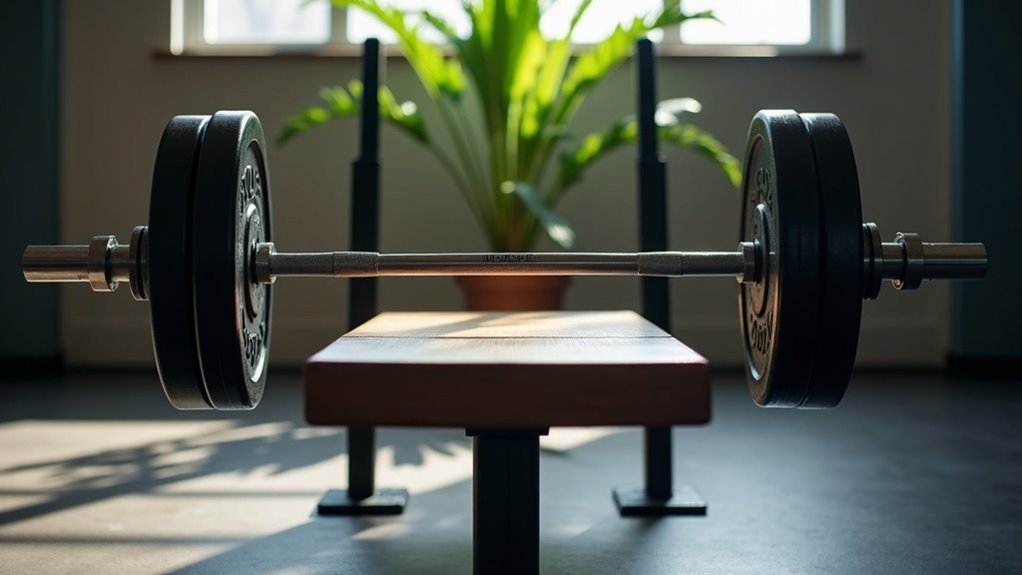
To position safeties for bench pressing alone at home, set your safety bars or pins just above your sternum. This ensures that the bar can safely touch your chest while being caught during a failed lift. It’s important to configure your setup to allow for a full range of motion. Always test it with an empty barbell to confirm stability and effectiveness. Regular adjustments are essential as your strength and technique develop. Keep reading for more tips on enhancing your safety and performance during solo workouts in your home gym.
Key Takeaways
- Set safety pins just above your sternum to catch the bar during failed lifts while allowing for a full range of motion, ensuring a safe and effective workout at home.
- Position safety bars just below chest level to provide protection against potential accidents, while still allowing them to catch the bar during your bench press sessions.
- Test your setup with an empty barbell to confirm that the safety pins effectively catch the bar during a simulated failed rep, ensuring your home gym is safe and reliable.
- Regularly adjust the height of your safety pins based on changes in your body and lifting style to maintain optimal safety during your bench pressing at home.
- Avoid using collars on the barbell for quick unloading in case of emergencies while bench pressing alone, allowing you to exercise with confidence and peace of mind.
Understanding the Importance of Safety in Bench Pressing
When you’re bench pressing at home, prioritizing safety is crucial for your workout experience. The bench press can pose risks, especially if you’re lifting without a spotter, as the barbell can potentially trap your face or neck.
Therefore, implementing safety measures is essential to protect yourself while exercising. Consider investing in a power rack with adjustable spotter arms and safety bars that can catch the bar in case of a failed lift.
Make sure to position the safeties low enough to allow for a full range of motion but high enough to effectively catch the bar in an emergency. Always test your setup with an empty bar before adding weights to ensure a secure and safe lifting experience.
This attention to safety will help you stay focused on your fitness goals while working out in the comfort of your home gym.
Essential Equipment for Safe Solo Lifting
To bench press safely on your own at home, you need the right equipment in place.
Start by selecting a power rack or squat stand with adjustable spotter arms that suit your space and workout needs.
Be sure to set the safety pin heights correctly to ensure maximum safety during your lifts.
Don’t forget to test everything with an empty bar to verify stability and readiness before diving into your workout.
With the right setup, you can enjoy a safe and effective exercise routine in the comfort of your home gym, enhancing your fitness journey.
Choosing the Right Rack
Choosing the right rack is crucial for safely bench pressing at home, whether you’re a man or woman. A sturdy power rack or squat stand with adjustable spotter arms is your best choice.
Ensure your power rack is equipped with safety pins or crash bars, as equipment lacking these features poses unnecessary risks. Position the safety arms low enough to avoid interference but high enough to catch the bar in case of a failed lift.
Always test your setup using an empty bar to confirm that the safety height adequately protects your neck and face. Look for spotter arms that provide a full range of motion while ensuring they’re properly set to catch the bar effectively, helping you to train safely and confidently in your home gym.
Setting Safety Pin Heights
Setting the safety pin heights correctly is essential for ensuring your safety during solo bench presses at home. Ideally, you should set the pins just above your sternum, allowing the bar to touch your chest without interference.
This position ensures they catch the bar in case of a failed rep, providing peace of mind as you work out in your home gym. Always test with an empty bar to confirm the height suits your range of motion and lifting style.
When adjusting, make sure the pins allow for safe bar release and body relaxation, promoting a safe and effective workout. Remember to recheck and adjust the safety pin heights whenever you change weights or before starting a new lifting session in your squat rack, ensuring a safe and effective home exercise routine for both men and women.
Testing Equipment Stability
Testing the stability of your home gym equipment is crucial for ensuring a safe solo bench pressing experience.
Begin by lowering an empty barbell onto the safety bars to verify they’re properly positioned for effective support. Simulate a failed rep and check if the safety bars catch the bar, allowing you to exit safely.
Ensure that the safety pins or arms are securely fastened and stable during your tests. Make sure the safety bars are set at a height that allows for a safe release without hindering your lift.
Regularly inspect your home gym equipment for any signs of wear, as compromised stability can increase the risk of injury during solo workouts.
Prioritizing safety will help you stay healthy and achieve your fitness goals from the comfort of your home.
Correct Setup of Safety Bars or Pins
When you’re preparing to bench press at home, the correct setup of safety bars or pins is crucial for both performance and safety. Ensure that the safety bars are positioned at a height that allows the bar to touch your chest while still being high enough to catch the bar if you fail a rep. Here’s a quick guide:
| Height Setting | Function | Adjustments Needed |
|---|---|---|
| Chest Level | Allows the bar to touch your chest | Regular checks needed |
| Low Position | Enables full range of motion | Adjust for body changes |
| Easy Release | Provides a safe exit in case of failure | Test with an empty bar |
| Stability Check | Ensures bar movement is unhindered | Inspect regularly |
| Performance Boost | Enhances lifting effectiveness | Fine-tune as needed |
Regularly inspect and adjust your safety bars to maintain optimal safety during your lifts, ensuring a safe and effective workout in your home gym.
Testing Your Safety Setup
Before you dive into your bench press routine at home, it’s crucial to ensure that your safety setup is both reliable and effective. Testing your equipment guarantees that your safety pins and barbell work together seamlessly, providing you with peace of mind while you lift.
Here’s how to conduct your tests:
- Begin with an empty barbell to check if the safety pins are set at the appropriate height for your workout.
- Simulate a failed rep by lowering the bar onto the safety pins—make sure they catch it securely to prevent any accidents.
- Practice rolling the bar towards your thighs to ensure you can exit safely if needed.
- Confirm that your setup allows you to relax while still effectively catching the barbell.
Documenting Your Safety Configuration
Documenting your safety configuration is essential for consistent and effective training at home. Be sure to record the positioning of the safety bars and any adjustments made for comfort, as this will help you maintain an ideal setup for your home gym.
Regularly testing the effectiveness of your setup ensures you’re prepared for any challenges during your solo bench presses, promoting safety and confidence in your workout routine. Keeping track of these details is vital for both men and women looking to stay healthy and maximize their exercise efforts at home.
Safety Bar Positioning
Proper safety bar positioning is crucial for individuals who exercise alone in their home gyms, as it provides an important safeguard during bench press sessions.
To ensure your safety bars are optimally placed, follow these steps:
- Position the safety bars to catch the barbell at chest level, which is essential for effective and safe lifting.
- Set the safety pins high enough to catch a failed lift, but low enough to allow for a full range of motion during your exercises.
- Test the setup with an empty barbell to confirm that the safety bars are properly positioned for your needs.
- Adjust the bars to cover the neck and face area, significantly reducing the risk of injury during your workouts.
Make it a habit to regularly review and adjust this setup to accommodate any changes in your lifting technique or routine, ensuring a safe and effective home gym experience for both men and women.
Testing Setup Effectiveness
While testing your home gym safety setup may seem tedious, it’s essential for ensuring your bench press sessions are both safe and effective.
Begin by using an empty bar to check that your safety pins are positioned correctly. Gradually lower the bar onto the safeties to confirm they’re at the right height—high enough to catch the bar during a failed lift but low enough to allow for a full range of motion during successful reps.
Practice rolling the empty bar towards your hips for a safe exit. Document your testing process and any adjustments for future reference, helping you enhance your bench pressing technique every session and maintain a safe home workout environment.
Adjusting for Comfort
To ensure your bench press setup is both safe and comfortable for your home gym, it’s crucial to adjust the safety bars correctly and document your configuration. Here’s how to make sure you’re set up right for effective workouts:
- Position the safety bars just below your chest level for optimal safety while lifting.
- Set them high enough to catch the bar in case of a failed lift, providing peace of mind.
- Confirm they’re low enough to allow for a smooth lifting motion, ensuring your workout is effective.
- Use an unloaded bar to test your setup, simulating a failed lift to verify everything is in place.
Make sure to document the height settings and testing protocols to replicate your setup consistently.
This will empower you to lift confidently every time, making your home gym experience safe and effective for both men and women on their fitness journeys.
Additional Safety Precautions to Consider
Ensuring your safety during a solo bench press session at home involves more than just setting up safety pins; it requires a thoughtful approach and thorough equipment checks.
Start by testing your safety setup with an empty bar to make sure it will effectively catch the bar without obstruction in case of a failed lift. It’s advisable to avoid using collars on the barbell; this allows for a quick and safe unloading of weights if necessary.
For extra security, you might consider using adjustable height sawhorses or safety straps.
Additionally, it’s crucial to regularly inspect all your equipment, making sure safety bars, pins, and supports are in good condition and securely fastened.
Your safety is paramount, so prioritize these precautions to create a safe and effective home workout environment.
Community Insights on Safe Bench Pressing Practices
Setting up your home gym for bench pressing is just the beginning; gaining insights from the community can greatly enhance your safety practices.
Here are key recommendations tailored for both men and women exercising at home:
- Use safety spotter arms on your squat rack for extra security, even if it limits your range of motion. This ensures that you can lift safely without a partner.
- Test safety bar heights with an unloaded bar to verify they catch the weight during a failed rep. This precaution is vital for solo lifters.
- Avoid collars on the bar to allow for quick unloading in emergencies. This simple step can make a significant difference if you ever find yourself in a tough spot.
- Consider using towing straps or chains for additional security during solo sessions. These tools can help stabilize the bar and give you peace of mind.