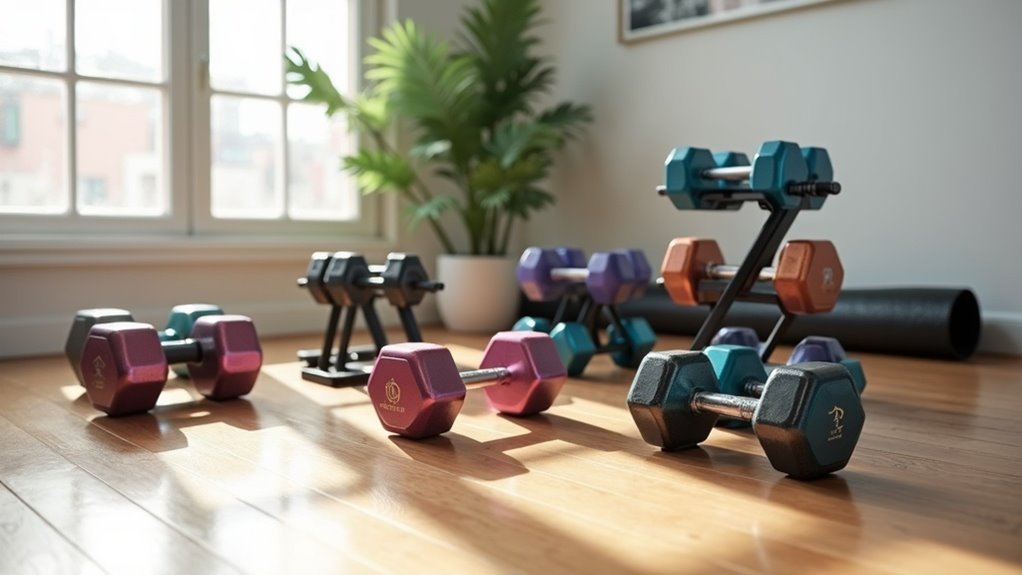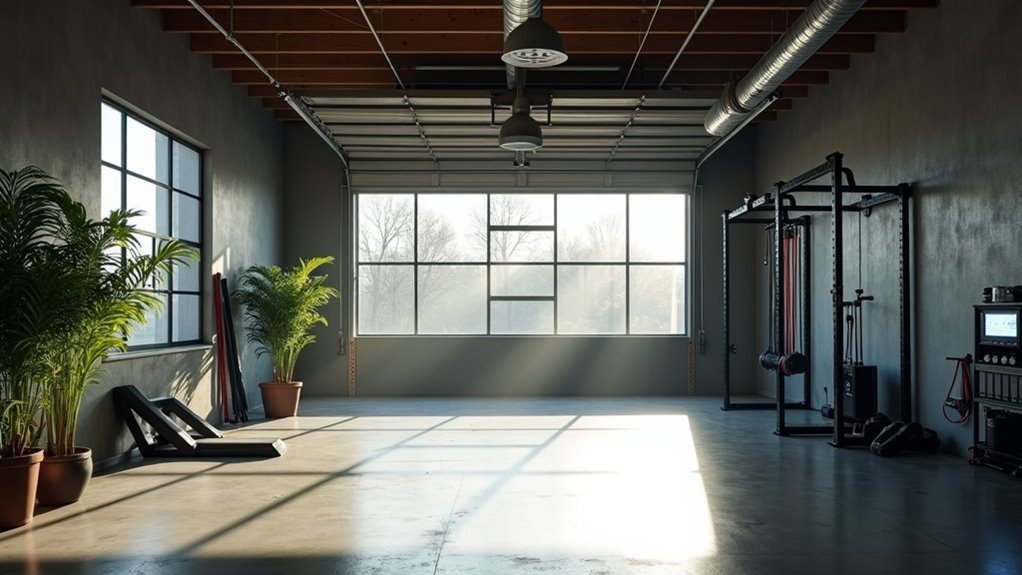
To effectively plan ventilation for your garage gym, begin by assessing the dimensions of your space and its current airflow. Aim for a minimum of 20 cubic feet per minute of airflow per person to ensure a comfortable workout environment. Installing HVLS (High Volume Low Speed) ceiling fans and an exhaust system will significantly improve air circulation. Additionally, consider incorporating air purifiers and dehumidifiers to keep the air quality fresh and maintain optimal humidity levels. Regularly clean the area to prevent mold growth, and opt for lighter color schemes to enhance light reflection. By implementing these strategies, you’ll create an inviting and healthy space for your workouts at home, tailored for both men and women. Explore more detailed solutions to find what best suits your needs!
Key Takeaways
- Evaluate the garage dimensions and current airflow systems to ensure there is enough space and ventilation for an effective workout environment.
- Install HVLS ceiling fans and exhaust systems to promote air circulation and eliminate stale air, creating a comfortable atmosphere for exercise.
- Utilize portable air purifiers and dehumidifiers to maintain optimal air quality and moisture levels, helping you breathe easier during your workouts.
- Incorporate natural ventilation by opening windows and doors for cross ventilation, allowing fresh air to flow in while you exercise.
- Regularly monitor air quality and maintain HVAC systems to ensure they are functioning efficiently, protecting your health and enhancing your fitness experience.
Importance of Proper Ventilation
Proper ventilation is crucial for creating a healthy and effective home gym environment, particularly since insufficient airflow can lead to various health issues and diminished workout performance.
To ensure optimal air circulation and maintain good indoor air quality, adequate ventilation is essential. Without it, you may encounter moisture buildup, which can promote mold growth and pose significant health risks.
Additionally, poor air quality can adversely affect your workout experience and the lifespan of your home gym equipment. Regularly assessing air quality and following recommended ventilation rates—such as 20 cubic feet per minute per person—is vital for your overall health and achieving peak performance in your fitness journey.
Assessing Your Space
Effective ventilation is crucial for creating an optimal home gym environment.
Start by assessing the dimensions of your garage to determine the available space and ceiling height for your workout equipment.
Look out for any obstructions, such as support beams or windows, that could impede airflow.
Check the existing airflow by identifying air intakes and exhaust systems, and consider the possibility of natural light and fresh air coming through openings.
Your goal is to foster a comfortable workout atmosphere, which may involve strategically placing ceiling fans or integrating an HVAC system based on your findings.
This foundational step is essential for maintaining a healthy and invigorating space for your home workouts.
Ventilation Solutions and Equipment
To ensure optimal air circulation in your home gym, it’s crucial to consider various ventilation solutions and equipment that meet your specific needs.
Installing HVLS ceiling fans, like the Lincoln Street fan by MacroAir, can significantly enhance air circulation and reduce humidity, creating a more comfortable workout environment.
Mechanical systems, such as exhaust fans, play a vital role in actively removing stale air while bringing in fresh air, which is essential for maintaining good indoor air quality during your workouts.
For smaller spaces, portable air purifiers and dehumidifiers are effective in managing humidity levels.
Regular maintenance of HVAC systems, including filter replacements and inspections, is important for achieving peak performance.
Additionally, you can utilize natural ventilation by opening windows and doors to create effective cross ventilation, ensuring your home gym remains a refreshing place to exercise.
Maintaining Air Quality
How can you ensure the air quality in your home gym remains optimal for your workouts? Maintaining good air quality is crucial for preventing respiratory issues and fatigue, allowing you to perform at your best.
Here are four essential steps to consider:
- Utilize air quality monitors to keep an eye on pollutants and humidity levels in your home gym.
- Install ceiling and exhaust fans to enhance ventilation, ensuring a steady flow of fresh air during your workouts.
- Regularly service HVAC systems and change filters to improve efficiency and lower energy costs.
- Keep your workout space clean by regularly sanitizing rubber mats and equipment to prevent moisture and mold growth.
Enhancing Comfort During Workouts
Maintaining ideal air quality is crucial for creating a comfortable workout environment in your home gym. To enhance your workout experience, consider installing high-powered fans that improve ventilation and reduce humidity levels.
Combine natural ventilation options, such as opening garage doors, with mechanical fans for optimal airflow. Additionally, using a dehumidifier can effectively manage moisture, especially when humidity levels exceed 70%.
To further enhance comfort, opt for lighter-colored paints and quality rubber flooring, as these can reflect sunlight and keep your gym cooler.
Choosing lighter-colored paints and quality rubber flooring can significantly enhance comfort by reflecting sunlight and maintaining a cooler gym environment.
Scheduling your workouts during early morning or late afternoon can help you avoid peak heat, ensuring a more enjoyable exercise environment. This strategic approach also maximizes your available floor space for various activities, making your home gym a welcoming haven for fitness enthusiasts of all levels.