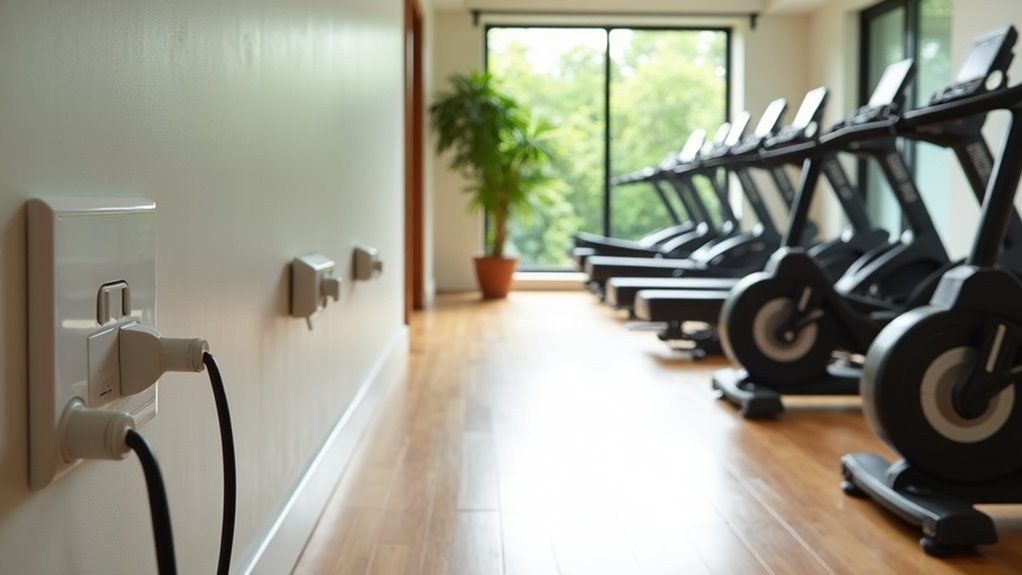
When planning electrical outlets for your home gym cardio equipment, it’s essential to assess the electrical needs of each machine. Ensure you install dedicated circuits, ideally 120 volts and 20 amps, to prevent overload and maintain safety during your workouts. Position outlets 2-3 feet in front of each machine for easy access and to promote a clutter-free environment. Additionally, use GFCI protection to enhance safety around your exercise area. Avoid using extension cords, and make it a habit to inspect cords regularly for any signs of wear or damage. To accommodate future growth and potential equipment upgrades, strategically place additional outlets throughout your gym space. By optimizing your gym’s electrical setup, you can create a safe and efficient environment that supports your fitness journey at home.
Key Takeaways
- Ensure each cardio machine in your home gym has a dedicated GFCI-protected circuit of at least 120 volts and 20 amps to prevent overload risks and keep your workouts safe.
- Position outlets 2-3 feet in front of each machine to reduce cord clutter and enhance safety, allowing for a clean and organized workout space.
- Avoid using extension cords; plan for permanent outlet placements during the design phase to accommodate all your equipment effectively.
- Regularly inspect electrical cords and outlets for wear to ensure compliance with safety standards and minimize the risk of electrical shock while you focus on your fitness goals.
- Anticipate future growth by installing additional circuits and strategically placing outlets for easy access and organization, making it convenient to upgrade your home gym as you progress in your fitness journey.
Assessing Electrical Needs for Cardio Equipment
When setting up your home gym with cardio equipment, it’s crucial to evaluate the electrical needs of each machine. Popular options like treadmills and ellipticals typically require dedicated circuits of at least 120 volts and 20 amps to function safely and efficiently.
Make sure to calculate the total electrical load of all your cardio machines to ensure it stays within your home’s electrical panel capacity, preventing any risk of overload. For safety and compliance, especially in areas prone to moisture, install GFCI receptacles.
It’s wise to consult a licensed electrician to confirm that your existing wiring can handle these demands and to ensure everything is installed according to local regulations. Prioritizing these electrical considerations will help you create a safe and effective workout space at home.
Ideal Outlet Placement for Treadmills and Ellipticals
When setting up electrical outlets for your home gym, especially for treadmills and ellipticals, it’s best to position them at the front of the machines, around 6 to 8 feet away.
This strategic placement minimizes cord clutter and ensures you maintain the essential 3 feet of safety space behind the equipment.
By optimizing outlet placement, you not only enhance safety but also create a more organized and inviting workout space.
This is crucial for both men and women looking to stay healthy and motivated while exercising at home.
Front Outlet Positioning
To create a safe and functional workout environment at home, it’s essential to strategically position electrical outlets in front of your treadmills and ellipticals.
Ideally, install outlets 2-3 feet in front of your cardio equipment to ensure easy access while minimizing trip hazards. Each machine should have its own dedicated outlet to prevent overload and tripped breakers, as they often draw significant power.
Proper front outlet positioning not only enhances safety but also helps manage cords effectively, contributing to a tidy home gym aesthetic.
Planning for these outlets during your design phase is crucial for an efficient and organized workout space, allowing you to focus on your fitness goals.
Safety Space Requirements
Ensuring you have adequate safety space around your home cardio equipment is crucial for both effective workouts and injury prevention.
For treadmills, it’s important to maintain at least three feet of safety space behind to prevent falls. Position electrical outlets conveniently just in front of treadmills and ellipticals to minimize cord clutter and reduce tripping hazards.
When placing ellipticals that require rear access, you can position them closer to walls while still following outlet placement guidelines. Avoid running cords beneath your cardio machines, as this can create safety hazards and potentially damage the equipment.
Importance of Dedicated Circuits
When planning your home gym, it’s crucial to understand the power requirements of your cardio equipment.
Installing dedicated circuits is key to preventing circuit overload, ensuring that each machine operates efficiently without the risk of tripped breakers or electrical hazards.
By incorporating dedicated circuits, you not only enhance the performance of your workout equipment but also safeguard your investment in high-energy machines.
This is essential for both men and women who are committed to creating an effective and safe home exercise environment.
Equipment Power Requirements
Dedicated circuits are crucial for the safe and efficient operation of home gym equipment, such as treadmills, ellipticals, and stationary bikes. Each piece of exercise equipment generally requires its own 120-volt circuit with a minimum of 20 amps. This setup helps manage the electrical load, reducing the risk of tripped breakers and potential fire hazards. Additionally, dedicated circuits protect sensitive electronics within your equipment, extending their lifespan by reducing the impact of power surges. It’s important to note that safety regulations require that any equipment drawing over 10 amps should be connected to dedicated circuits. By planning your outlets appropriately, you can optimize your home gym layout while minimizing cord clutter, making your workout space more inviting and efficient.
| Equipment Type | Voltage | Amps |
|---|---|---|
| Treadmill | 120V | 20 |
| Elliptical | 120V | 20 |
| Stationary Bike | 120V | 15 |
Preventing Circuit Overload
Choosing dedicated circuits for your home gym equipment is crucial in preventing circuit overload and ensuring a safe workout environment. Heavy-duty machines like treadmills and ellipticals typically draw more than 10 amps, which can pose electrical hazards if connected to general-use circuits.
Consider these key points for your home gym setup:
- Each machine should have its own 120-volt, 20-amp circuit to handle the power requirements.
- Dedicated circuits help reduce the risk of overheating and fire, ensuring your workouts are safe.
- Protect your equipment against surges and fluctuations in the power supply, keeping your workouts uninterrupted.
- Using dedicated circuits can extend the lifespan of your machines, allowing you to enjoy your fitness journey for years to come.
- Compliance with local electrical codes is essential for safety and functionality, giving you peace of mind as you focus on your health and fitness goals.
Safety Considerations for Gym Electrical Outlets
Ensuring safety in home gym environments requires thoughtful planning of electrical outlets for cardio equipment. All outlets should be GFCI protected to minimize electrical shock risks, especially in areas where moisture is present.
Dedicated circuits are essential for high-demand cardio machines like treadmills, which should be connected to a separate 120-volt circuit with at least 20 amps to prevent overloads.
Dedicated circuits are crucial for high-demand cardio machines, requiring a 120-volt source with at least 20 amps for safe operation.
Positioning outlets behind machines helps reduce tripping hazards and keeps your workout space organized. Regular inspections of electrical installations ensure compliance with safety standards and local codes.
It’s also important to avoid using extension cords for cardio equipment, as they can compromise power stability and introduce additional safety risks.
Prioritizing these safety measures will help create a secure and efficient home workout environment.
Cord Management Solutions
While you focus on your workout, effective cord management is crucial for maintaining a safe and organized home gym environment. Long cords from exercise equipment can create trip hazards; however, with the right solutions, you can manage them safely and effectively.
Consider the following strategies:
- Install floor receptacles in front of your cardio machines for easy access
- Use cable covers to shield and neatly organize cords
- Utilize clips to secure cords against walls, keeping them out of the way
- Conduct regular inspections for any wear and tear on cords
- Plan outlet placements to minimize cord length, enhancing your workout space
Future-Proofing Your Gym Electrical Setup
Effective cord management not only enhances safety but also lays the groundwork for future modifications to your home gym. To ensure your electrical setup is future-proof, consider these essential strategies:
| Strategy | Purpose | Benefits |
|---|---|---|
| Install additional circuits | Accommodate new equipment as you grow | Prevents overloading existing circuits, ensuring safety during workouts |
| Integrate smart technology | Easily upgrade lighting and climate control | Enhances energy efficiency, keeping your gym environment comfortable and motivating |
| Strategically place outlets | Minimize reliance on extension cords | Simplifies equipment relocation, making it easier to switch up your workout routine |
| Review and update regularly | Stay adaptable to fitness trends | Guarantees long-term functionality and safety, allowing you to keep your gym current |