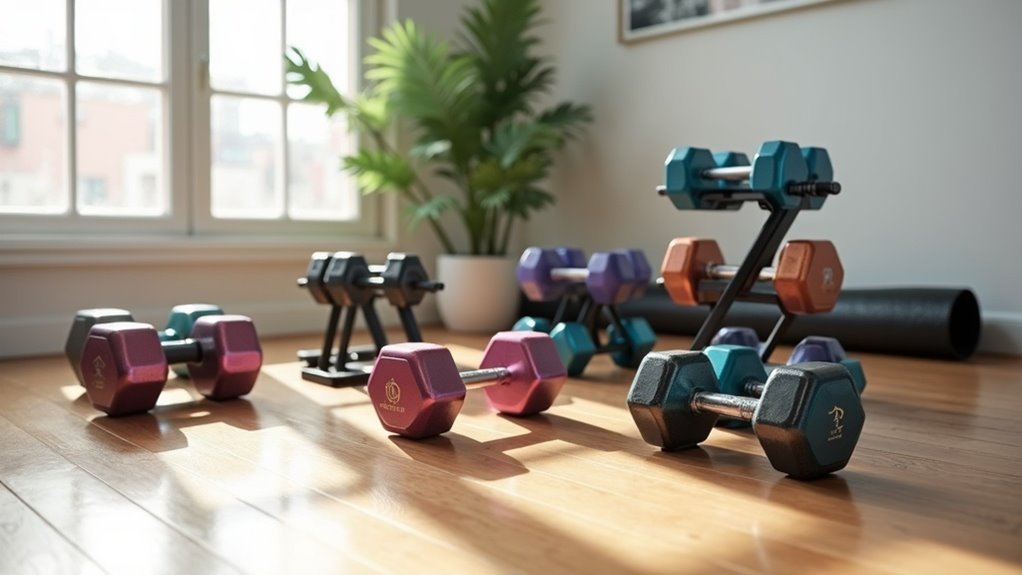
To plan an effective home gym layout, start by assessing your available space. Aim for a minimum size of 9ft x 16ft to ensure comfort and functionality. Select essential equipment that aligns with your fitness goals, whether you’re focusing on strength training, cardio, or flexibility. Organize your equipment for easy access and create distinct zones for different workout types. Ensure there’s at least 3 feet of clearance around each piece of equipment for safety and movement. Additionally, optimize your storage with shelves and bins to maintain a clutter-free environment. With a well-thought-out setup, you’ll be motivated to exercise regularly and can explore more ways to enhance your home fitness journey.
Key Takeaways
- Assess your workout space to ensure a minimum size of 9ft x 16ft for effective equipment placement and movement, accommodating both men and women.
- Select essential equipment based on your fitness focus, considering both must-have and nice-to-have items for versatility, catering to diverse workout preferences.
- Create distinct zones for cardio, strength training, and yoga, ensuring 3-4 feet of clearance around each piece of equipment to promote a comfortable and safe exercising environment for everyone.
- Maintain safe traffic flow by planning pathways at least 2 feet wide and positioning high-traffic equipment strategically to facilitate seamless movement.
- Implement effective storage solutions like shelving and bins to keep your workout area organized and clutter-free, making it easy for both men and women to find and use their equipment.
Assessing Your Space
How can you maximize your home gym space? Start by evaluating your designated workout area. Measure your space, aiming for dimensions of at least 9ft x 16ft, which is ideal for both men and women.
Use tape to outline the floor and visualize where gym equipment will go, ensuring there’s enough room for movement and exercises. Prioritize open areas in your gym layout for total body workouts and cardio sessions, while positioning larger items like treadmills near power outlets for convenience.
Remember to plan for future needs, allowing space for potential additions like a functional trainer or weights. Consider using apps like FloorPlanner to create an effective home gym design that not only optimizes your workout area now but can also adapt as your fitness journey progresses.
Equipment Selection and Organization
Selecting the right equipment is essential for creating an effective home gym that aligns with your fitness goals, whether you’re a man or a woman. Start by identifying your primary focus—whether it’s strength training with barbells and benches or cardio with treadmills and resistance bands.
Choosing the right equipment is vital for a home gym that meets your fitness goals and preferences.
Create a must-have list, and consider nice-to-have items for future versatility that cater to your personal fitness preferences.
To enhance your workout experience, prioritize gym organization by grouping similar equipment, such as weights and kettlebells, to improve accessibility.
Utilize shelving units or pegboards for smaller accessories, which will help keep clutter at bay and make your space more inviting. Good lighting is also crucial for creating an atmosphere that motivates you to exercise regularly.
Investing in quality, durable equipment ensures that your workouts are effective and that your gear lasts longer, ultimately saving you money in the long run.
Designing Zones for Different Activities
To create an effective home gym tailored for both men and women, it’s crucial to design distinct zones for different activities, ensuring each area meets specific workout needs.
Consider establishing a cardio zone equipped with machines like treadmills and bikes, a strength training zone dedicated to weight training, and a yoga area for calming stretches.
Aim for 3-4 feet of clearance around workout equipment to facilitate easy movement and avoid injuries. Use mats to visually separate these zones while enhancing safety during workouts.
Multi-purpose areas can also accommodate bodyweight exercises, making the most of your space.
Don’t overlook an accessory zone for items like resistance bands and dumbbells, helping keep your gym organized and functional.
Ideally, position your gym to benefit from natural light, as it can boost your motivation and overall workout experience.
Ensuring Safe Traffic Flow
When designing your home gym, prioritizing safe traffic flow is crucial for an effective workout experience. Ensure there’s at least 3 feet of clearance around each piece of equipment to allow for safe movement and to minimize the risk of accidents.
Plan pathways with a minimum width of 2 feet to accommodate loading bars and provide ample space for spotting, which will help facilitate smooth transitions between exercises. Position high-traffic equipment, such as weights and benches, in locations that won’t hinder movement.
Utilize mats to delineate workout zones, helping to guide activities and establish boundaries. Regularly evaluate your layout based on actual usage patterns to ensure ongoing safety and accessibility for your home gym, making it an inviting space for both men and women to stay healthy and fit.
Implementing Storage Solutions
As your home gym comes together, effective storage solutions are crucial for maintaining an organized and efficient workout environment for both men and women.
Utilize shelving units, pegboards, and racks to neatly store smaller items like weights and resistance bands, ensuring your gym remains clutter-free. Embrace vertical storage options to maximize floor space by mounting items on walls, which enhances accessibility in your workout area.
Maximize your workout space by using shelving, pegboards, and vertical storage to keep your gym organized and accessible.
Implement storage bins or stackable totes for easy organization of accessories, keeping everything within reach for your next workout. Designate specific storage areas to keep workout zones clear, allowing for smooth transitions between exercises.
Regularly evaluate your storage needs as your home gym evolves, adapting your solutions to stay on top of your fitness journey.