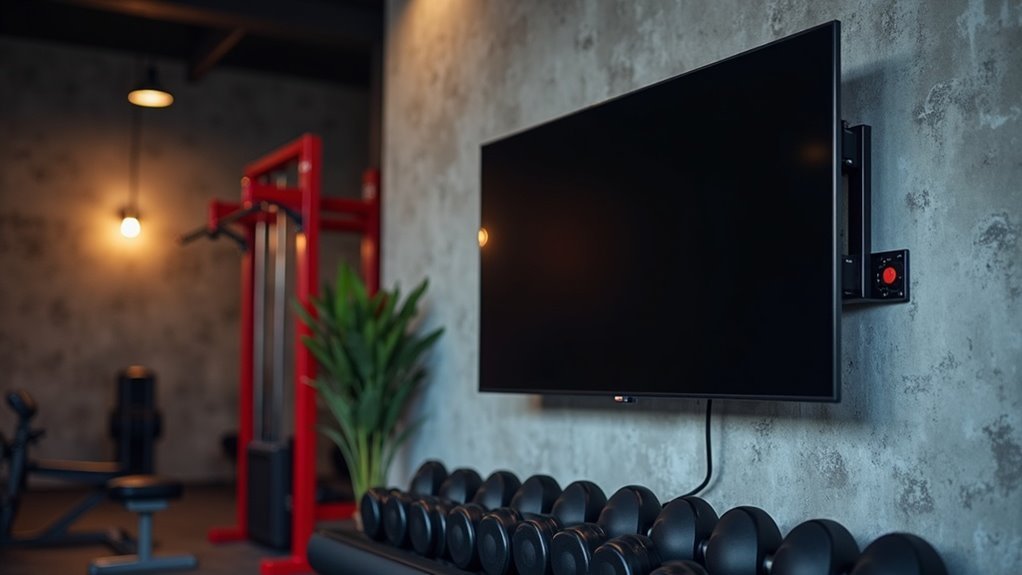
To mount a TV safely in your home gym, begin by assessing your wall’s structure and using a stud finder to locate the studs for secure mounting. Select a mount that is appropriate for the size and weight of your TV to ensure safety during workouts. Clear the area of any obstacles and gather the necessary tools for installation. Carefully mark the locations for pilot holes, ensuring that everything is level and straight for optimal viewing during your exercise sessions. After installing the mount, securely attach your TV and manage the cables to prevent any tripping hazards while you work out. It’s essential to regularly check the stability of the installation to ensure it remains safe and secure as you pursue your fitness goals.
Key Takeaways
- Assess the wall composition to determine the appropriate mounting technique and ensure you have enough support for the TV’s weight, which is essential for creating an inspiring workout environment.
- Choose a TV mount rated for double the TV’s weight and ensure it aligns with the VESA pattern, so you can enjoy your favorite fitness videos and workout programs without worry.
- Prepare the work area by clearing obstructions and inspecting for damage, ensuring a safe environment for installation and promoting a focused exercise space.
- Use a stud finder to locate and mark studs, and drill pilot holes to secure the mount properly, providing stability as you work on your fitness goals.
- Conduct regular maintenance checks for loose screws and wall damage, ensuring the TV remains securely mounted while you stay motivated and engaged in your home workouts.
Assessing Wall Composition for TV Mounting
When setting up a home gym, understanding your wall’s composition is essential for safely installing equipment. Start by evaluating the wall material—drywall, concrete, brick, or tile—as each requires different mounting hardware and techniques to ensure stability for gym equipment.
Use a stud finder to locate wall studs; they provide the best support, since drywall alone can only hold 50-100 pounds per stud. For drywall installations, consider using wall anchors or toggle bolts if you can’t mount directly to studs, especially when hanging items like mirrors or shelves for your workout gear.
Choosing the Right TV Mount
Choosing the right TV mount is crucial for ensuring both safety and optimal viewing in your home gym. Start by checking the size and weight of your TV, and choose a mount rated to support at least double its weight for added security.
Decide whether you prefer a fixed, tilting, or full-motion wall mount based on your workout routines and viewing preferences. It’s important to ensure that the mount’s VESA screw-hole pattern aligns with your TV for a secure fit.
Additionally, consider the type of wall you’ll be installing the mount on; use wall anchors for drywall and specific techniques for concrete walls.
Lastly, make sure to use quality hardware to prevent any shifting, particularly if your TV is near a power outlet, allowing you to focus on your fitness goals without distractions.
Preparing the Work Area for Safety
After selecting the right TV mount for your home gym setup, the next step is to prepare your work area for a safe installation. Clear any obstructions to create a spacious environment for your tools and prevent tripping hazards, especially if you have fitness equipment nearby.
Inspect the wall surface for cracks, water damage, or weak areas that could undermine stability, as a secure mount is essential for your TV to withstand any intense workout sessions nearby. Use a stud finder to locate wall studs accurately, marking their positions for secure anchoring.
Gather essential tools like a level, drill, and mounting hardware to streamline your process and ensure everything is aligned correctly.
Finally, always wear safety gear, such as gloves and eyewear, to protect yourself from potential injuries during the installation, so you can focus on your fitness goals without worry.
Marking and Drilling Pilot Holes
Marking and drilling pilot holes is a crucial step in ensuring a secure installation for your home gym equipment. Start by using a stud finder to accurately locate the studs in your wall and mark their edges clearly. Measure the desired height for your equipment, ensuring it is positioned for optimal use and comfort, and use a level to confirm everything is straight before finalizing your marks. Drill small pilot holes into the center of the studs to prevent wood splintering. If your equipment requires additional support, repeat this process for any extra studs.
| Step | Action |
|---|---|
| Locate Studs | Use a stud finder for accuracy |
| Measure Height | Position at a comfortable workout level |
| Drill Pilot Holes | Center holes for secure anchoring |
Attaching the TV Mount Securely
Attaching gym equipment securely is crucial for ensuring both safety and functionality in your home workout space.
First, make sure to anchor any heavy equipment, such as weight racks or benches, to wall studs using high-quality lag bolts, as drywall alone won’t support the weight effectively.
Choose hardware rated for at least twice the equipment’s weight for added stability.
Follow the manufacturer’s instructions carefully and use a level to confirm everything is even and properly aligned.
After you’ve installed the equipment, test its stability by gently applying pressure to ensure it’s securely fastened.
If you’re unsure about the installation process, consider hiring a professional for peace of mind and to ensure your home gym is safe and secure.
Mounting the TV and Organizing Cables
When mounting a TV in your home gym, it’s crucial to position it for optimal viewing comfort. Ensure that the bottom of the screen is at or below eye level when seated, while the top remains visible when standing.
Select a sturdy wall mount that can support the weight of your TV, using heavy-duty hardware rated to hold at least double the TV’s weight for added safety.
Before you mount the TV, take the time to connect and organize your cables using raceways or concealment kits. This keeps your gym space tidy and minimizes tripping hazards, allowing you to easily access HDMI inputs without sacrificing the aesthetic of your workout environment.
Enjoy your workouts with the right setup!
Regular Maintenance and Stability Checks
To ensure your home gym equipment remains safe and effective, it’s crucial to perform regular maintenance and stability checks.
Make sure to inspect all equipment for loose screws or signs of wear, as these can compromise safety. Conduct visual checks for any damage to floors or walls that could affect the stability of your workout area over time.
Schedule semi-annual inspections to confirm that all equipment is properly installed and can support your workout routines, especially after moving or reconfiguring your gym space.
Maintain proper cable management for any electronic devices to prevent tripping hazards and ensure all connections are secure for optimal performance.
Regularly clean the area to reduce dust buildup and create a safe, motivating environment for your home workouts.