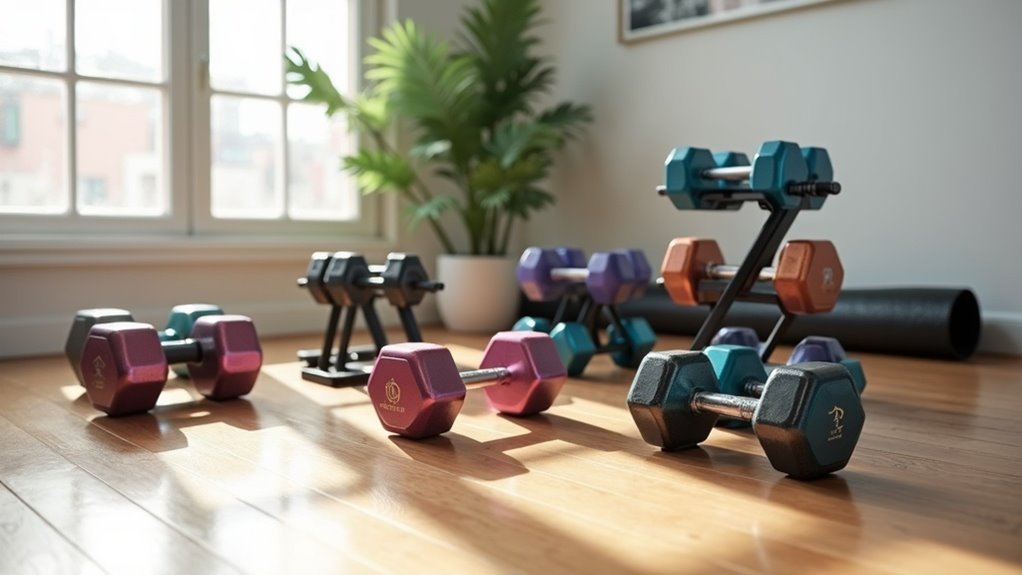
Creating your own home gym equipment is an excellent way to save money while personalizing your fitness journey. Begin by gathering essential tools such as drills and saws, along with materials like pipes and plywood. You can also get creative and use everyday household items, such as water jugs or filled backpacks, as makeshift weights. For those looking to enhance their strength training, consider building a sturdy pull-up bar using galvanized steel pipes and Kee Klamp fittings for added stability. Always prioritize safety during the construction of your gear, and explore additional tips and designs to elevate your home gym experience. Whether you’re a man or woman, setting up a customized workout space at home can help you stay healthy and committed to your fitness goals.
Key Takeaways
- Use readily available materials like pipes and wood to build customized and cost-effective gym equipment tailored to your fitness needs, perfect for both men and women looking to enhance their home workouts.
- Prioritize safety by using high-quality materials, ensuring stable construction, and regularly inspecting equipment for wear and tear to support a secure exercise environment for everyone.
- Follow detailed plans and utilize essential tools like drills and saws to streamline the construction process of your DIY gym equipment, making it easier for anyone to create a personalized workout space.
- Get creative with household items such as water jugs and luggage for adjustable weights and resistance training exercises, allowing you to incorporate various fitness levels and preferences.
- Engage with your community to collaborate on building functional fitness equipment and share knowledge and motivation, fostering a supportive environment for both men and women in their fitness journeys.
Understanding the Benefits of DIY Gym Equipment
When you decide to create your own home gym equipment, you’re not just saving money; you’re also gaining the ability to tailor your workouts to align with your personal fitness journey.
DIY gym equipment offers significant cost savings by utilizing readily available materials like pipes and wood, making it budget-friendly for both men and women. These customizable solutions empower you to design equipment that meets your specific fitness needs.
Moreover, many projects require only basic tools, making fitness accessible to everyone. Engaging in these builds promotes sustainability and resourcefulness, encouraging you to think creatively while crafting equipment that enhances your training experience and supports your health goals at home.
Essential Tools and Materials for Home Gym Projects
To successfully tackle your home gym equipment projects, you’ll need a few vital tools and materials that make the process both efficient and effective. Power tools such as drills and saws, along with basic hand tools like screwdrivers, are essential for any DIY enthusiast. For durable materials, consider using Kee Klamp fittings, industrial pipes, cinder blocks, and plywood to create sturdy support structures. Always prioritize safety by selecting high-quality materials that can handle your intended usage. A clear and detailed plan will help streamline your project, ensuring that your gym equipment meets all your fitness needs and supports your journey towards a healthier lifestyle.
| Essential Tools | Materials | Safety Tips |
|---|---|---|
| Power drills | Kee Klamp fittings | Use safety goggles |
| Saws | Industrial pipes | Confirm stability |
| Screwdrivers | Cinder blocks & plywood | Check weight capacity |
Creative Uses for Household Items in Workouts
Creating an effective home gym doesn’t require a hefty investment in expensive equipment. You can easily utilize common household items for impactful workouts.
Fill water jugs or milk containers with water or sand to create adjustable free weights, ideal for exercises like curls or squats. For resistance training, use luggage packed with books or canned goods as makeshift weights.
A sturdy table can serve as a platform for inverted bodyweight rows, helping to enhance your upper body strength. Buckets filled with sand are excellent for performing single-leg Romanian deadlifts, improving your balance and lower body strength.
Lastly, you can anchor towels to a door to perform chin-ups, providing a unique twist on bodyweight resistance training to incorporate into your routine.
Step-by-Step Guide to Building a Pull-Up Bar
Building a pull-up bar at home is an excellent project that can elevate your workout routine and help you stay fit without hefty expenses.
To start, gather galvanized steel pipes and adjustable pipe fittings, ensuring the height is at least 7-8 feet to accommodate various exercises. Use Kee Klamp fittings for straightforward assembly and disassembly, allowing you to customize the height to suit your preferences.
Gather galvanized steel pipes and Kee Klamp fittings, ensuring a height of 7-8 feet for versatile exercise options.
Incorporate horizontal pipe bars to add versatility, enabling both pull-ups and dips for a comprehensive upper body workout. It’s crucial to ensure proper installation, especially for freestanding designs, to prevent any movement during use.
This DIY pull-up bar can support up to 300 lbs, making it a reliable and effective addition to your home gym equipment for both men and women.
How to Construct a Homemade Dip Station
To construct your homemade dip station, you’ll need some basic materials and tools, including 2x4s, Kee Klamp fittings, and pipe bars.
Assembling your dip station is a straightforward process, allowing you to create a sturdy frame that supports various exercises essential for building upper body strength.
Let’s break down the required materials and go through a step-by-step guide to help you set up your dip station efficiently, so you can elevate your home workout routine and stay healthy from the comfort of your home.
Required Materials and Tools
When you’re ready to build your own homemade dip station, gathering the right materials and tools is crucial for a sturdy and safe setup that supports your fitness journey.
Start with 2×4 lumber for the frame, ensuring a solid foundation, and use Kee Klamp fittings for enhanced stability. Pipe bars are essential for the functionality of your dip station, fitting securely into circular grooves. Remember to include collar fittings to keep the bars in place while you work out.
One of the great advantages of a DIY dip station is that you can customize its height to match your preferences, making it adaptable for various exercises.
For even more versatility, consider adding horizontal pipe bars, perfect for incorporating pull-ups into your routine, helping you achieve your fitness goals from the comfort of home.
Step-by-Step Assembly Guide
Constructing your own dip station for your home gym is a rewarding project that can elevate your strength training and upper body workouts.
Follow these straightforward steps to create a sturdy and functional piece of equipment.
Start by cutting 2x4s for the frame, ensuring you use Kee Klamp fittings for added stability.
Next, cut circular grooves into the wood supports for the pipe bars, and make sure to use collar fittings to prevent any movement.
To enhance versatility, incorporate additional horizontal pipe bars for pull-ups, allowing for a wider range of exercises.
As you assemble your dip station, securely connect all components using flange fittings to ensure safety during your workouts.
Aim for a weight capacity of around 300 lbs, and adjust your materials if necessary to accommodate your needs.
This DIY dip station is an excellent addition for any home gym enthusiast looking to enhance their fitness routine and achieve their health goals.
Designing a Versatile Weight Rack With Pipes
Designing a versatile weight rack with pipes can be an exciting project that elevates your home gym experience while providing reliable storage for your weights.
Whether you’re a fitness enthusiast or just starting out, building a sturdy DIY pipe weight rack using industrial pipes and cinder blocks for a solid base is a fantastic option. You can customize the height and tiers to fit your specific workout needs, maximizing storage efficiency and making your exercise routine more enjoyable.
Utilizing Kee Klamp fittings allows for easy assembly, ensuring that your weight rack is adaptable to your evolving fitness goals.
It’s essential to pay close attention to weight distribution and stability, as your rack should support around 300 lbs, accommodating a variety of weights for both men and women.
To make informed decisions, consult a handy pipe selection guide to choose the right pipe sizes and fittings that prioritize durability and functionality.
With the right setup, your home gym can be both practical and motivating, helping you stay healthy and fit in the comfort of your own space.
Tips for Safety and Stability in DIY Equipment
Building a weight rack is just the beginning of creating a safe and effective home gym for everyone. Focus on using high-quality materials like heavy-duty galvanized steel for enhanced stability, especially for equipment like pull-up bars.
Secure all fittings with reliable connectors such as Kee Klamp to guarantee structural integrity. Follow detailed construction plans closely and regularly inspect your DIY equipment for wear or looseness.
For in-ground bars, ensure proper anchoring to prevent swaying, while freestanding structures should have a wide base for added stability.
Finally, test your equipment with incremental weight loads to confirm sturdiness before full use, prioritizing your safety and well-being.
Whether you’re a man or woman, a well-built home gym can help you stay healthy and fit from the comfort of your own space.
Inspiring Examples of Custom Gym Equipment Designs
When you’re ready to elevate your home workouts, consider unique DIY designs that cater to your fitness aspirations.
Functional fitness creations, such as adjustable pull-up bars and robust dip stations, can significantly enhance your routine while being budget-friendly.
Let’s delve into how you can create custom equipment that isn’t only practical but also specifically tailored to meet the needs of both men and women looking to stay healthy and fit from the comfort of their own homes.
Unique DIY Designs
Transforming your home into a personalized fitness sanctuary is entirely achievable with unique DIY gym equipment.
Here are three inspiring projects to elevate your workout routine, perfect for both men and women:
- Construct a DIY freestanding pull-up station using Kee Klamp, allowing for adjustable heights—ideal for group workouts or personal training sessions.
- Create homemade dip stations with 2x4s and pipe fittings, ensuring stability and the flexibility to customize for a variety of exercises, catering to all fitness levels.
- Develop a DIY gymnastics bar for enjoyable practice sessions, using Kee Klamp for added durability and support.
These distinctive DIY designs not only enhance your home gym but also accommodate advanced training needs, including personalized weightlifting platforms tailored specifically for your fitness goals.
Functional Fitness Creations
Custom gym equipment designs can elevate your home workouts into highly effective training sessions, perfect for both men and women.
For instance, a DIY pull-up bar can reach an impressive 10 feet tall, with adjustable height options tailored to your preferences. You can also construct a homemade dip station using sturdy 2x4s and Kee Klamp fittings, making for a budget-friendly DIY project that doesn’t compromise on quality.
These designs not only enhance your functional fitness routine but also foster a sense of community through shared fitness projects, such as group pull-up structures.
Explore advanced options like a weightlifting platform that serves as a squat stand, allowing for versatile exercise routines while keeping costs manageable.
Embrace your creativity on the path to a healthier, fitter lifestyle at home!