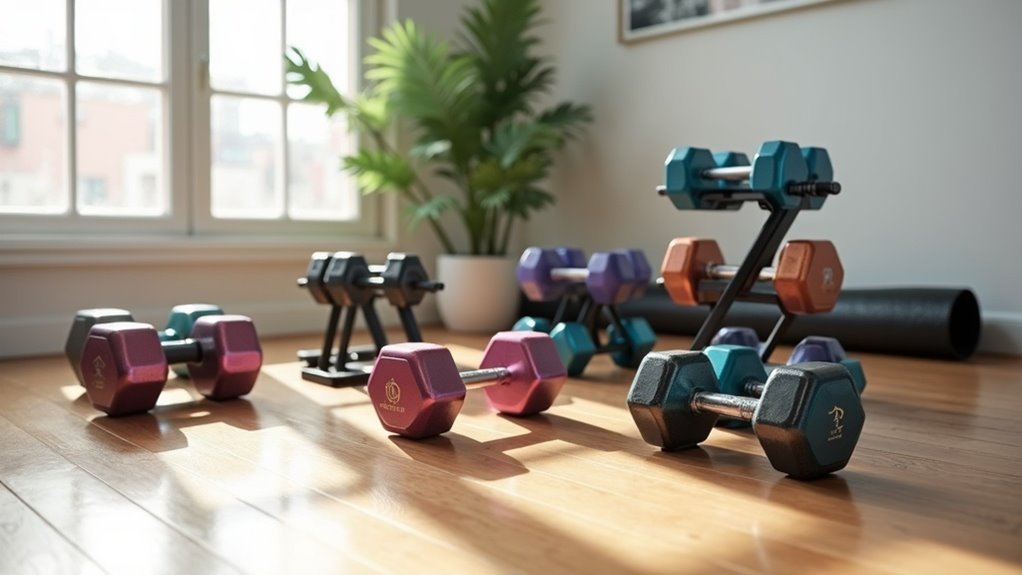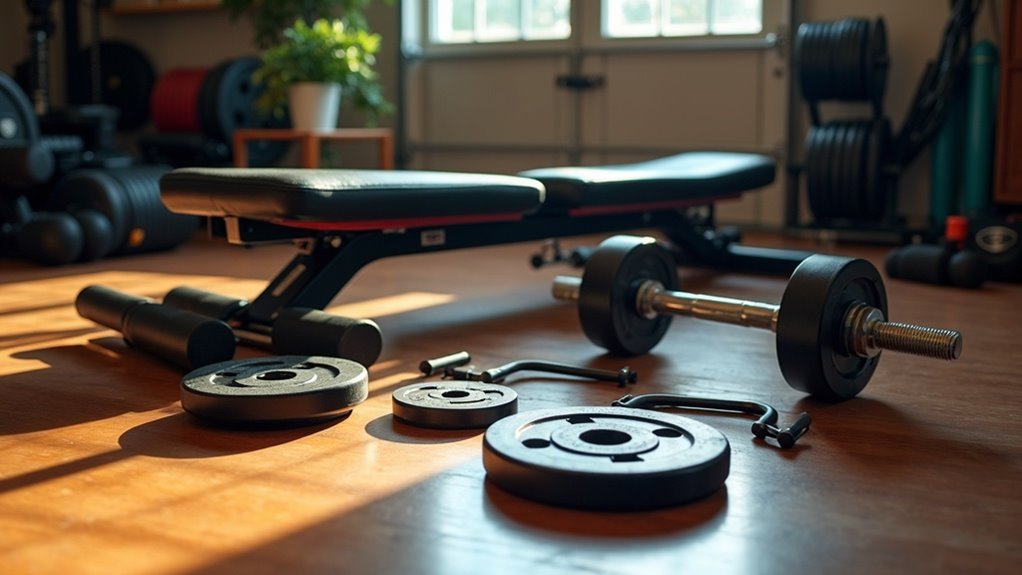
To disassemble your home gym equipment effectively, start by gathering essential tools such as screwdrivers and wrenches. Before diving into the process, clean the equipment to ensure everything operates smoothly. Make sure to unplug and disconnect any electronic components, and remove any accessories that may hinder disassembly. As you work, organize screws and parts in labeled bags to keep track of everything, and consider documenting your steps with photos for future reference. Carefully take apart each component, following the manufacturer’s instructions closely to avoid any mishaps. Once disassembled, store all parts securely for transport. If you’re looking for detailed steps on disassembling specific equipment, additional information is readily available to help you maintain your home gym and continue your fitness journey.
Key Takeaways
- Gather necessary tools and packing materials, including screwdrivers, wrenches, bubble wrap, and zip-lock bags for small parts, to ensure a smooth disassembly process.
- Clean your home gym equipment thoroughly before starting the disassembly. This not only keeps your space tidy but also helps document the condition of your equipment with photos for future reference.
- Review the instruction manuals specific to your gym equipment for detailed disassembly steps and diagrams, making the process easier for both men and women looking to stay organized.
- Organize the disassembled parts using labeled bags and boxes. This will help ensure that all screws and components are accounted for, making it simpler to reassemble your equipment when you’re ready to get back to your fitness routine.
- Follow your documentation and checklist during reassembly to guarantee that all parts are correctly placed and nothing is lost, allowing you to quickly return to your healthy home workout.
Gather Necessary Tools and Supplies
To successfully disassemble your home gym equipment and ensure a smooth transition, it’s essential to have the right tools and supplies ready.
Begin by gathering key tools such as both flat and Phillips screwdrivers, wrenches, and pliers. Don’t forget to include hex keys or Allen wrenches, as many machines require these for assembly.
Gather essential tools like screwdrivers, wrenches, and hex keys to ensure smooth disassembly of your gym equipment.
Next, collect packing materials like bubble wrap, moving blankets, and zip-lock bags to keep small parts organized and protected during transport. If your equipment has high components, use a ladder or step stool to safely reach them.
Lastly, keep a notepad or your smartphone handy to document the disassembly process; jot down each step or take photos to make reassembly easier later on.
With everything prepared, you’ll be on your way to creating your ideal workout space at home!
Clean the Equipment Before Disassembly
Cleaning your home gym equipment before disassembly is crucial for maintaining its condition and hygiene.
Begin by using a mild cleaning solution or disinfectant wipes on surfaces that come into contact with your skin, such as handles and seats. This step helps prevent the buildup of bacteria that can lead to health issues.
Be sure to pay special attention to joints and crevices where dust tends to accumulate, as this can impact the performance of your equipment.
Allow the equipment to dry completely to prevent moisture-related rust or damage, especially to any electronic components.
Lastly, document your cleaning process with photos. This practice helps you keep track of maintenance and ensures your home gym equipment remains in top shape for reassembly and future workouts.
Review Instruction Manuals for Guidance
Before you start disassembling your home gym equipment, it’s crucial to locate the instruction manual for each piece.
These manuals offer essential guidance tailored for both men and women, including specific disassembly steps and important warnings to prevent damage.
Importance of Manuals
While you may feel confident tackling the disassembly of your home gym equipment, consulting the instruction manual is crucial for ensuring a smooth process.
These manuals provide specific disassembly steps tailored to each piece of equipment, minimizing the risk of damage and helping you maintain your fitness investment. Many include diagrams and illustrations that clarify the order of operations, making it easier for both men and women to follow along.
Manuals also highlight important safety precautions and unique fasteners, ensuring you don’t overlook vital components that could impact your workout routine.
Keeping the manual handy during reassembly helps you avoid missing parts or making mistakes, streamlining the entire process and enabling you to get back to your exercise regimen as quickly as possible.
Follow Manufacturer Instructions
Consulting the instruction manual is essential for effectively disassembling your home gym equipment. By reviewing the manufacturer’s instructions, you’ll gain insight into specific steps and safety precautions tailored to your equipment. Manuals often include helpful diagrams and parts lists to assist in identifying components.
| Step | Action |
|---|---|
| 1. Review Manual | Read instructions thoroughly to understand the process |
| 2. Gather Tools | Identify any special tools required for disassembly |
| 3. Follow Order | Stick to the recommended disassembly order |
| 4. Identify Components | Utilize diagrams to accurately locate parts |
| 5. Troubleshoot Issues | Refer to the troubleshooting section for assistance |
Unplug and Detach Electronic Components
To ensure a safe disassembly of your home gym equipment, begin by unplugging it from the power source. This step is key to preventing any risk of electrical shock or damage.
Next, carefully detach any electronic components, such as displays or consoles, by following the manufacturer’s instructions—this usually involves unscrewing or unclipping connectors.
Carefully remove electronic components like displays or consoles, following the manufacturer’s instructions for safe detachment.
To keep your workspace tidy, secure power cords and detachable cables with ties or Velcro straps to prevent tangling.
Documenting the disconnection process is important; taking pictures of the wiring setup will make reassembly at your new location much easier.
Lastly, place all electronic components in a labeled bag for efficient organization and easy access during reassembly. This way, you can quickly get back to your workouts and continue your fitness journey at home.
Remove Accessories and Attachments
Begin by identifying all removable components on your home gym equipment, such as weights and attachments.
Once you’ve located them, carefully store each piece in labeled bags to maintain organization.
This will make reassembly straightforward and efficient when you’re ready to set up your home gym again, ensuring you can get back to your fitness routine smoothly.
Identify All Accessories First
Before you dive into disassembling your home gym equipment, it’s essential to identify all accessories and attachments. Start by creating a comprehensive list that includes items like weights, seat cushions, resistance bands, and any other components specific to your setup.
Carefully detach these parts, placing them in labeled bags to keep everything organized for a smooth reassembly process. Be mindful of specific attachment methods, such as quick-release pins or locking mechanisms, to avoid any damage during removal.
Document the order in which you take off each accessory to make reassembly easier and ensure all parts are accounted for. Use the appropriate tools, such as wrenches or screwdrivers, to efficiently handle any bolted or screwed-on attachments.
Properly Store Components
Removing accessories and attachments from your home gym equipment is essential for a successful disassembly.
Follow these steps to properly store components and keep your workout space organized:
- Start by removing accessories like weights, resistance bands, and other attachments. To prevent loss, place smaller items in labeled plastic bags that are easy to identify.
- Use bubble wrap or protective padding to securely wrap delicate attachments, ensuring they’re protected from scratches and damage during storage.
- For larger attachments, carefully disassemble them according to the manufacturer’s instructions. Store these components in a dedicated, labeled container to maintain order in your home gym.
Label Attachments Clearly
Once you’ve properly stored the components of your home gym equipment, it’s essential to label each attachment clearly for easy identification during reassembly. Use tape or markers to enhance recognition, and group similar attachments in labeled bags to prevent misplacement. Additionally, take pictures of how each attachment connects to the main equipment, serving as a visual guide for reinstallation. Write the corresponding location or function on each label for quick reference. For small parts like screws, store them in labeled bags with their attachments to guarantee nothing gets lost.
| Attachment | Location |
|---|---|
| Resistance Bands | Side Hooks |
| Weight Plates | Main Frame |
| Bolts and Screws | Storage Bag |
Label Parts and Hardware for Organization
To effectively organize your disassembled home gym equipment and maintain your commitment to a healthy lifestyle, label each part and its associated hardware meticulously. This practice ensures that your equipment stays organized during the moving process, making it easier for you to set up your home gym again.
Follow these steps:
- Use labeled plastic bags for small screws, nuts, and bolts, categorized by machine to keep everything in order.
- Attach labels directly to larger components, clearly indicating their specific locations for quick reference.
- Take clear photos and create a diagram of the layout, showing how everything connects for future assembly.
Keeping an inventory checklist of all labeled parts will help you track items and avoid losing anything, facilitating a smoother reassembly once you reach your new location.
This way, you can quickly get back to your workout routine and stay on track with your fitness goals!
Carefully Disassemble the Equipment
Start by carefully evaluating your home gym equipment’s assembly to ensure a smooth disassembly process. Take pictures and document cable routing for easy reassembly later.
Unplug and detach all electronic components, securing cords with ties to prevent tangling. Remove accessories, weights, and attachments to lighten the load during disassembly.
Use the appropriate tools to avoid damage, labeling screws and small parts in bags for easy identification. Follow the manufacturer’s instructions closely, focusing on larger sections and disassembling them in manageable pieces.
This method ensures you can disassemble your equipment safely, making transport and reassembly more efficient, so you can get back to your home workouts quickly and effectively.
Store Disassembled Parts Safely for Transport
As you prepare to transport your disassembled home gym equipment, it’s essential to keep all parts organized and secure for a smooth transition to your new space.
Preparing to move your disassembled home gym? Keep all parts organized for a seamless transition to your new space.
Whether you’re a fitness enthusiast or just starting on your health journey, follow these steps to ensure your equipment stays intact:
- Use labeled plastic bags for small screws, bolts, and nuts, making them easily identifiable for reassembly.
- Wrap larger disassembled parts in padded moving blankets or bubble wrap to prevent scratches and damage, ensuring your investment in fitness equipment remains in top condition.
- Store all disassembled parts in clearly marked boxes, labeling them with the name of the respective equipment to simplify the setup process once you arrive at your new location.
Secure these boxes in a designated area of the moving truck, and use packing tape to keep them closed.
To avoid any loss during transport, document everything with a checklist, helping you stay organized and ready to get back to your home workouts in no time.