To effectively manage humidity in your basement gym, consider investing in a dehumidifier that fits your space, aiming to keep humidity levels between 35% and 50% RH. Utilize hygrometers to regularly check humidity levels, and incorporate fans to enhance air circulation. For optimal moisture control, pair dehumidifiers with moisture absorbers. Regular maintenance of your equipment is essential to ensure it operates efficiently. By implementing these strategies, you’ll create a more comfortable workout environment and mitigate risks like mold growth and slippery floors. Explore more ways to optimize your home gym for a healthier lifestyle!
Key Takeaways
- Invest in a high-quality dehumidifier to effectively manage moisture levels in your home gym, ensuring a comfortable workout environment.
- Utilize hygrometers to consistently monitor humidity, keeping it within the ideal range of 35% to 50% RH for optimal health and performance.
- Improve air circulation by installing fans, which will help prevent stagnant, humid air and create a more pleasant atmosphere for your workouts.
- Pair dehumidifiers with moisture absorbers like Damprid to enhance moisture control and maintain a dry, comfortable space for your fitness routines.
- Regularly maintain your dehumidifiers and check hygrometers to ensure top-notch performance and air quality, promoting a healthier workout experience.
Common Humidity Challenges in a Basement Gym
When you decide to create a gym in your basement, managing humidity becomes crucial for your workout environment. High humidity levels can result in unpleasant odors, mold growth, and rust on your gym equipment, which can hinder both safety and performance.
To keep your home gym in optimal condition, it’s important to maintain indoor humidity levels between 35% to 50% relative humidity (RH). This prevents damage such as cupping or buckling of gym floors, ensuring a safe space for your exercise routines.
Excess moisture can also lead to slippery surfaces, increasing the risk of slips and falls during workouts. Regularly monitoring humidity levels with hygrometers, along with using dehumidifiers, can significantly enhance air quality, allowing you to focus on your fitness goals in a comfortable and safe environment.
Essential Tools for Humidity Control
To effectively manage humidity in your home gym, it’s important to have the right tools at your disposal.
Start with dehumidifiers, which can remove up to 100 pints of moisture daily in spaces around 2,500 square feet, ensuring a comfortable workout environment.
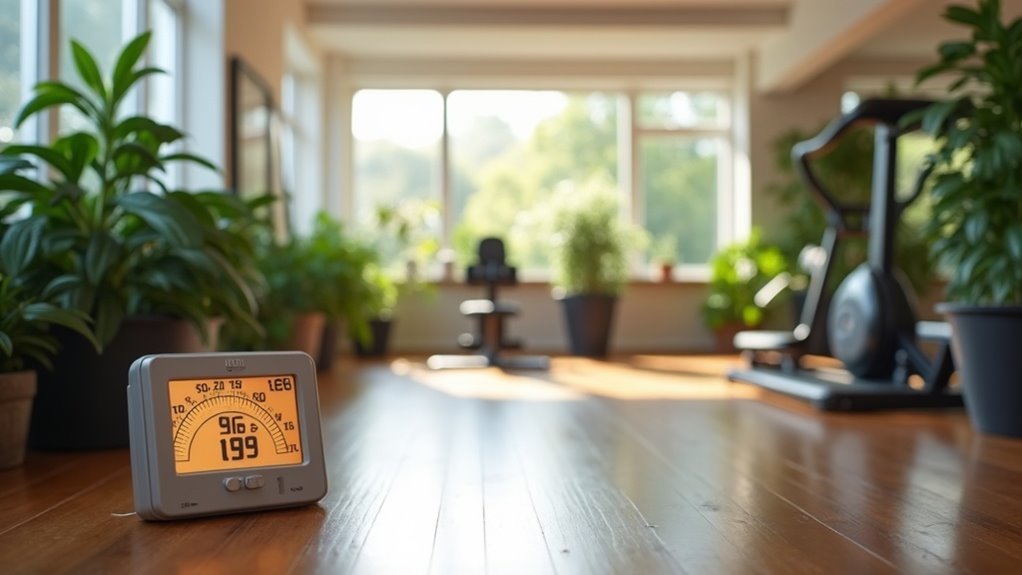
Incorporate hygrometers to monitor humidity levels in real-time, aiming to keep them between 35 to 50 percent for optimal exercise conditions.
For larger areas, consider high-capacity Damprid moisture absorbers to enhance moisture management.
Programmable dehumidifiers are a great investment as they allow you to set specific humidity thresholds and schedules, automating your control efforts for consistent results.
Steps to Effectively Manage Humidity Levels
Managing humidity levels in your home gym is essential for creating a comfortable and effective workout environment. To achieve ideal humidity control, consider the following proactive strategies:
- Invest in a dehumidifier that suits the size of your gym to keep moisture in check.
- Use hygrometers to regularly monitor humidity levels, aiming for a range of 35-50% for optimal comfort.
- Install fans to enhance air circulation and help prevent stagnant air.
- Combine your dehumidifier with moisture absorbers like Damprid for added moisture control.
- Regularly check and maintain your dehumidifier to ensure it operates at peak efficiency.
- Remember to empty the dehumidifier as needed to keep it functioning effectively.
Importance of Regular Monitoring and Maintenance
Regular monitoring and maintenance of humidity levels in your home gym are crucial for fostering a safe and effective workout environment.
Keeping humidity between 35 to 50 percent RH is key to preventing mold growth and protecting your valuable gym equipment. Utilize hygrometers to keep an eye on moisture levels, allowing for timely adjustments to maintain optimal conditions.
Consistent monitoring not only safeguards your equipment but also helps to prevent damage to wood flooring, avoiding issues like cupping and cracking that can disrupt your workout space.
Moreover, proactive oversight minimizes slip hazards on damp surfaces, ensuring your safety during workouts.
Additionally, regular maintenance of dehumidifiers and moisture management tools is essential for long-term humidity control, ultimately enhancing your home gym experience for both men and women committed to their fitness journey.
Enhancing Air Quality for a Healthier Workout Environment
While managing humidity levels in your home gym is crucial, improving air quality elevates your workout environment even further.
Managing humidity is essential, but enhancing air quality takes your home gym to the next level.
Here are some practical steps to enhance your space for both men and women:
- Install an air purifier to effectively filter out dust and allergens, ensuring cleaner air during your workouts.
- Use a dehumidifier to keep humidity levels between 35% to 50% RH, creating a comfortable atmosphere.
- Regularly check humidity levels with a hygrometer to maintain optimal conditions.
- Ensure proper ventilation to promote fresh air circulation, making your workouts more invigorating.
- Incorporate houseplants that naturally enhance air quality, adding a touch of nature to your gym.