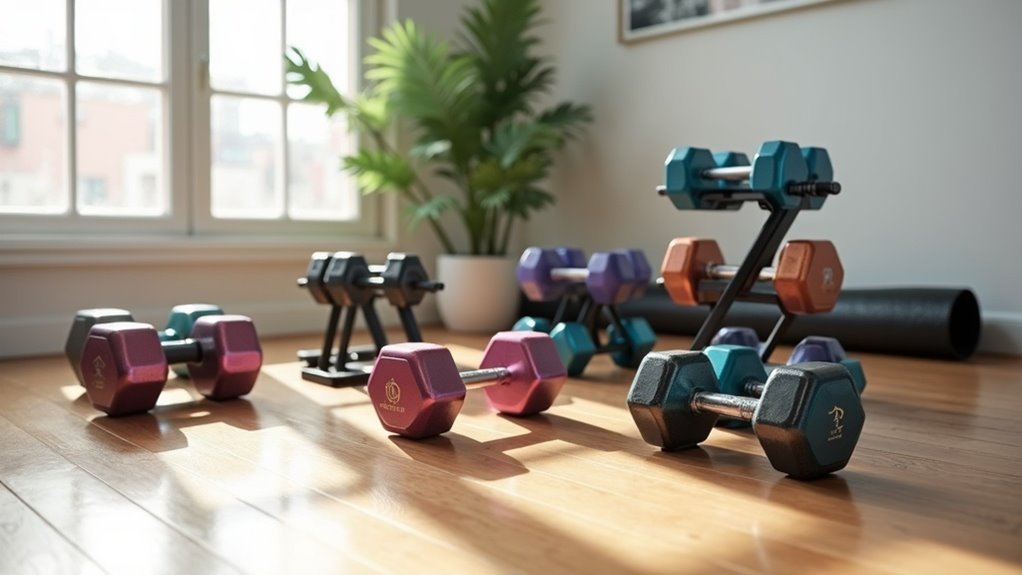
When comparing rolled rubber flooring and interlocking tiles for your home gym, it’s essential to consider factors such as installation, durability, aesthetics, maintenance, and cost. Rolled rubber flooring provides a seamless surface, making it highly durable and ideal for high-traffic workout areas, though it typically requires professional installation. On the other hand, interlocking tiles are perfect for DIY enthusiasts; they’re easier to install and customizable to fit your space, but the seams may necessitate more maintenance over time.
Cost considerations are also important, as interlocking tiles can often be pricier per square foot. Carefully weigh these factors to find the best flooring option that aligns with your fitness goals and personal style in your home gym. Stay tuned for more insights on creating your perfect workout environment.
Key Takeaways
- Installation Ease: Interlocking tiles are perfect for those looking to set up a home gym without hassle, allowing for DIY installation without the need for tools. On the other hand, rolled rubber typically requires professional installation and adhesive, making it less convenient for a quick setup.
- Durability: When it comes to high-traffic areas and intense workout sessions, rolled rubber outperforms the tiles in durability. However, if you’re concerned about potential damage, interlocking tiles are easier to replace, ensuring your home gym always looks its best.
- Aesthetic Appeal: For those who want to customize their workout space, rubber tiles offer a variety of designs. In contrast, rolled rubber gives a seamless and professional appearance with minimal visible seams, creating a sleek look for your home gym.
- Maintenance Requirements: If you’re keen on keeping your gym clean, be aware that tiles require more frequent cleaning of seams. Rolled rubber, with its uniform surface, makes upkeep easier and helps manage spills effectively, allowing you to focus on your workouts.
- Cost Factors: While interlocking tiles may have a higher price per square foot, rolled rubber can prove more economical for larger spaces, especially considering its lower long-term maintenance costs. This can be a significant factor for anyone setting up a home gym on a budget.
Key Differences Between Rubber Tiles and Rolls
When choosing flooring for your home gym, it’s crucial to understand the key differences between rubber tiles and rolls. Rubber tiles, designed as modular pieces, are perfect for irregular spaces, making installation straightforward and often manageable as a DIY project. This flexibility allows you to customize your workout area to fit your specific needs.
Choosing rubber tiles for your home gym offers flexibility and easy installation, perfect for customizing your workout space.
On the other hand, rubber rolls are ideal for larger gym spaces, providing a seamless look with minimal seams, which can enhance the overall aesthetic of your workout environment.
In terms of durability, rubber rolls are particularly well-suited for high-traffic areas, ensuring they can withstand intense workouts over time. While rubber tiles may show signs of wear more quickly due to their individual nature, they still offer a reliable option for home gym setups.
Aesthetic considerations are also important; visible seams in tiles can disrupt the visual flow of your space, while rolls deliver a sleek, polished appearance that can motivate you to stay active.
Maintenance is another factor to consider. Rubber tiles may trap dirt in their seams, requiring more frequent cleaning, whereas rolls have a uniform surface that typically demands less upkeep.
Ultimately, whether you choose tiles or rolls will depend on your specific gym layout, your workout habits, and your personal preferences for both style and maintenance.
Rubber Tiles – Pros and Cons
Rubber tiles offer a variety of benefits and drawbacks that can significantly influence your home gym setup. Their modular design allows for easy installation, making them an excellent choice for DIY enthusiasts and those with unique spaces.
With customizable design options, you can create a layout that reflects your personal style while optimizing your workout area. If any tile becomes damaged, replacing it’s a straightforward and cost-effective solution, ensuring your gym remains in top shape.
However, it’s important to note that visible seams may detract from the overall aesthetic of your gym, and dirt can build up, necessitating more frequent cleaning.
While rubber tiles are appropriate for high-traffic areas, they may not be as durable as rolled rubber flooring, making them more suitable for lighter activities.
Rubber Rolls – Pros and Cons
Rolled rubber flooring is an excellent choice for home gyms, thanks to its seamless design that reduces tripping hazards and simplifies cleaning. Here are some pros and cons to consider for your workout space:
- Durable: Perfect for high-impact exercises and heavy foot traffic, making it ideal for intense workouts.
- Cost-effective: More budget-friendly for larger gym areas compared to interlocking tiles, allowing you to invest more in quality equipment.
- Installation: Professional installation is recommended due to its weight and adhesive requirements, ensuring a secure and safe setup.
While rolled rubber offers a sleek, uniform look, it does have limited customization options compared to interlocking tiles, which can be arranged in creative patterns.
Ultimately, assess these pros and cons to see if rolled rubber flooring aligns with your home gym goals and needs.
Choosing the Right Option Based on Your Space
How do you choose the best flooring option for your home gym?
If you’re setting up a large, high-traffic workout area, rolled rubber flooring provides a seamless look and exceptional durability, perfect for withstanding intense exercise routines.
On the other hand, if your gym space is smaller or has an irregular shape, interlocking tiles offer customizable layouts and are easy to install, making them a great DIY-friendly choice.
Don’t forget to factor in your budget: rolled rubber generally has a lower cost per square foot for larger installations, while interlocking tiles may require a higher initial investment but allow for easy replacement of individual pieces if needed.
Additionally, consider the aesthetic appeal; interlocking tiles come in a variety of colors and patterns to match your style, while rolled rubber gives a more uniform appearance.
Installation and Maintenance Comparison
When considering installation and maintenance for your home gym, the differences between interlocking tiles and rolled rubber flooring become clear.
– Rubber tiles offer a straightforward DIY installation with their interlocking design, making it easy for anyone to set up their workout space.
In contrast, rolled rubber flooring typically requires professional installation, which can be more time-consuming and costly.
– If you make a mistake with rubber tiles during installation, it’s simple to correct.
However, rolled flooring is more challenging to adjust once it’s glued down, which can lead to frustrations in your gym setup.
– When it comes to maintenance, rubber tiles require regular cleaning of the seams to keep your gym hygienic, while the seamless finish of rolled flooring allows for quicker and easier cleaning, minimizing dirt accumulation.
In summary, rubber tiles provide a budget-friendly option for both installation and maintenance, ideal for those setting up a home gym.
On the other hand, rolled rubber flooring may be more expensive to install but offers a sleek and low-maintenance surface for your fitness space.
Cost Considerations
When considering the costs for your home gym flooring, it’s crucial to weigh the price differences between rubber tiles and rolled rubber flooring.
Rubber tiles typically come at a higher price per square foot due to their modular design, making them a stylish and customizable option for your workout space. On the other hand, rolled rubber flooring can be a more economical choice for larger areas, as it covers more ground with fewer seams, ultimately lowering your overall expenses.
While installing rubber tiles yourself can be a budget-friendly solution, keep in mind that rolled rubber may require professional installation, which can increase costs.
Additionally, it’s important to consider long-term maintenance expenses. The fewer seams in rolled rubber mean less dirt accumulation in high-traffic areas, potentially saving you money over time and ensuring your home gym remains a clean and inviting space for your workouts.
Making the Right Choice for Your Needs
Choosing the Right Flooring for Your Home Gym
When it comes to selecting the perfect flooring for your home gym, it’s essential to consider several key factors:
- Installation: Rolled rubber flooring typically requires professional installation, which can be a time investment. On the other hand, interlocking tiles are user-friendly and can be easily installed by anyone looking to take on a DIY project.
- Durability: If you’re into heavy-duty workouts or high-impact exercises, rolled rubber flooring is your best bet for resilience. However, interlocking tiles offer the advantage of easy replacement; if one gets damaged, you can simply swap it out without overhauling the entire floor.
- Aesthetic Preferences: For those who value a personalized touch, interlocking tiles come in a variety of colors and designs, allowing you to customize your space. If you prefer a streamlined and cohesive look, rolled rubber provides a seamless, uniform appearance.
Ultimately, your decision should reflect the size of your gym, the level of maintenance you’re willing to commit to, and your style preferences.
Rolled rubber is perfect for larger spaces where heavy equipment is used, while interlocking tiles can be a great fit for smaller or uniquely shaped areas.
Make your choice wisely by weighing these important factors to create the ideal workout environment at home.