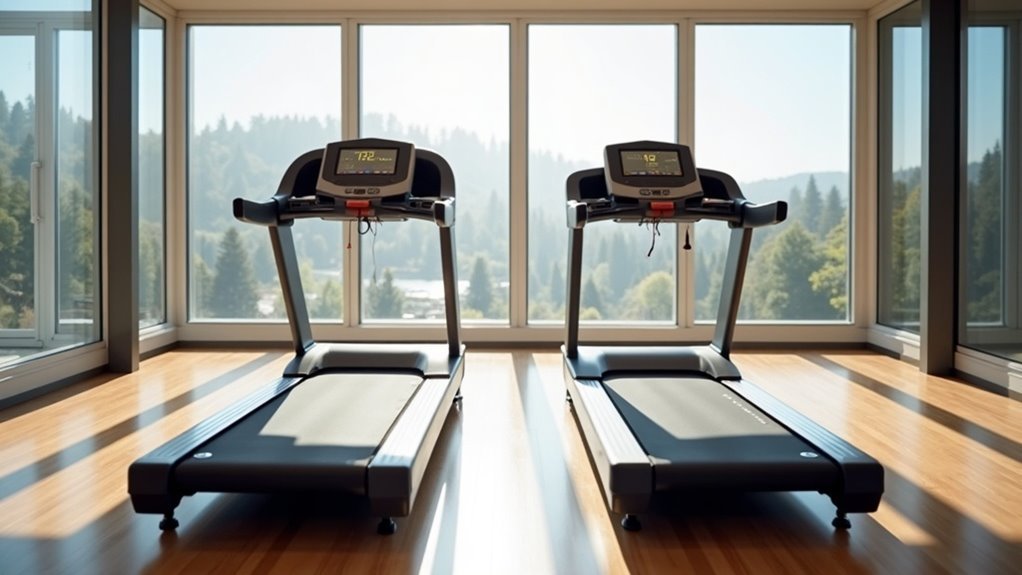
To compare auto incline and manual incline treadmills for your home gym, consider several important factors: mechanisms, user convenience, cost, and maintenance. Auto incline models offer seamless adjustments, allowing you to easily change the incline level during your workout, which can enhance the variety and intensity of your training. However, these models typically come with a higher price tag and may require more maintenance over time.
On the other hand, manual incline treadmills are budget-friendly and generally easier to repair, making them a great option for those looking to save money. However, keep in mind that adjusting the incline on a manual treadmill requires physical effort, which might be a consideration depending on your fitness goals.
Before making a decision, evaluate your specific fitness needs and the space you have available for your home gym. By exploring the key differences between these two types of treadmills, you can narrow down the best choice that aligns with your training preferences and lifestyle.
Key Takeaways
- Auto incline treadmills provide the ability to make real-time incline adjustments, allowing for personalized workout experiences that can keep you motivated and engaged. In contrast, manual incline treadmills require physical adjustments, which can interrupt your workout flow.
- When considering budget, auto incline treadmills generally range from $800 to over $3,000, making them a significant investment for your home gym. On the other hand, manual treadmills are more affordable, with prices typically falling between $150 and $600, making them accessible for those starting their fitness journey at home.
- Maintenance is another important aspect to consider; auto incline treadmills often require more upkeep due to their electrical components, while manual treadmills feature simpler designs that lead to lower maintenance costs and hassle.
- Incline training has been shown to increase calorie burn by up to 30%, effectively engaging your lower body muscles and enhancing cardiovascular health. Both types of treadmills can support your weight loss goals, making them valuable additions to your home gym.
- It’s essential to evaluate your fitness level and personal goals before making a decision; if you’re looking for varied and dynamic workout routines, an auto incline treadmill may be the right choice for you. However, if you prefer straightforward workouts without the need for complex features, a manual treadmill could be a perfect fit for your home fitness setup.
Mechanism Comparison
When comparing the mechanisms of auto incline and manual incline treadmills, it’s clear that each type has distinct operational features that cater to home gym enthusiasts.
Auto incline treadmills utilize a motorized system, allowing you to adjust the incline effortlessly with the push of a button or through programmable incline levels, enhancing the customization of your workout routine. This feature is particularly beneficial for those looking to diversify their home exercise regimen.
Auto incline treadmills offer effortless incline adjustments, enhancing workout customization and keeping your home exercise routine dynamic and engaging.
On the other hand, manual incline treadmills require physical effort to change the incline, typically offering fixed settings like 0%, 5%, or 10%. While the simplicity of manual treadmills can be appealing due to fewer parts and lower maintenance, the advanced functionality of auto incline treadmills contributes to a more dynamic user experience.
With auto incline, you can make real-time incline adjustments without interrupting your workout, making it an excellent choice for both men and women committed to staying healthy and fit at home.
User Convenience
User convenience is a crucial factor when selecting between auto incline and manual incline treadmills for your home gym. Auto incline treadmills offer real-time adjustments, allowing you to enhance your workout experience seamlessly, without any interruptions. On the other hand, manual incline treadmills require you to pause your workout to make adjustments, which can disrupt your exercise flow.
| Features | Auto Incline Treadmills | Manual Incline Treadmills |
|---|---|---|
| Adjustable Incline | Yes | Limited |
| Customizable Workouts | Yes | No |
| Uninterrupted Workouts | Yes | No |
| Ideal for Interval Training | Yes | No |
| User-Friendly Design | Yes | No |
Choosing the right treadmill is essential for supporting your fitness goals and maintaining a healthy lifestyle at home.
Cost Implications
When evaluating cost implications for home gym equipment, auto incline treadmills typically range from $800 to over $3,000, reflecting their advanced features and versatility.
On the other hand, manual incline models are much more budget-friendly, usually priced between $150 and $600.
While the lower initial cost of manual treadmills may be enticing for those just starting their fitness journey, the long-term investment in auto incline treadmills can be worthwhile for dedicated individuals looking to diversify their workouts and achieve greater results from their home exercise routines.
Price Range Differences
While both auto and manual incline treadmills cater to different fitness needs, their price ranges highlight notable differences in features and functionality.
Auto incline treadmills typically range from $800 to over $3,000, equipped with advanced features and motorized systems. These are perfect for fitness enthusiasts who seek versatility and enjoy pre-set workout programs.
On the other hand, manual incline treadmills offer a budget-friendly alternative, usually priced between $150 and $600, making them accessible for casual users and beginners looking to enhance their home workout routine.
While the lower upfront cost of manual treadmills may attract those with basic fitness goals, the long-term benefits of investing in auto incline treadmills are evident for serious home fitness users aiming for comprehensive training options.
Long-Term Investment Value
Investing in a treadmill for your home gym requires careful consideration of initial costs versus long-term value, especially when weighing the benefits of auto incline versus manual incline models.
Auto incline treadmills, which range from $800 to over $3,000, come equipped with advanced features that enhance your workout experience. However, keep in mind that they also incur higher maintenance costs due to the complexity of motor upkeep.
On the other hand, manual incline treadmills offer a budget-friendly alternative, priced between $150 and $600. These are perfect for casual users or beginners who are just starting their fitness journey and have basic fitness goals.
For those who prioritize frequent workouts and advanced functionality, auto incline models might provide a better long-term investment return. However, manual models deliver essential features without the hefty price tag, making them an excellent choice for anyone looking to stay fit at home without breaking the bank.
Ultimately, both options cater to different fitness needs and levels, ensuring that everyone can find the right treadmill to help them achieve their health goals.
Maintenance Considerations
When considering maintenance for treadmills in your home gym, it’s important to recognize that auto incline models require more frequent upkeep due to their intricate electrical systems.
On the other hand, manual incline treadmills have simpler mechanisms, which makes repairs less complicated and generally more affordable.
Maintenance Frequency Requirements
Although both auto incline and manual incline treadmills require regular maintenance, the frequency and nature of that maintenance can differ considerably. Here’s what you need to know for keeping your home gym in top shape:
- Auto incline treadmills demand checks on motors and wiring, along with potential software updates to ensure optimal performance.
- Expect higher maintenance expenses due to the complexity of electrical components, which may require professional assistance.
- Manual incline treadmills, thanks to their simpler construction, generally incur minimal maintenance and are easier to maintain at home.
- Users enjoy lower upkeep costs since fewer mechanical issues arise without motorized systems, making them ideal for those looking to stay healthy through consistent exercise at home.
Repair Complexity Levels
Repair complexity levels for treadmills can significantly affect your home gym experience and long-term expenses.
Auto incline treadmills often come with higher maintenance costs due to their motorized systems, which require regular checks on electrical components and potential servicing.
On the other hand, manual incline treadmills have fewer mechanical parts, resulting in lower maintenance expenses and simpler repairs. Their straightforward design means you’ll likely face less repair complexity, making them a low-maintenance choice for your home workout space.
If you value ease of servicing and minimal upkeep, manual models may be more suitable for your fitness journey, while auto incline treadmills require more attention to ensure optimal functionality and performance.
Choose wisely to enhance your home gym experience and support your commitment to staying healthy through exercising at home.
Long-term Durability Factors
The longevity of your treadmill is crucial for maintaining a consistent home workout routine. When evaluating long-term durability for your home gym, consider the following factors:
- Maintenance Costs: Manual incline treadmills generally have lower maintenance costs due to their simpler design and fewer mechanical components.
- Mechanical Issues: The straightforward construction of manual models minimizes the chance of mechanical failures, making them a reliable choice for consistent use.
- Lubrication Needs: While both types of treadmills need regular lubrication, manual treadmills require less maintenance since they’ve fewer parts to worry about.
- Advanced Features: Although auto incline treadmills come with a variety of advanced features, their complex systems may lead to increased upkeep and potential repair issues over time.
Opting for a manual incline treadmill can often result in better long-term durability, ensuring that you have a reliable piece of equipment for your home workouts.
Benefits of Incline Training
Incline training on treadmills is an excellent addition to your home gym routine, offering a variety of benefits that can enhance your workout experience. By incorporating an incline into your sessions, you can increase your calorie burn by up to 30% compared to flat workouts, making it an effective option for those focused on weight loss.
Incline training on treadmills boosts calorie burn by up to 30%, making it ideal for effective weight loss.
This training method specifically targets lower body strength, engaging crucial muscle groups such as the glutes, hamstrings, and calves, which is essential for building a strong physique at home.
Moreover, incline training is great for improving cardiovascular health by mimicking the challenges of uphill running, giving your heart and lungs a good workout. It also supports joint health by minimizing stress on your knees, thanks to a more natural running form.
Regular incline workouts can significantly boost your stamina and endurance, contributing to better overall performance in various physical activities you may enjoy.
Whether you’re a man or woman, incorporating incline training into your home exercise regimen can help you achieve your fitness goals effectively.
Recommendations for Home and Commercial Use
Choosing the right treadmill for your home gym can significantly enhance your fitness journey. Here are some tailored recommendations for home use:
- Auto Incline Treadmills: These are perfect for individuals who want to simulate outdoor running conditions and challenge themselves with diverse workouts. They’re suitable for users at various fitness levels looking to intensify their routines.
- Manual Incline Treadmills: A cost-effective choice that’s accessible for casual users. These treadmills are great for those who want a straightforward workout without the bells and whistles, making them ideal for home environments.
- Portability: Manual treadmills are typically lightweight and easy to move. This feature is especially beneficial for those with limited space, allowing you to store your equipment away when not in use.
- Durability: While looking for home gym equipment, consider treadmills that offer solid construction. Even for home use, investing in a durable model will ensure it can withstand regular workouts over time.
Assess your fitness goals and space availability to choose the treadmill that best suits your needs, helping you stay motivated and committed to your health journey.
Final Thoughts on Choosing the Right Treadmill
When selecting the right treadmill for your home gym, it’s essential to weigh the pros and cons of auto incline versus manual incline models.
Auto incline treadmills offer advanced features and effortless workout adjustments, making them ideal for dedicated fitness enthusiasts with diverse goals, although they come with a higher price tag ranging from $800 to $3,000+.
On the other hand, manual incline treadmills are more budget-friendly, perfect for those who prefer straightforward routines and casual workouts, typically costing between $150 and $600.
While maintenance costs are generally lower for manual models, it’s important for users to consider their long-term fitness needs.
Ultimately, your choice will depend on your fitness aspirations, budget, and desired workout experience in your home gym.