When selecting a spin bike flywheel weight for your home gym, it’s crucial to consider your fitness goals and experience level. Heavier flywheels (18-20 kg) offer smoother momentum and stability, making them perfect for those looking to enhance the intensity of their workouts. On the other hand, lighter flywheels facilitate easier starts and stops, which can be more forgiving on your joints, especially for beginners or those recovering from injuries. It’s also important to ensure that the flywheel weight complements your bike’s resistance system for optimal performance. By understanding these factors, you can make an informed choice that aligns with your cycling experience and supports your overall fitness journey at home.
Key Takeaways
- For a smooth ride and consistent momentum during your home workouts, consider a flywheel weight of 18-20 kg, which is ideal for moderate to intense sessions.
- If you’re looking to push your limits, heavier flywheels (over 20 kg) are perfect for challenging workouts, offering enhanced stability and resistance to maximize your effort.
- Beginners or those with joint concerns may benefit from lighter flywheels (under 10 kg), as they allow for easier starts and stops, making your home cycling experience more manageable.
- Ensure that the bike’s resistance system complements the flywheel weight for optimal performance, helping you achieve your fitness goals effectively.
- Always prioritize your personal fitness goals and preferences when selecting flywheel weight to ensure an enjoyable and motivating cycling experience at home.
Understanding the Function of a Flywheel
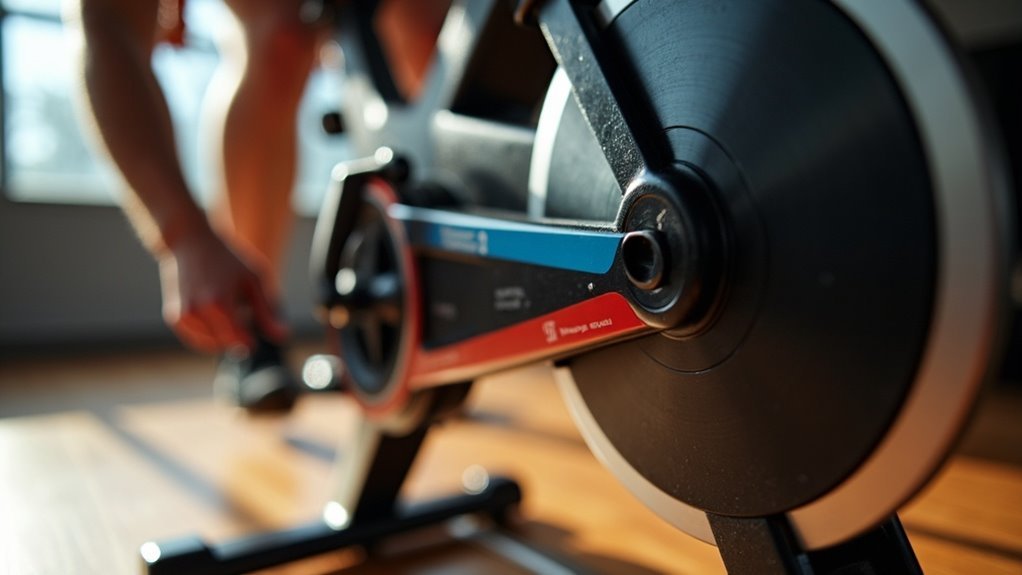
The flywheel is a crucial component of a spin bike, significantly enhancing your home cycling experience. This circular disc, connected to the pedals, is designed to store rotational energy and provide resistance during your workout.
The weight of the flywheel plays a vital role in your ride; heavier flywheels, typically ranging from 18-20 kg for indoor cycling bikes, deliver greater momentum and a smoother cycling experience. While they may require more initial effort to start spinning, they help maintain speed longer, closely mimicking the feel of outdoor cycling.
In addition to its weight, the flywheel works in conjunction with a resistance system that allows you to adjust the intensity of your workout, catering to your fitness goals.
Its position on the bike can also affect stability and maintenance requirements, making it an important feature to consider when setting up your home gym. By understanding the function of the flywheel, you can optimize your workouts and enhance your journey towards a healthier lifestyle.
Importance of Flywheel Weight in Indoor Cycling
The weight of the flywheel is crucial for your indoor cycling experience, significantly affecting the smoothness of your ride.
For both men and women looking to enhance their home workouts, a heavier flywheel provides better momentum and resistance, which leads to a more consistent pedal stroke and minimizes the risk of joint strain.
Selecting the appropriate flywheel weight can greatly enhance your comfort and effectiveness during your home exercise sessions, making it an important consideration for anyone investing in home gym equipment.
Smooth Ride Experience
While various factors contribute to a smooth ride experience on a spin bike, the weight of the flywheel plays a crucial role in ensuring both momentum and stability during your workouts.
A heavier flywheel, usually weighing between 18-20 kg (approximately 40-44 lbs), helps maintain continuous momentum, which minimizes jerky pedal strokes and enhances your cycling experience at home. This added inertia allows for effortless transitions between resistance levels, simulating the feel of outdoor cycling much more effectively than a lighter flywheel can.
Lighter flywheels often necessitate quicker spins, which can lead to instability and increased stress on your joints. For a consistent and enjoyable cycling experience in your home gym, aim for a flywheel weight of 20 lbs or more, as this significantly improves overall ride smoothness and comfort, making your at-home workouts more effective and enjoyable for both men and women.
Joint Stress Consideration
Choosing the right flywheel weight is crucial for maintaining joint health during your home workouts on an indoor cycling bike. Opting for a heavier flywheel, typically in the range of 18-22 kg, can provide a smoother and more enjoyable cycling experience. This weight helps reduce joint stress by ensuring consistent momentum, which is especially beneficial during intense sessions.
On the other hand, lighter flywheels (10 kg or less) may lead to jerky movements, increasing the risk of joint strain. The added inertia from heavier flywheels acts as a cushion for your joints, enhancing comfort and simulating the feel of outdoor cycling.
If you have joint concerns, investing in a heavier flywheel can help minimize abrupt stops and starts, making your workouts safer and more comfortable over time. Prioritizing joint health while exercising at home is essential for both men and women, ensuring you can enjoy your fitness journey without discomfort or injuries.
Momentum and Resistance Impact
Understanding the impact of flywheel weight on momentum and resistance is essential for optimizing your home cycling workouts.
Heavier flywheels, typically 20 kg or more, create smoother shifts and maintain speed for longer periods, enhancing your overall cycling experience at home. This increased momentum reduces gaps between pedal strokes, allowing for a steadier and more effective workout.
While heavier flywheels require more effort to get started, they provide consistent pedal strokes, which can help minimize stress on your joints. Additionally, they allow for finer resistance adjustments, giving you more options to customize your workout intensity.
Choosing the right flywheel weight is crucial for effectively engaging your cardiovascular system and muscles during your at-home cycling sessions, helping you stay healthy and fit.
Comparing Heavy and Light Flywheels
When comparing heavy and light flywheels for home gym equipment, performance and stability are essential factors to consider for your workouts.
Heavier flywheels provide smoother momentum, creating a more consistent and realistic riding experience, which can enhance your overall fitness routine.
On the other hand, lighter flywheels offer the advantage of easier starts and stops, making them suitable for users who prefer quick transitions during their exercises. However, this may result in a choppier experience.
Additionally, the impact on your joints varies; lighter options tend to be gentler, which can be beneficial for those focusing on joint health, but they may compromise ride quality.
Choosing the right flywheel depends on your fitness goals and personal preferences to maximize your home exercise experience.
Performance and Stability
While both heavy and light flywheels offer distinct benefits, your choice will significantly influence your cycling performance and stability at home.
Heavier flywheels, typically over 20 kg, deliver greater momentum for a smoother ride that closely resembles outdoor cycling, enhancing overall stability during your workouts.
On the other hand, lighter flywheels, around 10 kg or less, enable quicker acceleration but may result in a less stable pedaling experience.
The inertia provided by heavy flywheels helps maintain consistent pedal strokes, minimizing abrupt stops that can affect your stability as you exercise.
Selecting the appropriate flywheel weight is crucial for aligning with your fitness goals and ensuring an effective indoor cycling experience that supports your journey to better health at home.
Joint Impact Considerations
Selecting the ideal flywheel weight is crucial for maintaining joint health while enjoying indoor cycling workouts at home. Heavier flywheels (20 LB+) provide smoother momentum and enhanced inertia, allowing for a steady pedal stroke that minimizes the risk of joint impact injuries.
On the other hand, lighter flywheels (10 LB or less) facilitate quicker pedaling but can result in a bumpier ride, potentially increasing strain on your joints. If you’re dealing with existing joint issues, lighter flywheels may be a better choice, as they require less effort to start and stop.
Ultimately, it’s important to consider your cycling preferences, joint health, and the intensity of your workouts when choosing the right flywheel weight for your home gym setup.
Impact of Flywheel Weight on Workout Experience
The weight of the flywheel plays a crucial role in your home workout experience, as it directly impacts the stability and smoothness of your ride.
For those looking to achieve an effective exercise routine, heavier flywheels, typically ranging from 18-22 kg, offer a more consistent pedal stroke. This enhances your workout by maintaining momentum and allowing for finer adjustments in resistance levels, making it easier to challenge yourself as you progress.
On the other hand, a lightweight flywheel (10 kg or less) may result in a choppy riding experience, requiring quicker pedaling that can put unnecessary strain on your joints.
Therefore, choosing the right flywheel weight is essential for attaining ideal resistance, simulating various terrains, and ensuring a satisfying cycling experience tailored to your fitness goals—whether you’re a beginner or a seasoned athlete working out from home.
Recommendations for Choosing the Right Flywheel Weight
When selecting the right flywheel weight for your spin bike, it’s important to consider your fitness level and workout preferences to optimize your home gym experience.
For those engaging in moderate use, a flywheel weight between 18-20 kg is recommended, providing a great balance of smoothness and resistance.
If you’re looking for a more challenging workout, consider a flywheel over 20 kg for increased stability and momentum.
On the other hand, lighter weights (under 10 kg) can facilitate easier starts and stops, making them suitable for individuals with joint concerns.
Always ensure that your chosen flywheel weight aligns with the bike’s resistance system to enhance your cycling experience, whether you lean towards heavier or lighter options.
Embrace your fitness journey at home, and choose the flywheel that best supports your goals.
Exercise Bike Models With Varying Flywheel Weights
Understanding the differences in flywheel weights among various exercise bike models can significantly enhance your home workout experience. Here’s a quick comparison of popular spin bikes that cater to both men and women looking to stay fit at home:
| Model | Flywheel Weight | Purpose |
|---|---|---|
| SF-B1002 | 20 kg | Offers a realistic cycling experience |
| Keiser M3i | 3.6 kg | Lightweight flywheel designed for speed |
| Sunny SF-B1709 | 9 kg | Affordable and joint-friendly option |
Choosing the right flywheel weight is crucial as it directly influences performance and smoothness during your workouts. Heavier flywheels provide greater stability, making them ideal for a more intense cycling experience, while lighter options allow for quicker spinning, perfect for speed workouts. Select based on your fitness goals and personal preferences to maximize your home exercise routine.
Factors to Consider Beyond Flywheel Weight
Choosing the right spin bike for your home gym goes beyond just assessing flywheel weight; there are several other crucial factors that can significantly enhance your workout experience.
The type of resistance system—whether friction or magnetic—plays a vital role in determining the effectiveness of your workouts. Additionally, the bike’s design, including the stability of the frame and ergonomic features, is essential for ensuring comfort and maximizing performance during your sessions.
The positioning of the flywheel is another important consideration; bikes with front flywheels often provide a smoother ride, especially during climbs, which can elevate your overall cycling experience and simplify maintenance.
It’s important to align your bike choice with your personal fitness goals, as user experiences can vary widely based on individual objectives.
Lastly, don’t underestimate the quality of components such as pedals and handlebars. These elements can greatly influence the bike’s performance, comfort, and your overall satisfaction while exercising at home.
Taking the time to evaluate these factors will help you select a spin bike that supports your fitness journey effectively.