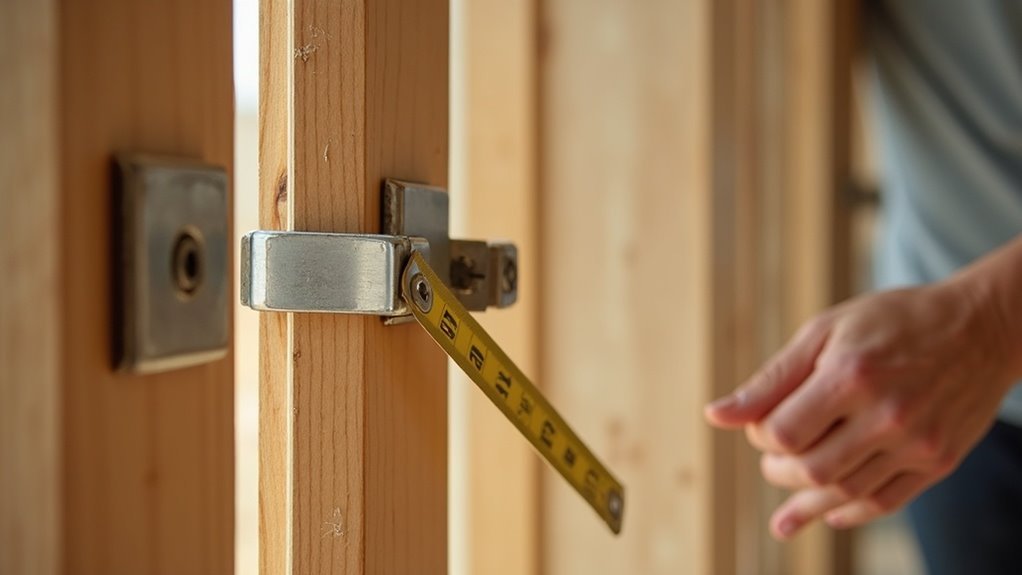
To ensure your door frame is safe for band anchors while setting up your home gym, start by inspecting it for any visible cracks, dents, or warping. Make sure the door latch fully engages and test the stability of the hinges to ensure they can handle the tension from your resistance bands. Next, confirm that the door opens inward, as this provides a secure anchoring point. Position the anchor on the hinge side of the door, steering clear of corners for optimal safety. Regularly monitor the tension of your bands and check for any signs of wear. By staying proactive in your safety checks, you can enhance both your workout performance and overall safety while exercising at home.
Key Takeaways
- Inspect the door frame for visible cracks, dents, or warping that could compromise stability during your home workouts.
- Ensure that the hinges are tight and show no signs of wear or looseness for secure anchoring of your workout bands.
- Confirm that the door latch fully engages to prevent accidental openings while you’re focused on your exercises.
- Position the anchor on the hinge side of the door for enhanced stability and safety during your routines.
- Regularly monitor band tension and check for wear to maintain effective workout conditions and ensure your safety at home.
Inspecting for Damage and Weakness
When inspecting your door frame for damage and weakness as part of setting up your home gym, it’s crucial to check for visible signs that could compromise its integrity during workouts. Look for cracks, dents, or warping, as these can indicate structural weaknesses that mightn’t withstand the tension from resistance bands.
Pay close attention to the hinges for any looseness or signs of wear; compromised hinges can fail under stress, posing a risk of injury while exercising. Additionally, check for any paint or material chipping, which could suggest excessive strain on the frame.
Ensure that your door frame is made of solid wood or metal, as hollow-core materials are more vulnerable to damage. Regularly test the stability by applying gentle pressure to the anchor point and confirming that the frame remains firm and unshifted during use—this will help ensure a safe and effective workout at home.
Ensuring Secure Door Closure
To ensure a secure door closure for your home gym setup, it’s important to confirm that the door latch fully engages. This prevents any gaps that could result in accidental openings while using resistance bands during your workouts. Regularly inspect the door frame for any wear and test the hinges to ensure they are stable. A properly functioning door is crucial for creating a safe environment that supports your fitness goals.
| Inspection Step | Importance |
|---|---|
| Check door latch | Confirms secure closure |
| Inspect frame for damage | Prevents unstable anchoring |
| Test hinges | Maintains door stability |
| Verify inward opening | Maximizes anchor effectiveness |
Assessing Door Frame Sturdiness
To assess your home gym setup‘s sturdiness, start by inspecting the quality of your equipment; solid weights and durable frames provide greater stability than lighter, flimsy options.
Next, check the alignment of your gym apparatus, ensuring everything sits level without gaps that could compromise your workout safety.
Finally, evaluate the condition of all moving parts, as any wear or looseness can diminish the overall strength and effectiveness of your home gym equipment.
Inspect Door Material Quality
Evaluating the quality of your door materials is essential for ensuring a safe and effective resistance band workout at home. Opt for solid-core doors, as they provide better durability and can withstand the tension put on them, unlike hollow-core doors that may easily sustain damage.
Take a moment to inspect the door frame for any cracks, warping, or signs of wear that could indicate potential weaknesses. Additionally, check the hinges for any looseness; compromised hinges can threaten the door’s integrity when under tension from an anchor.
Make sure the door frame is securely mounted to the wall, as weak or improperly installed frames can fail during your workout. Always consider the age and material of both the door and frame to guarantee a reliable and safe fitness environment.
Check Frame Alignment
Proper alignment of your door frame is crucial for ensuring safety and stability during resistance band workouts at home.
Start by checking the frame alignment; a square and well-aligned door frame prevents uneven pressure on the anchor point, which can reduce the risk of damage and injury.
Inspect for any visible cracks or damage that could compromise the frame’s integrity. Open and close the door to assess its smooth operation; any sticking may indicate alignment issues that could affect your safety while exercising.
Additionally, consider the frame material; solid wood frames generally offer better durability compared to hollow-core options.
Assess Hinge Condition
After ensuring your door frame is properly aligned, the next step is to assess the condition of the hinges for your home gym setup.
Check for any signs of rust, looseness, or general wear; damaged hinges can compromise the stability you need during your workouts.
Make sure the screws that secure the hinges to both the door and the frame are tight, as loose screws can lead to misalignment and increased stress during exercises.
Look for any gaps between the door and frame when closed, as this could indicate misalignment that may affect your workout.
Test the door’s ability to swing freely; any resistance may suggest underlying structural issues that need attention.
Finally, remember that solid wood or metal frames provide better support than hollow-core frames, which is crucial for safely anchoring resistance bands during your home workouts.
Proper Anchor Positioning
When positioning your anchor for home gym equipment, it’s essential to consider the direction of the door swing to ensure stability during your workouts.
Evaluate the integrity of the door frame and choose an appropriate height for the anchor to maintain balance and safety.
By following these guidelines, you can enhance your exercise routine while reducing the risk of damage to your door frame.
This approach helps create an effective and safe workout environment for both men and women exercising at home.
Door Swing Direction
To ensure optimal door anchor positioning for your home gym setup, it’s essential to consider the swing direction of the door.
Place the anchor on the hinge side, where the door closes, to enhance stability during your workouts. This strategic placement takes advantage of the entire door frame, significantly reducing the chances of slippage or accidental release.
Steer clear of corners and the doorknob side, as these areas tend to be less stable and could pose a risk of injury or damage.
Always double-check that the door is securely latched after setting up your equipment to prevent any unexpected openings.
Proper anchor positioning not only boosts the effectiveness of your workout but also protects both your equipment and the integrity of your door.
Stay fit and safe while exercising at home!
Frame Stability Assessment
Ensuring your door frame can withstand the forces of resistance band exercises is essential for both your safety and workout performance at home.
Begin by securely closing and latching the door, then position the anchor on the closing side of the door, utilizing the entire frame for maximum stability.
Avoid placing the anchor near the door knob or corners, as these areas can lead to slippage or damage.
Regularly inspect your door frame for any cracks or loose hinges that may compromise its stability.
Finally, test the anchor setup with a gentle pull to confirm that your door frame can handle the required tension before engaging in full exertion.
Stay safe and enjoy your home workouts!
Anchor Height Considerations
After confirming the stability of your door frame, it’s important to focus on anchor height, as it significantly impacts the effectiveness of your workouts at home.
Proper anchor positioning not only enhances safety but also ensures you get the most out of your resistance band exercises. Here are some guidelines to consider:
- Chest-level for pushing exercises (e.g., chest presses) to maximize upper body strength.
- Waist height for pulling exercises (e.g., rows) to maintain optimal form and prevent injury.
- Shoulder height or lower for upward movements (e.g., shoulder presses) to promote stability and control.
- Avoid proximity to door knobs or corners to reduce the risk of slippage and ensure a secure workout environment.
Monitoring Band Tension and Usage
Monitoring the tension of resistance bands is crucial for preserving the integrity of your home gym setup, especially if you’re utilizing a door frame for your workouts. Regular assessments are key to avoiding excessive strain, which can lead to wear and damage over time. Be mindful of your usage frequency; high-tension exercises can accelerate deterioration of both the bands and the anchoring areas. After each session, take a moment to inspect for any visible signs of wear or damage. Additionally, keep a log to track your tension levels and exercise patterns to help identify any potential issues.
| Aspect | Action |
|---|---|
| Tension Assessment | Check before each workout |
| Frequency of Use | Track usage to prevent damage |
| Visible Damage Check | Inspect after each session |
| Log Maintenance | Record exercises and tensions |
Regular Maintenance Checks
Your workout’s effectiveness relies not only on the quality of your resistance bands but also on the stability of the door frame anchoring them.
To ensure a safe and effective home workout environment, incorporate regular maintenance checks:
- Inspect the door frame for any visible cracks, dents, or warping that could compromise its strength.
- Check the hinges for signs of loosening or wear; a secure door frame is essential for safety.
- Ensure the door latch functions properly and closes securely to prevent any accidents during your workout.
- Look for scratches or abrasions on the door surface that may indicate friction from the bands.
Signs of Potential Damage
Identifying signs of potential damage in your door frame is crucial for ensuring a safe workout environment at home. Whether you’re lifting weights or doing bodyweight exercises, a secure frame is vital. Look for visible cracks, loose hinges, or misalignment, as these may indicate structural weakness. Scratches or dents on the surface can suggest that your anchor point isn’t secure. To test stability, gently pull on the frame; if you notice any movement, it could mean it’s compromised. Additionally, listen for unusual noises like creaking, which can point to underlying issues that need attention.
| Signs to Look For | Implications |
|---|---|
| Visible cracks or splits | Indicates structural weakness |
| Loose hinges or misalignment | May affect anchor security |
| Unusual noises | Suggests potential damage |