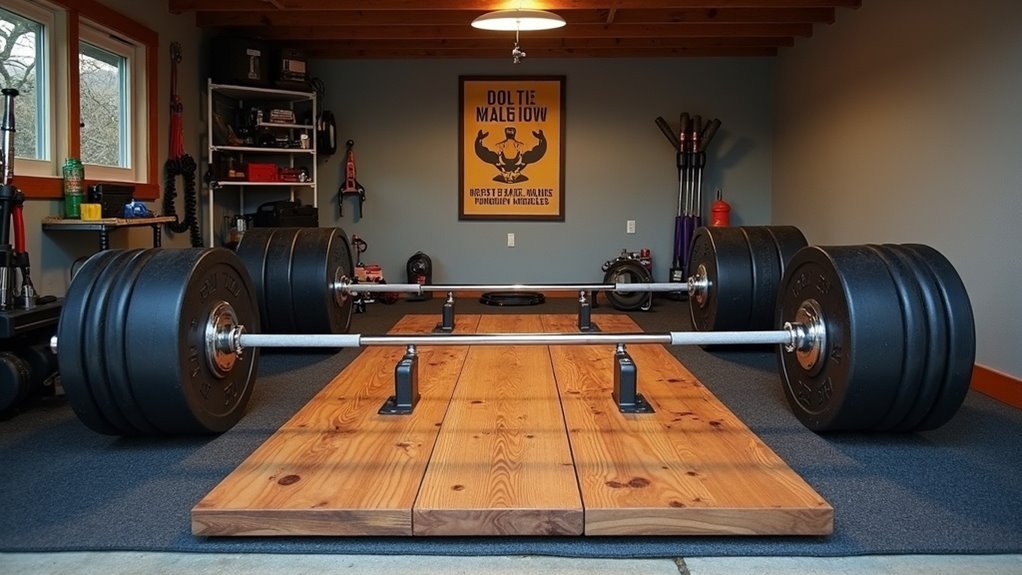
To build a deadlift platform at home, begin by gathering essential materials such as OSB (oriented strand board), plywood, rubber mats, and screws. Start by assembling two layers of OSB side by side to create a solid base, then add two more sheets on top for added strength and stability. Secure these layers together with screws to ensure they stay in place during your workouts.
Next, cut the plywood to the desired size and attach it on top of the OSB layers. This will serve as the main surface for your deadlifts. To enhance comfort and reduce impact during lifts, place rubber mats on top for cushioning and grip.
Finally, if you have a squat rack, install it securely by using lag screws to ensure it remains stable and safe during your exercises. Follow these detailed instructions for assembling your platform, and check our enhancement tips to make your home gym the perfect space for achieving your fitness goals. Whether you’re a beginner or an experienced lifter, this DIY deadlift platform will help you stay healthy and strong from the comfort of your home.
Key Takeaways
- Gather essential materials such as OSB, plywood, rubber mats, screws, and lag screws to create a solid and sturdy deadlift platform for your home gym.
- Begin assembling the platform by layering OSB sheets, ensuring added strength, and securing them with construction screws for durability.
- Cut the plywood to the appropriate size for the lifting surface, and attach it firmly with screws to provide a reliable area for your deadlifts.
- Incorporate rubber mats on top of the platform to enhance cushioning and traction, ensuring a safe and comfortable lifting experience.
- Finally, install and securely anchor your squat rack or any other gym equipment to maintain stability and safety during your workouts at home.
Materials and Tools Needed for Your Deadlift Platform
To create a deadlift platform in your home gym, you’ll need specific materials and tools to ensure a robust and effective setup.
To build a deadlift platform at home, gather essential materials and tools for a sturdy setup.
Begin with four 4 x 8 pieces of 5/8”-thick OSB or particle board for the base. Additionally, obtain one piece of 3/4”-thick smooth plywood for the lifting surface, which provides a durable area for your workouts.
For cushioning and protection, purchase two 4 x 6 horse stall rubber mats to absorb impact. Secure all materials with a box of 1 1/4” construction screws, and use four 3 1/2” lag screws to anchor any squat rack or additional equipment for stability.
Essential tools for this project include a power drill, box cutter, chalk line, and straight edge to ensure accurate assembly and alignment.
This platform will help you stay focused on your fitness goals and enhance your strength training routine at home.
Step-by-Step Assembly Instructions
Begin the assembly of your home gym’s deadlift platform by laying down two 4′ x 8′ sheets of 5/8”-thick OSB side by side, ensuring the crown faces up for optimal stability during your workouts.
Next, add two more sheets of OSB on top, running perpendicular to the first layer for enhanced support. Secure them with 1-1/4” construction screws, paying special attention to corners and edges to ensure a solid foundation for your lifts.
Cut a 3/4”-thick sheet of plywood to 96” x 42” for the top lifting surface, securing it with 1-5/8” screws to provide a durable area for your exercises.
Finally, place two 4′ x 6′ rubber mats on top of the plywood, trimming as necessary to fit perfectly, and then position your squat rack securely to complete your home gym setup.
Enjoy your workouts and stay committed to a healthy lifestyle!
Cutting the Plywood and Stall Mats
With the base of your deadlift platform securely assembled, it’s time to cut the plywood and stall mats to fit perfectly.
Use a circular saw with a fine-toothed blade for cutting the 3/4”-thick plywood, typically sized at 4’ x 8’. If you don’t have the necessary tools, many hardware stores offer cutting services for plywood, making it convenient for you.
For the stall mats, use a jigsaw to create 2 x 6 strips and 2 x 2 squares, taking care to measure accurately in order to minimize waste.
After cutting, sand the plywood edges for a smooth finish, which will enhance both the safety and appearance of your home gym platform.
This attention to detail will contribute to a more enjoyable workout environment, helping you stay motivated and committed to your health and fitness goals.
Installing and Securing the Squat Rack
After ensuring your deadlift platform is level and stable, you can position the squat rack on the plywood lifting surface.
Make sure it’s either flush against the back or spaced as desired for maximum accessibility, accommodating your workout routine.
Next, drill pilot holes through the squat rack’s feet to prepare for securing it to the platform.
Use 3 1/2” lag screws along with washers to secure each corner of the squat rack.
This will provide stability and prevent movement during lifts, ensuring a safe environment for your home workouts.
Regularly inspect the connections to the platform for any signs of loosening or wear to maintain safety and enhance your home gym experience.
Tips for Customization and Aesthetic Enhancements
Customizing your deadlift platform not only boosts its aesthetic appeal but also allows it to reflect your personal style and fit seamlessly into your home gym environment.
Enhance your home gym by customizing your deadlift platform to showcase your unique style and elevate its visual impact.
Consider adding a personalized vinyl logo for a unique touch that won’t compromise grip. A two-tone color scheme using different materials or finishes can create a striking contrast that elevates the look of your equipment.
Sanding the edges of the plywood will provide a smooth transition, enhancing both safety and appearance. Applying a non-slip finish, like teak or Danish oil, will help maintain grip while protecting the wood.
Finally, you can incorporate decorative elements such as edge banding or colored screws to further personalize your platform and make your home gym a space you love.