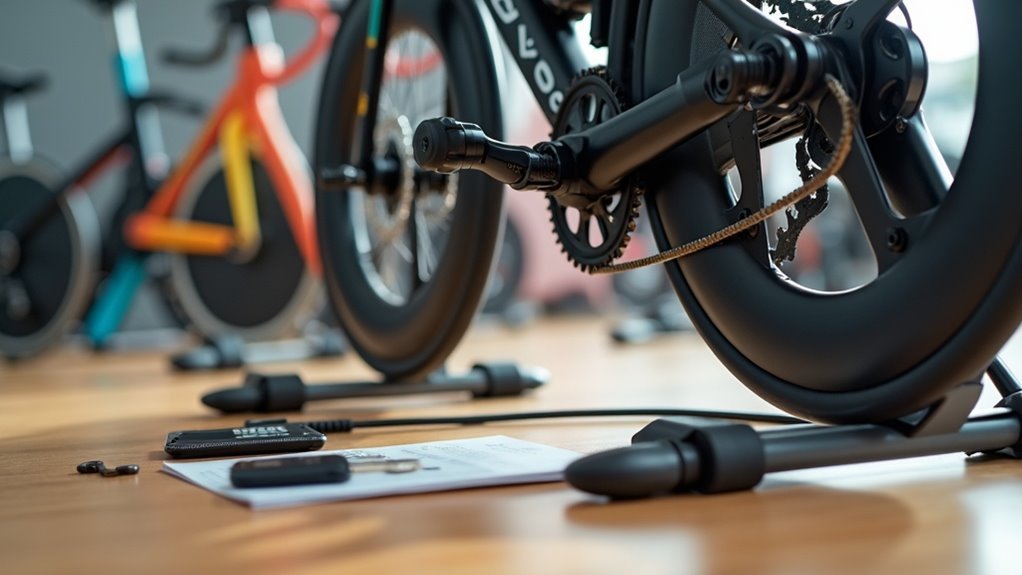
To enhance your indoor cycling experience and track your performance, adding a power meter to your bike is a great step. Begin by selecting compatible power meter pedals, such as the Favero Assioma, which are suitable for both men and women. Alternatively, consider using external sensors if they better fit your needs.
Install the pedals using a pedal wrench, making sure to apply grease to the threads for a secure fit. It’s important to calibrate the power meter before each workout to ensure accurate readings. Once set up, connect it to your preferred cycling app via Bluetooth or ANT+ to keep an eye on your power output. Stay tuned for more tips on optimizing your home gym setup and enhancing your overall fitness journey!
Key Takeaways
- Choose compatible power meter pedals, such as Favero Assioma, that are suitable for your indoor bike and compatible with your cycling shoes to ensure accurate performance measurement during your home workouts.
- Gather essential tools, including a pedal wrench or hex key, to assist you in removing your existing pedals and installing the new power meter efficiently.
- Before installing the new power meter pedals, apply grease to the threads to ensure a secure fit when screwing them into the crank arms.
- Follow the manufacturer’s instructions to calibrate the power meter, ensuring you receive precise readings and enhancing your training effectiveness at home.
- Connect the power meter to your favorite cycling apps via Bluetooth or ANT+ to monitor real-time power output and track your performance progress as part of your home fitness routine.
Choosing the Right Power Meter for Your Indoor Bike
When enhancing your indoor cycling experience, selecting the right power meter is essential for accurate performance tracking.
Power meter pedals, such as the Favero Assioma, offer precise measurements from both legs and are compatible with a variety of indoor bikes, as long as you use road cycling shoes.
Power meter pedals like the Favero Assioma deliver accurate dual-leg measurements, fitting various indoor bikes with road cycling shoes.
If your bike isn’t compatible with pedals, you might consider a cadence sensor or a smart bike that features integrated power measurement technology.
Always check the compatibility of the power meter with your specific indoor bike model to ensure a seamless connection and accurate power data during your workouts.
This is especially important for those committed to building a home gym and maintaining a healthy lifestyle through effective at-home exercise routines.
Installation Process for Power Meter Pedals
Installing power meter pedals on your indoor bike can be a straightforward process that enhances your home workout experience.
To begin, gather the necessary tools such as a pedal wrench or hex key to remove the existing pedals. Before installation, it’s important to apply grease to the threads of your new power meter pedals to prevent binding and ensure a smooth fit.
Carefully screw each pedal into their respective crank arms, making sure to tighten them according to the manufacturer’s specifications for optimal accuracy. Once the pedals are securely installed, calibrate them following the manufacturer’s instructions to ensure precise measurements.
Regular maintenance—including checking for wear and loose connections—is essential for consistent performance and reliable data during your training sessions.
Configuring Your Indoor Bike for Optimal Performance
To achieve optimal performance with your indoor bike, it’s essential to configure it correctly to meet your fitness goals.
Begin by selecting power meter options that are compatible with your bike, such as Assioma pedals. These pedals not only provide accurate power data but are also easy to install, making them a great addition to your home gym setup.
If your bike lacks built-in power measurement, consider investing in external cadence sensors as a cost-effective way to enhance your performance tracking. Be sure to disconnect any existing sensors to avoid conflicts and ensure accurate readings.
Lastly, don’t forget that regular maintenance of your bike’s components is vital, as it directly impacts the accuracy of your power metrics and your overall cycling performance.
Calibrating Your Power Meter for Accurate Readings
Calibrating your power meter is crucial for maintaining accurate readings, as even small inaccuracies can hinder your home workout goals.
Follow these steps to ensure your power meter is calibrated effectively for your home gym equipment:
- Zero Offset: Always perform a zero offset measurement before each workout session, especially if you’re using pedal-based power meters. This ensures your readings are starting from a true baseline.
- Crank Length: Regularly verify the crank length settings in your app to ensure they align with your bike’s specifications, which is essential for accurate power output readings.
- Environmental Factors: Pay attention to temperature fluctuations in your home gym; if there are extreme conditions, it’s advisable to recalibrate your power meter to maintain accuracy.
Monitoring Your Power Output With Cycling Apps
While you pedal away in your home cycling setup, monitoring your power output with cycling apps becomes essential for maximizing your training effectiveness.
Power meters, like the Favero Assioma, connect seamlessly to popular cycling apps via Bluetooth or ANT+, delivering real-time data on your performance. These apps typically display power output in watts, enabling you to set specific training zones based on your Functional Threshold Power (FTP).
Power meters like the Favero Assioma provide real-time performance data, helping you tailor your training zones effectively.
Whether you opt for free options or premium subscriptions, using these apps enhances training accuracy, providing consistent metrics that help you analyze your progress and achieve your fitness goals from the comfort of your own home.
Staying healthy and fit has never been easier with the right equipment and tools at your disposal!