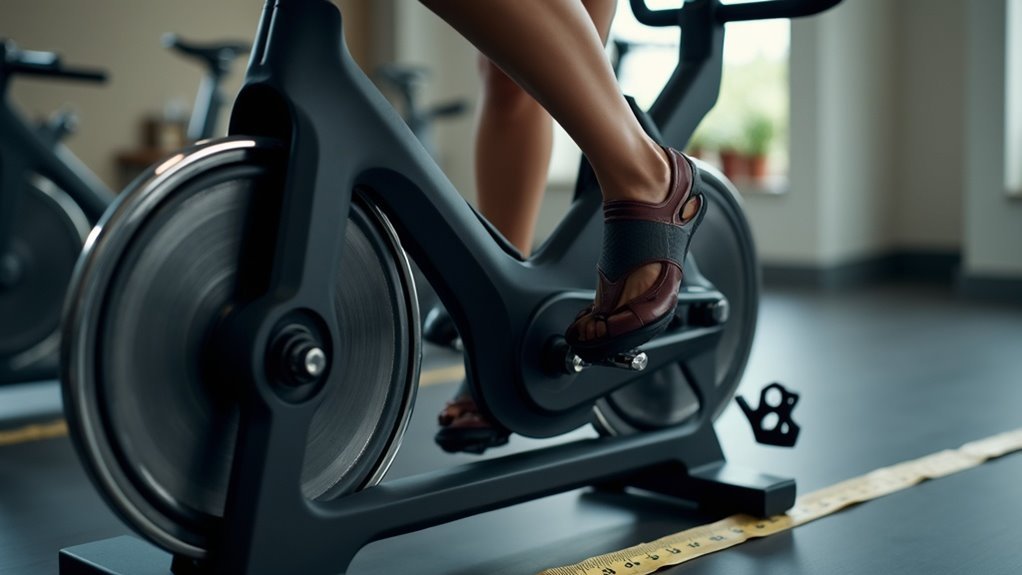
Spin bike geometries play a crucial role in achieving the perfect fit for your home gym setup, significantly impacting your riding posture and overall comfort. Ensuring the correct saddle height is essential for optimal knee bend, which can help reduce discomfort and enhance your cycling efficiency. The height of the handlebars also influences your posture; higher handlebars encourage a more upright riding position, making it suitable for longer sessions, while lower handlebars promote a more aggressive stance, ideal for intense workouts. Additionally, the frame geometry—encompassing reach and angle—affects your power output and stability during your spin sessions. By customizing these elements, you can elevate your cycling experience and performance at home. Explore more tips to maximize your spin workouts and stay healthy through effective home exercise.
Key Takeaways
- Spin bike geometry, including frame size and angles, plays a significant role in ensuring a comfortable and effective workout at home, allowing both men and women to maintain proper rider alignment.
- Adjusting the saddle height is essential for optimizing power transfer and minimizing strain, with a recommended knee bend of 25-30 degrees that caters to various fitness levels.
- The height of the handlebars can influence riding posture; higher handlebars promote comfort for beginners, while lower positions are ideal for more experienced riders looking for an aggressive stance.
- The relationship between saddle and handlebar reach is crucial in preventing overreaching and cramping, which is vital for a pleasant riding experience at home.
- Modifications to frame geometry, such as bottom bracket height and crank length, can be tailored to fit individual body mechanics, enhancing stability and reducing the risk of injury, making home workouts safer and more effective for everyone.
Importance of Spin Bike Geometry
When it comes to maximizing the effectiveness of your home spin workouts, the geometry of your spin bike is crucial for optimal performance. Different bike designs cater to varying preferences, which directly affects your comfort and efficiency during exercise.
Ensuring proper alignment allows your knees to track with the pedals, optimizing power transfer and minimizing the risk of injury. Adjusting the saddle height and handlebar position enables you to hold the handlebars comfortably, enhancing your stability throughout your workout.
The right bike geometry accommodates various body types, underscoring the importance of personalized adjustments for every user. By understanding this relationship, you can select the ideal spin bike for your home gym and make necessary modifications to elevate your cycling experience, ultimately supporting your health and fitness goals.
Key Elements of Spin Bike Fit
When fitting your spin bike for home workouts, frame geometry is crucial for achieving optimal performance and comfort.
Additionally, adjusting the handlebar heights is vital, as it can significantly influence your riding posture and overall experience.
Both of these elements should be customized to meet your individual needs, ensuring a truly effective spin session in the comfort of your own home gym.
Frame Geometry Considerations
Understanding frame geometry is crucial for optimizing your spin bike fit, as it plays a significant role in enhancing comfort and efficiency during home workouts.
Key elements to consider include the seat tube angle, which helps position your center of mass over the pedals for improved power transfer and reduced strain on your back; the top tube length, which affects your reach to the handlebars; and the head tube angle, which impacts steering stability and responsiveness.
By making the right adjustments to saddle height and fore-aft position, along with these geometric factors, you can achieve the perfect alignment tailored to your unique body type and riding style.
Ultimately, this will elevate your spin experience and support your fitness journey at home.
Adjusting Handlebar Heights
How does handlebar height impact your performance on a spin bike?
Adjusting the handlebar height is crucial for comfort and posture, which in turn influences your workout efficiency at home. If the handlebars are too low, you may experience strain in your lower back and shoulders; conversely, if they’re too high, it can restrict your leg extension and power output.
For optimal performance, aim to set the handlebars level with or slightly above the saddle, particularly if you’re new to spinning.
It’s also important to consider your flexibility and riding style; more aggressive riders might benefit from lower handlebars for improved aerodynamics.
Regularly reassessing this adjustment can significantly enhance both your comfort and overall performance as you continue your home fitness journey.
Adjusting Saddle Height for Comfort
Achieving the right saddle height on your spin bike is essential for maximizing comfort and cycling efficiency, whether you’re a fitness enthusiast or just starting your home workout journey.
A proper adjustment allows for ideal leg extension, minimizing injury risk and fatigue. Here’s how to verify your saddle is set correctly for an effective home gym experience:
- Aim for a knee bend of 25-30 degrees at the bottom of the pedal stroke to ensure optimal performance.
- Use the inseam method: saddle height = 0.883 × inseam (cm) for a personalized fit.
- Be cautious of heights; a saddle that’s too high may cause hip and back pain, while one that’s too low can strain your knees.
- Regularly reassess your saddle height as your fitness level or body type changes to maintain comfort and efficiency.
Prioritize these adjustments for improved performance and comfort in your home workouts, making your fitness journey more enjoyable and effective.
Handlebar Height and Reach Considerations
What adjustments can you make to your spin bike’s handlebars to enhance your home workout experience?
Start by considering handlebar height; higher handlebars promote an upright posture, making them ideal for beginners or those looking for a more relaxed ride. Conversely, lower handlebars are better suited for experienced riders who prefer a more aggressive, forward-leaning position.
Ensure your reach to the handlebars is comfortable—your arms should extend naturally without overreaching or feeling cramped.
Adjust the handlebars within the standard 4-6 inch height range relative to your saddle. Ideally, they should be positioned at or slightly below saddle height to maintain a neutral spine, which can help reduce discomfort during longer rides.
Proper adjustments are essential for optimizing both comfort and performance, ensuring you get the most out of your home workout sessions.
Impact of Frame Geometry on Performance
While the frame geometry of your spin bike might seem like a minor detail, it plays an essential role in shaping your home workout experience and performance. Understanding these aspects can greatly enhance your efficiency and comfort during your at-home fitness sessions:
- A steeper seat tube angle promotes an aggressive riding position, allowing for greater power output.
- The reach between the saddle and handlebars affects your posture, which can significantly influence your workout effectiveness.
- Bottom bracket height impacts your center of gravity and stability, crucial for maintaining balance during intense rides.
- Proper adjustments can optimize your performance and help reduce the risk of injury, ensuring you stay healthy while exercising at home.
- Each geometric factor works together to create a tailored cycling experience that enhances your overall fitness journey.
Customizing Fit for Different Riding Styles
When customizing your spin bike for various riding styles, it’s important to focus on adjusting the setup to enhance both comfort and performance for your home workouts.
Tailoring the saddle height and handlebar position can significantly influence your riding experience, whether you’re engaged in high-intensity interval training or longer endurance sessions.
Additionally, taking into account the effects of trail length on stability can fine-tune your fit, helping you maximize efficiency and minimize the risk of injury.
This approach not only supports your fitness goals but also makes exercising at home more enjoyable for both men and women.
Tailoring Geometry for Comfort
To enhance your home workout experience, tailoring the geometry of your spin bike is crucial for achieving optimal comfort and performance.
By focusing on specific adjustments, you can refine your fit for various riding styles suitable for both men and women:
- Adjust saddle height and distance to handlebars for the best riding position, ensuring a comfortable fit for your body type.
- Customize reach and stack measurements to accommodate different physiques, promoting an effective workout for everyone.
- Modify seat angle and fore-aft position to support your preferred riding styles, whether you’re into high-intensity intervals or steady endurance rides.
- Choose wider or narrower handlebars based on your comfort level and stability preferences during workouts.
- Align pedal and cleat positions with your natural biomechanics to enhance power transfer and efficiency in your workouts.
These adjustments not only help maintain proper body alignment but also reduce strain during your home fitness sessions, allowing you to focus on achieving your health goals.
Adjusting for Riding Style
Achieving ideal comfort and performance on your spin bike is crucial for enjoying your home workout and maintaining your health. Understanding how to adjust the fit based on your riding style can greatly enhance your experience.
Customizing seat height and position optimizes power transfer for different intensities, making your workouts more effective. For racing intervals, modify the distance between the saddle and handlebars to improve aerodynamics, while opting for a more upright posture during endurance rides for comfort.
Adjusting the saddle tilt can help alleviate discomfort and improve your alignment, which is essential for longer sessions. Additionally, altering crank length accommodates various leg lengths, ensuring efficient pedal strokes for everyone.
Proper alignment with your body mechanics is vital for preventing injuries and maximizing performance, especially when transitioning between sprinting bursts and climbing challenges. Tailoring your spin bike setup to your individual needs will enhance your home gym experience and keep you motivated on your fitness journey.
Impact of Trail Length
Understanding the impact of trail length on your spin bike is essential for tailoring your fit to suit different riding styles, especially when working out at home.
- Longer trail lengths (around 70mm) enhance stability, making them ideal for speed-focused workouts that push your limits.
- Shorter trails (like 44mm) allow for easier handling, perfect for low-speed maneuvers during your at-home sessions.
- Adjusting trail length allows you to customize your fit for steady-state rides or high-intensity interval training, catering to your fitness goals.
- Longer trails provide positive feedback during sprints, helping you maximize performance and motivation during your home workouts.
- Analyzing trail length alongside other geometry aspects can optimize your bike’s fit, ensuring you enjoy your exercise routine tailored to your unique preferences and enhancing your at-home fitness journey.