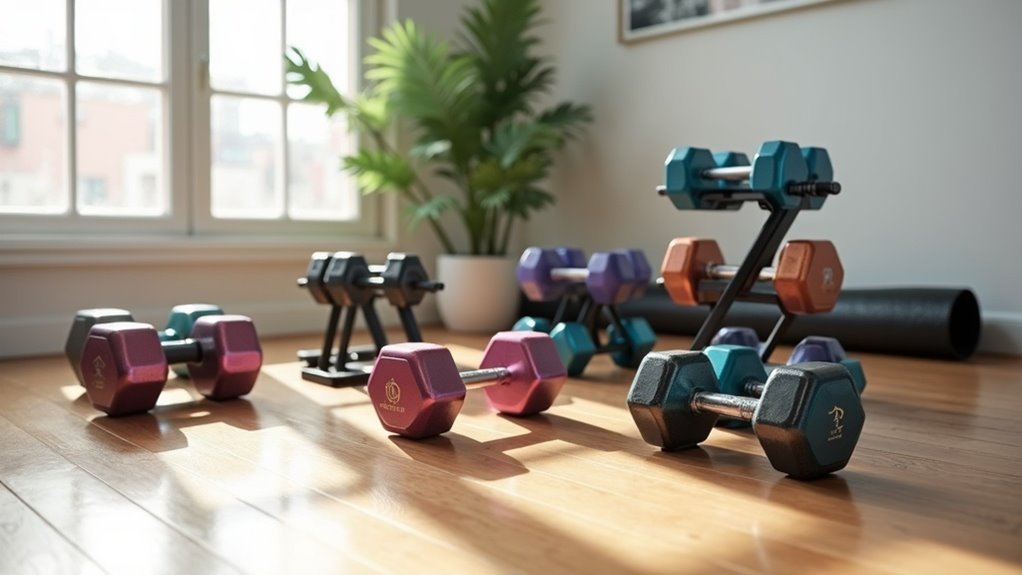
Plate materials significantly impact noise levels in home gym environments. Softer materials, such as rubber or foam, are excellent at absorbing sound, which helps create a quieter atmosphere during workouts. On the other hand, metal components can amplify vibrations, resulting in increased noise levels. The density and damping properties of the materials are also crucial; thicker damping layers can effectively minimize sound emissions. By understanding these factors, you can enhance your home workout experience, ensuring a more peaceful environment. Learning how to select the right materials can further optimize your performance and enjoyment while exercising at home.
Key Takeaways
- Stiffer metal components in home gym equipment can amplify vibrations, leading to higher noise levels during workouts.
- Softer materials such as rubber and foam are excellent choices for home gym flooring, as they effectively absorb sound and reduce overall noise emissions.
- The density of materials is important; heavier materials often provide better sound absorption, making for a quieter exercise environment.
- Damping materials play a key role by converting vibrational energy into heat, which significantly minimizes noise levels from impacts during your home workouts.
- Utilizing layered flooring systems and selecting the right padding thickness can enhance noise reduction, maximizing sound absorption and creating a more peaceful home gym atmosphere for your fitness routine.
Understanding Noise Emissions From Plate Materials
When sound waves interact with home gym equipment, they can generate vibrations that may affect your workout experience. The sound absorption characteristics of the materials used in gym equipment play a crucial role in determining how much noise is reflected versus absorbed.
For instance, metal components can amplify vibrations due to their stiffness, while softer materials, like rubber or foam, can help absorb sound more effectively. Without adequate damping materials, metal parts may contribute to increased noise levels during workouts, as vibrations convert into sound energy.
To create a quieter and more enjoyable exercise environment, consider using damping materials that are 2-3 times the thickness of the metal parts in your equipment. This can significantly reduce noise emissions, limit vibration spread, and enhance your overall home gym experience, allowing you to focus on your fitness goals.
The Role of Damping Properties in Noise Reduction
When you incorporate damping materials into your home gym equipment, you effectively transform vibrational energy into heat, which helps to minimize noise levels during workouts.
Understanding the characteristics of these materials and their vibration absorption mechanisms is key to creating a quieter exercise environment.
Damping Material Characteristics
Understanding the characteristics of damping materials can significantly enhance your home gym experience by minimizing noise from equipment and creating a more pleasant workout environment.
Damping materials, such as visco-elastic compounds, are effective in converting vibrational energy into heat, which helps to reduce sound wave propagation. To get the best results, consider using a damping material that’s 2-3 times thicker than the equipment surface and covers at least 70% of the area. This approach can improve the Noise Reduction Coefficient (NRC), making your fitness space more efficient and enjoyable.
In addition, incorporating damping layers into your gym setup—such as under weight benches or cardio machines—can greatly enhance noise attenuation by changing the vibrational characteristics of the equipment.
Your choice of damping material, whether it be rubber mats or specialized damping pads, will significantly impact the overall effectiveness of noise reduction in your home gym. This allows you to focus on your workouts without distractions, creating an ideal environment for achieving your health and fitness goals.
Vibration Absorption Mechanisms
While the selection of damping materials is important, understanding the underlying vibration absorption mechanisms can help you create a quieter home gym environment.
Damping materials effectively convert vibrational energy from equipment impacts into heat, enhancing sound absorption. For optimal noise reduction during workouts, it’s recommended to use mats or padding that are 2-3 times thicker than the equipment base, which helps limit vibration spread.
Implementing layered flooring systems maximizes sound absorption, significantly improving the Noise Reduction Coefficient (NRC) compared to using single-layer surfaces. Covering at least 70% of the workout area with these materials is essential for effective sound reduction.
Ultimately, choosing the right damping properties based on the types of equipment and workout intensity ensures maximum effectiveness in creating a peaceful home gym atmosphere.
Comparing Acoustic Behavior of Different Materials
Acoustic behavior is an important consideration when setting up a home gym, as it can influence your workout experience.
Acoustic behavior significantly impacts your workout experience in a home gym setup.
When comparing materials for gym equipment or flooring, keep these factors in mind:
- Density: Heavier materials, like rubber flooring, can help reduce noise levels by absorbing sound better than lighter options.
- Sound Absorption: Materials such as foam mats provide excellent sound absorption, making them ideal for minimizing noise during workouts.
- NRC: The Noise Reduction Coefficient (NRC) measures how effectively a material reduces sound reflections, which can enhance your focus and motivation as you exercise.
- Configurability: Various materials, including rubber and foam, can be adapted to different gym setups, ensuring you have the flexibility to choose options that maintain a quieter environment without compromising on performance.
Long-term Effectiveness of Plate Materials
When choosing plate materials for noise reduction in your home gym, it’s essential to consider their long-term effectiveness, as various factors can impact performance over time.
For instance, rubber materials are known for their excellent noise absorption and can maintain a favorable Noise Reduction Coefficient (NRC) for years, making them a smart choice for any home gym setup.
On the other hand, metals may amplify sound and reduce their effectiveness over time, especially with regular impacts from weights and equipment. This can necessitate maintenance or even replacement of damping materials.
Additionally, environmental conditions like temperature and moisture can alter acoustic properties, further affecting long-term performance.
To maximize durability and ensure sustained noise reduction capabilities, consider using a sandwich construction with damping layers between metal plates. This approach can help create a quieter workout environment, allowing you to focus on your fitness goals without the distraction of excess noise.
Practical Applications for Noise Control
When choosing equipment and materials for your home gym, it’s important to consider how different properties can impact noise levels during workouts.
Effective setup techniques are crucial for minimizing sound transmission and maximizing sound absorption, ensuring a more enjoyable exercise environment.
Material Selection Importance
Selecting the right materials for home gym equipment is crucial for creating a comfortable and effective workout environment, as the properties of these materials can influence noise levels during exercise.
Consider the following when choosing materials:
- Metals often amplify noise due to their stiffness, which can be disruptive during workouts.
- Incorporate visco-elastic damping materials within equipment to minimize vibrations and enhance comfort.
- Ensure the thickness of damping materials is 2-3 times that of the metal components to effectively reduce sound transmission.
- Choose natural materials with inherent damping properties to improve overall noise control and create a more peaceful exercise space.
Installation Techniques Effectiveness
Effective installation techniques are crucial for noise control in home gym equipment, significantly enhancing your workout experience.
By applying appropriate damping materials to metal plates, you can greatly improve sound absorption and minimize vibration transmission. Aim to cover at least 70% of the plate’s surface with damping materials that are 2-3 times thicker than the plates themselves.
Utilizing sandwich construction can further boost the Noise Reduction Coefficient (NRC) by limiting vibrations. Additionally, incorporating damping bumpers between machines and plates effectively shifts vibrations outside the audible frequency range, promoting an overall quieter environment for your home gym.
This not only helps you focus on your fitness goals but also creates a more pleasant atmosphere for both men and women exercising at home.
Selecting the Right Material for Optimal Performance
To achieve optimal performance in your home gym, it’s essential to carefully consider the materials used in your equipment construction.
Selecting the right materials can enhance stability, reduce noise, and improve the overall workout experience. Here are some key factors to keep in mind:
- Choose visco-elastic materials for superior cushioning and shock absorption.
- Opt for softer materials in mats and flooring to minimize noise and improve comfort.
- Ensure that padding thickness is appropriate to provide adequate support during workouts.
- Utilize layered construction in equipment to enhance durability and reduce vibrations during use.