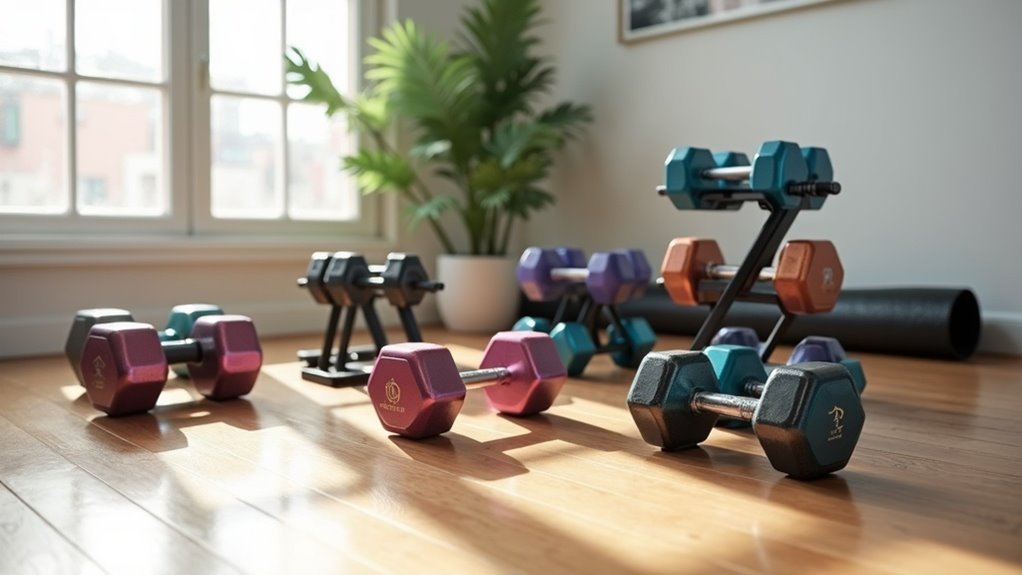
To protect your home gym floors from dropped weights, consider investing in thick rubber flooring or protective mats designed to absorb shock effectively. Opt for rubber-coated bumper plates to minimize the impact when weights are dropped. Implement smart weight control techniques, such as controlled descents and proper storage practices, to further reduce stress on your surfaces. Regularly inspect and maintain your flooring to ensure it remains in good condition. By following these tips, you’ll not only safeguard your floors but also enhance your overall workout experience and performance at home.
Key Takeaways
- Install rubber flooring at least 3/8 inch thick to absorb shock and protect your home surfaces during weightlifting exercises.
- Use protective mats or lifting platforms to distribute the force from dropped weights and minimize damage to your floors.
- Practice smart weight storage by returning weights to racks after use to keep them off the floor and reduce potential damage.
- Conduct regular inspections and maintenance of your flooring to identify wear and replace damaged tiles, ensuring optimal protection for your home gym.
- Educate yourself and others on proper lifting techniques, encouraging controlled descents to minimize shock loads during workouts and maintain a safe exercise environment at home.
Understanding the Impact of Dropped Weights
When you drop weights during a home workout, the impact can generate shock loads that reach thousands of pounds on your flooring. This force can lead to cracks and damage, particularly on hardwood or tile surfaces.
The unpredictable bounce of dropped weights not only poses risks to your floors but also to your safety during exercise. Consistently dropping weights in the same spot increases stress and heightens the potential for floor failure over time.
To safeguard your home gym setup, consider investing in Rubber Flooring Rolls or thick rubber mats. These materials provide excellent shock absorption, effectively reducing impact force and ensuring that both your flooring and workout environment remain safe and intact for all your fitness routines.
Rubber Flooring Options for Weight Rooms
When setting up your home gym, selecting the right rubber flooring can significantly enhance your workout experience while protecting your floors and equipment.
You’ll find options like rolled mats, interlocking tiles, and specialty surfaces, each offering unique benefits tailored to your fitness needs.
Rubber flooring not only absorbs shock during intense workouts but also provides durability and ease of maintenance, making it an ideal choice for any home training environment.
Whether you’re lifting weights or doing cardio, the right flooring can help you stay healthy and motivated in your exercise journey.
Types of Rubber Flooring
Selecting the appropriate type of rubber flooring for your home gym is crucial for safeguarding your floors and equipment while ensuring a safe workout environment.
You have several options to consider: rubber rolls, interlocking rubber tiles, and heavy weightlifting mats, each available in various thicknesses.
For those who use free weights, rubber rolls that are at least 3/8 inch thick are a cost-effective choice. However, if you’re lifting heavier weights, you should opt for mats that are a minimum of 3/4 inch thick to effectively absorb impacts.
Specialty interlocking rubber tiles, which are typically 1 inch thick, not only provide excellent protection but also help to dampen noise, making them easy to install and minimizing waste.
Make a thoughtful choice to ensure your home gym is both durable and functional for all your fitness needs.
Benefits of Rubber Flooring
Rubber flooring presents unmatched benefits for home gyms, making it a preferred option for both men and women dedicated to fitness.
By selecting rubber flooring, you can take advantage of:
- Outstanding durability coupled with excellent shock absorption
- Sound-dampening features to help maintain a quieter workout space
- Simple maintenance and environmentally friendly materials
This flooring effectively safeguards your home gym against the impact of dropped weights, reducing the risk of damage and injuries.
For lighter weights, a ¼ inch thickness is suitable, while for heavier weights, a minimum thickness of 3/4 inch is recommended.
Specialty interlocking tiles, often 1 inch thick, offer enhanced impact resistance.
With rubber flooring, you can cultivate a safer, more effective workout environment that meets your unique fitness goals.
Utilizing Protective Mats and Platforms
To effectively protect your floors while creating a home gym, utilizing protective mats and lifting platforms is essential.
Choose protective mats that are at least 3/8 inch thick for general lifting, or up to 3/4 inch for heavy weights, to absorb shock effectively and ensure a safe workout environment.
Lifting platforms made from plywood and rubber mats help distribute the force of dropped weights, significantly reducing the risk of floor damage.
Opt for bumper plates instead of metal ones to minimize impact and protect your surfaces.
Interlocking rubber tiles can create a customizable, cushioned area that suits your workout needs, while crash mats provide extra protection for high-impact exercises.
Importance of Proper Weight Control Techniques
When you manage your weight effectively during home workouts, you not only protect your floors but also improve your lifting technique.
By practicing proper techniques and incorporating spotting for safety, you can significantly reduce the risk of accidents and damage to your home gym equipment.
Being mindful during your exercises ensures a safer environment for both you and your gear, allowing you to focus on achieving your fitness goals in the comfort of your own home.
Weight Descent Control
While it might seem harmless to drop weights during a home workout, practicing proper weight descent control is crucial for protecting your floors and maintaining a safe exercise environment.
The impact from dropping weights can damage your flooring over time, which is especially important to consider when investing in home gym equipment.
- Controlled descents minimize shock loads that can harm surfaces, ensuring your workout space remains in top condition.
- Techniques like rack pulls not only improve your strength but also help reduce the need for dropping weights, allowing for a more effective and safer workout.
- Consistent practice of weight descent control promotes better lifting form and enhances safety, making your home fitness journey more enjoyable and sustainable for both men and women.
Technique Refinement Practices
Practicing proper weight control techniques is essential for maintaining the integrity of your home gym floors during workouts. Focusing on technique refinement ensures controlled descents and minimizes impact, which is crucial for both safety and the longevity of your equipment. Maintaining a proper grip enhances muscle engagement for stability, reducing the risk of accidental drops. Incorporating pauses at the bottom of lifts can significantly improve control and safety. Below is a table summarizing effective weight control techniques for your home workouts:
| Technique | Benefits | Tips |
|---|---|---|
| Controlled Descents | Reduces shock loads | Lower weights slowly |
| Proper Grip | Enhances lifting stability | Keep hands positioned firmly |
| Rack Pulls | Minimizes drops | Use for strength training |
| Pauses at Bottom | Improves control | Focus on form |
Spotting for Safety
Spotting during weightlifting at home isn’t just about having someone there to catch a falling barbell; it’s a vital component of ensuring safety and promoting proper weight control techniques.
Engaging a spotter can significantly enhance your home lifting experience by encouraging:
- Intentional weight handling techniques tailored for home gym setups
- Reduced likelihood of dropped weights, protecting both you and your equipment
- Enhanced safety practices in your home workout area, ensuring a secure environment for exercise
Whether you’re working out solo or with a partner, having a spotter can make a world of difference in your fitness journey.
Enhancing Floor Protection With Additional Materials
To effectively enhance floor protection in your home gym from dropped weights, consider incorporating various materials that absorb impact and reduce damage. Using a layer of ¾-inch plywood beneath rubber mats can help spread the force of dropped weights, ensuring your flooring remains intact. Crash mats provide additional cushioning, minimizing noise and vibrations, which is particularly beneficial for home environments. Interlocking rubber tiles are not only durable but also allow for easy replacement, making them a practical choice for any gym setup. For superior shock absorption, opt for rubber-coated bumper plates instead of traditional metal ones. Additionally, utilizing old tires or weight cradles can further cushion the impact, providing an extra layer of safety for your floors.
| Material | Benefit |
|---|---|
| Rubber Mats | Basic shock absorption |
| Plywood | Spreads impact force |
| Crash Mats | Reduces noise and vibration |
| Interlocking Tiles | Easy repair and durability |
| Old Tires/Weight Cradles | Extra shock absorption |
Best Practices for Weight Storage and Handling
Protecting your home gym floor goes beyond just using impact-absorbing materials; it also involves smart weight storage and handling practices that ensure safety and longevity of your equipment.
Safeguarding your home gym floor requires both protective materials and smart weight management practices for safety and durability.
- Always return weights to their designated storage area after your workout to keep your space organized and safe.
- Utilize weight storage racks specifically designed for your weights to maximize efficiency and accessibility.
- Practice proper lifting techniques to prevent injuries and accidents while managing your weights.
Regular Maintenance and Inspection of Flooring
While regular maintenance may seem tedious, it’s essential for preserving the integrity of your home gym flooring and ensuring safety during your workouts.
Regular inspections help you spot any wear, such as cracks or indentations, caused by dropped weights. It’s important to clean the surface frequently to eliminate debris and moisture, which can reduce slip risks.
Make sure that mats and protective layers are secure, as gaps can lead to increased wear. Keep an eye on interlocking tiles, replacing any damaged pieces promptly to maintain optimal protection.
Finally, schedule periodic assessments of your flooring’s shock-absorbing capabilities, especially after intense lifting sessions, to ensure it continues to shield you from impacts effectively.